
Side Dishes
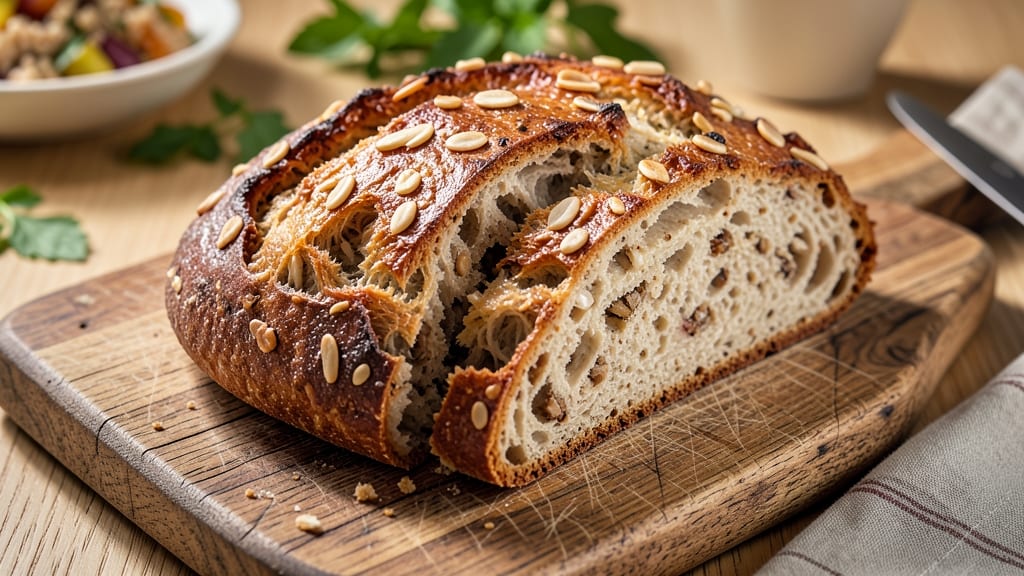
This 7 grain flour bread recipe delivers a nutrient-packed loaf with a hearty texture that rivals artisanal sourdough—without the complexity. 🌾 The blend of whole grains creates a subtle nutty depth while boosting fiber and protein, making every slice a wholesome upgrade from standard white bread.
Perfect for toast lovers or sandwich enthusiasts craving substance, this recipe transforms simple ingredients into a rustic, satisfying loaf with a crispy crust and tender crumb.
The beauty of this recipe lies in its balance: 7 grains (like wheat, rye, and oats) work together to create a dough that's easy to handle yet packed with flavor.
No special equipment is needed—just a standard mixing bowl, dough scraper, and 45 minutes of hands-on time before letting the bread rise while you prepare dinner. The proofing stage is where the magic happens, developing that signature airy texture that makes every bite irresistible.
What you’ll end up with is a crusty, golden-brown loaf that slices beautifully and stays fresh for days. The nutty undertones from the grains pair perfectly with butter, jam, or as the base for gourmet sandwiches.
Unlike dense whole-grain breads, this recipe achieves a light yet substantial texture—ideal for those who want nutrition without sacrificing satisfaction.
Whether you’re baking for breakfast or meal prep, this bread is a game-changer. The instructions walk you through every step—from mixing to baking—so you’ll achieve restaurant-quality results at home. Ready to elevate your bread game? Let’s get started.
Ingredients for 7 grain flour bread
Seven wholesome grains and simple pantry staples create a loaf with restaurant-quality texture.
| Ingredient | Amount | Notes |
|---|---|---|
| Wheat Berries 🌾 | ½ cup | Roughly chopped for texture |
| Rye Flour 🌾 | 1 cup | Dark rye for nutty depth |
| Oat Flour 🌾 | ¾ cup | Blended from rolled oats |
| Spelt Flour 🌾 | 1 cup | Lightly toasted for flavor |
| Whole Wheat Flour 🌾 | 1 ½ cups | Unbleached for freshness |
| Barley Flour 🌾 | ½ cup | Ground from pearled barley |
| Buckwheat Flour 🌾 | ¼ cup | Rich, earthy flavor |
| Active Dry Yeast 🍞 | 2 ¼ tsp | Freshly opened for potency |
| Granulated Sugar 🍚 | 1 tbsp | Feeds yeast fermentation |
| Salt 🧂 | 1 ½ tsp | Diamond Crystal preferred |
| Olive Oil 🫒 | ¼ cup | Extra-virgin for richness |
| Warm Water 💧 | 1 ¼ cups | 110°F for yeast activation |
| Honey 🍯 | 1 tbsp | For subtle sweetness |
| Cornmeal 🌽 | ¼ cup | For dusting bread pan |
The grain blend is where the magic happens. Bob's Red Mill carries all the flours individually, but if you're buying in bulk, check the Whole Foods bulk bins for the best prices. For the wheat berries, Trader Joe's sells them pre-chopped—saves time. The buckwheat flour is non-negotiable for that subtle earthiness that sets this apart from regular whole wheat. If you can't find spelt flour, substitute whole wheat at a 1:1 ratio, but you'll lose some of that delicate flavor. Toast your grains lightly before blending (3-4 minutes in a dry pan) for deeper flavor—worth the extra minute.
No rye flour? Substitute half the whole wheat with pumpernickel flour for a similar depth. Running low on buckwheat? Swap for more oat flour—it'll be slightly sweeter but still delicious. The honey can be swapped for maple syrup at a 1:1 ratio, though it'll darken the crust slightly. For the yeast, King Arthur brand stays fresh longer than store brands. If your kitchen's cold, warm the water slightly more (up to 115°F) to help activate the yeast faster. The olive oil matters here—use something fruity and peppery, not the bland supermarket kind.
This dough is sticky but manageable—don't overwork it. Let it rise at room temperature for 1.5-2 hours (it should double in size), then shape and let it proof another 30-45 minutes before baking. For best results, bake immediately after shaping—425°F for 30-35 minutes with a spray of water in the oven for that crispy crust. Cool completely on a wire rack (at least 1 hour) before slicing, or the bread will turn gummy. Store wrapped at room temp for 3 days or freeze slices for up to 3 months—perfect for quick toast.
Why You'll Love This Recipe
- No-Knead Magic: I swear by this—just mix the wet ingredients with the seven grains (wheat berries, rye, oat, spelt, whole wheat), let it rest overnight, and bake. No standing at the counter, no sore arms. That chewy texture comes from the wheat berries softening just right, and honestly? It’s the easiest way to make bread feel like a reward.
- Nutty Earthy Crunch: The rye and spelt give it a deep, almost caramelized warmth, while the oat flour adds a subtle toasted sweetness. Toast a slice, slather it with butter, and you’ve got a breakfast that tastes like a fancy bakery—but without the markup. (Yes, even on a Tuesday night.)
- Meal Prep MVP: This bread keeps for days in the fridge, freezes perfectly, and toasts up like it’s fresh. I make a double batch on Sundays: one loaf for sandwiches, another for croutons or breadcrumbs. It’s my go-to for lunches, charcuterie boards, or when I’m too tired to bake.
- Budget-Friendly Pantry Staple: Using whole grains I already had (plus a few cheap flours) cuts costs way more than store-bought. The wheat berries add heft, so a loaf goes a long way—perfect for stretching meals when groceries feel tight. Plus, no fancy ingredients, just real, wholesome stuff that tastes better than anything in a bakery case.
Step-by-step instructions for 7 grain flour bread
Here's how to transform these nutrient-packed flours into a hearty, rustic loaf with perfect texture.
👨🍳 Step 1: Prepare the Wheat Berries and Flour Blend
First, pulse the 0.5 cup wheat berries in a food processor until they reach a coarse, sand-like texture—think rough grit, not fine powder. This gives the bread its signature nutty bite and chewy texture. Transfer to a large mixing bowl.
In the same food processor, combine all remaining flours: 1 cup rye flour, 0.75 cup oat flour, 1 cup spelt flour, 1.5 cups whole wheat flour, 0.5 cup barley flour, and 0.25 cup buckwheat flour. Pulse just until blended—don't over-process or you'll develop gluten too early. Add this flour blend to the bowl with the wheat berries.
🍳 Step 2: Activate the Yeast and Combine Wet Ingredients
In a separate small bowl, whisk together the 2.25 tsp active dry yeast, 1 tbsp granulated sugar, and 1.25 cups warm water (about 110°F). Let this sit for 5-10 minutes until it becomes foamy—this confirms your yeast is alive and active. If it doesn't foam, start over with fresh yeast.
In the large mixing bowl, add the 0.25 cup olive oil, 1 tbsp honey, and 1.5 tsp salt to the flour-wheat berry mixture. Pour in the yeast mixture and stir with a wooden spoon until everything comes together into a shaggy, sticky dough. The dough will be thick and wet—this is normal with whole grain flours.
🥘 Step 3: Knead and Develop Gluten
Turn the dough onto a lightly floured surface and knead for 8-10 minutes by hand. You're not looking for smooth, elastic dough here—this is a dense, rustic bread. Just work the dough until it's slightly smoother and pulls away from the surface when pressed. If it's too sticky to handle, wet your hands slightly to prevent tearing.
Real talk: This dough won't look like traditional bread dough. It's dense and crumbly—almost like wet sand. That's perfect for our hearty texture. Once kneaded, shape it into a loose round and place it in a lightly oiled bowl. Cover with a damp towel and let it rise in a warm place for 1-2 hours, or until it's puffed about 50%.
🔥 Step 4: Shape and Proof for Maximum Flavor
After the first rise, punch down the dough gently and shape it into a 9x5-inch loaf pan (greased with olive oil). Sprinkle the 0.25 cup cornmeal evenly over the top—this creates that beautiful crust and prevents sticking. Cover again and let it proof for another 30-45 minutes until it rises just above the pan's rim.
Preheat your oven to 375°F with a Dutch oven inside for 30 minutes. This step is crucial—it creates steam that develops that signature crust. Carefully transfer the loaf (pan and all) into the hot Dutch oven. Bake for 45-50 minutes until the top is deep golden brown and sounds hollow when tapped.
⏰ Step 5: Cool and Slice for Perfect Texture
Remove the bread from the oven and let it cool in the pan for 10 minutes, then transfer to a wire rack. Here's the thing—this bread needs time to set. Resist the urge to slice immediately. Let it cool completely for at least 1 hour before cutting. The interior will firm up, making each slice hold its shape beautifully.
Once cooled, slice with a sharp serrated knife for clean cuts. You'll see layers of texture: the dense, nutty crumb from the whole grains and the crispy, golden crust. Serve warm with olive oil and flaky sea salt for the ultimate rustic experience—each bite delivers that perfect balance of chewy, hearty, and slightly sweet.
Pro Tips For Making 7 Grain Flour Bread
- Soak Wheat Berries First: I learned this the hard way—skipping the overnight soak for wheat berries means your bread will taste like chewed-up cardboard. Toss them in warm water (not boiling) with a pinch of salt for 12+ hours, then drain and rinse before grinding. Trust me, your bread’s texture will thank you.
- Mix Flours by Weight: Rye and oat flour absorb moisture differently, so measuring by volume leads to dry, dense bread. Weigh each flour separately—rye (heaviest), then spelt, whole wheat, and oat (lightest). The ratio matters more than you’d think, especially when blending textures.
- Don’t Over-Knead the Dough: This isn’t pizza dough—handle it just enough to combine. Overworking it with whole grains and rye will make the gluten tough and the crumb gummy. Two minutes by hand or 5–6 minutes in a mixer is plenty. Feel for stretchiness, not resistance.
- Proof in a Warm Drawer: Your oven’s lightbulb drawer (or a proofing box) keeps the dough cozy without overcooking it. If it’s too cold, the yeast will sulk; if too hot, it’ll rise too fast and collapse. Aim for 80–85°F (27–29°C) and check for doubled size in 1–2 hours—no peeking or you’ll reset the clock.
Creative variations of this dish
Nutty Seed Boost
Swap 0.25 cup buckwheat flour for 0.25 cup ground flaxseed and add 0.25 cup chopped walnuts to the dough. This creates a richer, crunchier texture with omega-3s and healthy fats.
Toast the walnuts first in a dry pan for 3-4 minutes to enhance their nutty flavor—this variation feels like a cross between bread and energy bar. 🌰
Herb-Infused Twist
Stir in 1 tbsp chopped fresh rosemary and 1 tsp dried thyme during the first rise for an aromatic Mediterranean-inspired loaf. The herbs pair beautifully with the earthy grains, creating a fragrant crust perfect for dipping in olive oil.
For extra flavor, brush the baked loaf with 1 tbsp melted garlic-infused olive oil before serving. ✨
Sweet Cinnamon Swirl
Add 1 tbsp ground cinnamon and 0.5 cup raisins to the dough for a breakfast-friendly variation. Fold the raisins into the dough after kneading, then shape the loaf as usual.
This creates pockets of sweetness that contrast perfectly with the savory crust. Serve with almond butter or Greek yogurt for a satisfying morning treat. 🍯
Savory Garlic & Onion
Mix 2 tbsp minced garlic and 2 tbsp finely chopped red onion into the wet ingredients for a flavor-packed loaf. The onions caramelize slightly during baking, adding sweetness that balances the hearty grains. This version works exceptionally well as a sandwich base for grilled meats or sharp cheeses. 🧄
Spiced Pumpkin Loaf
Replace 0.5 cup warm water with 0.5 cup pumpkin puree and add 1 tsp pumpkin pie spice for a seasonal variation. The pumpkin adds moisture and natural sweetness while the spices create warm, cozy notes.
This loaf is perfect for fall—slice it thick and toast with cinnamon sugar for a dessert-like treat. 🎃
Gluten-Free Adaptation
For a gluten-free version, replace the wheat berries with 0.5 cup gluten-free rolled oats and substitute 1 cup gluten-free all-purpose flour for the whole wheat flour. Use 0.25 cup xanthan gum to bind the dough properly.
While the texture will differ slightly, this adaptation maintains the hearty flavor profile while being inclusive for gluten-sensitive bakers. 🌾
Nutrition facts
Frequently asked questions
Why does my 7 grain bread dough feel so sticky?
The high whole grain content (like rye and buckwheat) absorbs more moisture, creating a denser, stickier dough. This is normal—don't add extra flour or the texture will become dense. Wet your hands slightly when handling to prevent tearing. The stickiness actually helps develop that signature hearty crumb!
Can I make this bread without a Dutch oven?
Yes! Use a standard loaf pan lined with parchment paper. For extra crustiness, place the pan on a baking sheet and pour 1 cup hot water into the sheet during the last 10 minutes of baking. This creates steam that mimics a Dutch oven's effect. The bread will still be delicious, just with a slightly softer crust.
How do I store this bread to keep it fresh?
Wrap the cooled loaf tightly in plastic wrap or aluminum foil and store at room temperature for up to 3 days. For longer storage, freeze individual slices wrapped in parchment paper—they'll stay fresh for 3 months. To revive, toast frozen slices directly from the freezer for 2-3 minutes until crispy.
What's the best way to reheat sliced bread?
For crispy toast, use a toaster or toaster oven at 375°F for 3-5 minutes. To revive the interior, wrap slices in foil and warm in the oven at 300°F for 8-10 minutes. Avoid microwaving—it makes the crust soggy. The best method? Freshly baked is always best, but a quick oven warm-up brings back that just-out-of-the-oven texture.
Can I substitute any of the grains for gluten-free options?
Yes, but with adjustments. Replace wheat berries with gluten-free rolled oats and use gluten-free all-purpose flour (1:1 ratio). Add 0.25 cup xanthan gum to bind the dough. The texture will be slightly different but still delicious. For best results, use a gluten-free bread flour blend designed for yeast breads.