
Side Dishes
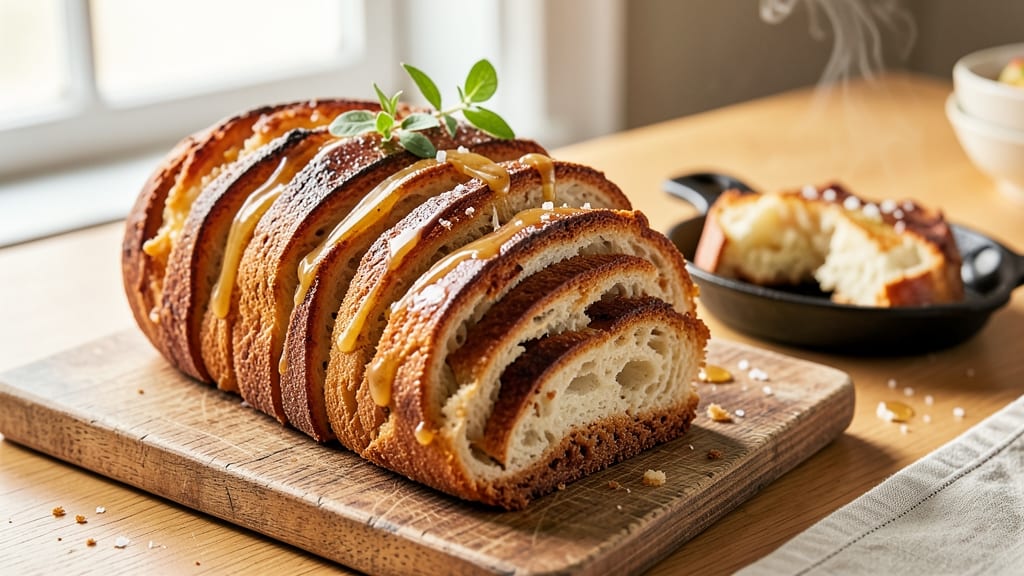
This accordion bread recipe transforms simple dough into layers of golden, buttery magic that pulls apart with every bite. 🌟 The secret lies in its Eastern European roots, where dough is rolled, folded, and baked to create those signature flaky, crispy layers—perfect for both sweet and savory versions. What makes this recipe special is how the dough's structure develops during proofing, creating pockets of air that become crispy, caramelized layers when baked.
The process starts with a basic yeast dough that's rolled out, brushed with butter, and folded like an accordion before baking. This technique ensures flaky layers that are crispy on the outside and tender inside, with a buttery aroma that fills your kitchen.
Whether you're making it for a holiday feast or a simple family dinner, the pull-apart texture makes it irresistible—ideal for serving with soups, jams, or even as a side to roasted meats.
By the time it emerges from the oven, you'll have a loaf with layers that separate effortlessly, revealing crispy, golden edges and a soft, pillowy interior.
The butter melts into the dough, creating a rich, buttery flavor that pairs perfectly with sweet toppings like jam or savory options like garlic butter. This recipe is a celebration of texture and tradition, bringing a touch of Eastern European charm to your table.
Ready in about 2 hours (including proofing), this bread is perfect for meal prep or serving fresh. The dough's versatility means you can customize it with fillings like cheese, herbs, or even chocolate for a decadent twist. Let's get started on creating this pull-apart masterpiece!
Ingredients for accordion bread
Four cups flour, a pinch of yeast, and butter that melts into golden layers—this is your accordion bread starter kit.
| Ingredient | Amount | Notes |
|---|---|---|
| All-Purpose Flour 🌾 | 4 cups | Spooned and leveled |
| Active Dry Yeast 🍞 | 2 ¼ tsp | One packet or 0.25 oz |
| Granulated Sugar 🍚 | 1 tbsp | For yeast activation |
| Unsalted Butter 🧈 | ½ cup | Cold, cubed for folding |
| Warm Water 💧 | 1 ¼ cups | 110°F for yeast activation |
| Salt 🧂 | 1 tsp | Kosher or sea salt |
| Large Egg 🥚 | 1 whole | Room temperature |
| Milk 🥛 | ¼ cup | Warm, for dough softness |
| Vanilla Extract 🌸 | 1 tsp | Optional, for subtle sweetness |
| All-Purpose Flour 🌾 | 1 cup | Extra for dusting |
| Coarse Sugar 🍚 | ¼ cup | For sprinkling on top |
| Melted Butter 🧈 | 2 tbsp | For brushing layers |
The butter is non-negotiable here. European-style unsalted gives the best flavor, but any good-quality butter works. Grab the coldest sticks from the fridge—you want it to stay firm during folding. Land O'Lakes or Plugrá are solid choices, but if you're feeling fancy, Kerrygold takes this to the next level. The dough needs to be cool when you fold it, so don't rush the chilling steps. Flour matters too—King Arthur or Gold Medal are my go-tos for that perfect balance of protein and tenderness. If your kitchen's humid, add an extra 1/4 cup flour when rolling—sticky dough is the enemy of crispy layers.
No vanilla? Skip it—this isn't a cake. Short on butter? Olive oil or coconut oil can substitute, but the flavor won't be the same. The yeast packet might say '2 1/4 tsp'—that's 2.25 tsp, not 2.5. Diamond Crystal salt measures differently than Morton's, so if you're using it, pack the teaspoon. For the warm water, I use my microwave—heat 1 cup water for 45 seconds, then let it sit for 30 seconds to cool slightly. The dough should be soft but not sticky after kneading. If it's too dry, add a splash more milk; if too sticky, sprinkle in extra flour. And trust me on the chilling—30 minutes in the fridge between folds makes all the difference.
Dough keeps beautifully in the fridge for 3 days wrapped tightly in plastic, or 3 months frozen. Thaw overnight in the fridge before baking. The baked bread? Room temperature for 2 hours after baking is ideal—those layers need time to set. Store leftovers in a bread bag at room temp for 2 days, or freeze slices wrapped in foil for 1 month. Pro tip: Brush the warm bread with extra melted butter before serving—game-changer. And if you're making this ahead for a party, bake it the day before and reheat at 350°F for 10 minutes to revive the crisp.
Why You'll Love This Recipe
- No-Knead Magic: I swear by this dough—just mix, fold, and let it rise while I sip coffee. The butter and sugar work their flavor into the flour like a slow dance, and zero effort on my part.
- Buttery Crust, Soft Core: That crispy golden accordion layers? Pure satisfaction. The warm butter melts into the dough just enough to keep it tender inside while the outside gets that addictive crunch.
- Lunchbox Hero: Between us, this bread is my go-to for packed lunches. The layers hold up for days (yes, really), and kids actually eat it cold—no fancy reheating needed.
- Budget Stretch: Four simple ingredients, one rising time, and it feeds my whole family. I make two loaves on Sunday, freeze half, and never stress about last-minute sandwiches. My wallet thanks me.
Step-by-step instructions for accordion bread
Here's how to create those dreamy, buttery layers that make this bread irresistible.
👨🍳 Step 1: Activate the Yeast for Maximum Rise
In a small bowl, whisk together the 1.25 cups warm water (around 110°F—it should feel warm to your wrist but not hot), 1 tbsp granulated sugar, and 2.25 tsp active dry yeast. Let it sit for 5-10 minutes until it becomes foamy and bubbly. This tells you your yeast is alive and ready to work its magic.
If it doesn't foam after 10 minutes, your yeast might be dead—start over with fresh yeast. I've made this mistake before, and trust me, you don't want to wait hours for dough that never rises. The foam should be thick and bubbly, almost like a mini beer head.
👨🍳 Step 2: Mix the Dough Base and Knead
In a large bowl, combine the 4 cups all-purpose flour, 1 tsp salt, and the foamy yeast mixture. Mix with a wooden spoon until a shaggy dough forms. Add the 1 whole large egg, 0.25 cup warm milk, and 1 tsp vanilla extract (if using), then mix again until incorporated.
Turn the dough onto a lightly floured surface and knead for 8-10 minutes until smooth and elastic. You'll know it's ready when it springs back slowly when poked. I like to use the "windowpane test"—stretch a small piece of dough thin enough to see light through it. If it doesn't tear, you're good to go.
🥘 Step 3: Fold in Cold Butter for Flaky Layers
Shape the dough into a rectangle about 12x8 inches. Place the 0.5 cup cold unsalted butter (cut into cubes) along the short side. Fold the dough over the butter like a letter, sealing the edges tightly. This creates those signature flaky layers that make accordion bread so special.
Repeat this folding process 3 times, rotating the dough each time to ensure even butter distribution. After each fold, rest the dough for 5 minutes before folding again. The butter should be fully encased in the dough, creating thin layers that will melt and create steam during baking.
🔥 Step 4: Shape and Proof the Dough
Divide the dough into 4 equal pieces (about 8 ounces each). Roll each piece into a 12-inch log and fold it accordion-style by making 3-4 folds along the length. Place the folded logs seam-side down in a greased 9x13-inch baking pan, leaving a little space between them.
Cover the pan with a clean kitchen towel and let the dough rise in a warm place for 1-2 hours until it nearly doubles in size. You'll see the folds expand and the dough become light and airy. Poke the dough gently—if it springs back slowly, it's ready. If it springs back quickly, give it another 30 minutes.
🔥 Step 5: Bake to Golden Perfection
Preheat your oven to 375°F. Brush the tops of the dough with 2 tbsp melted butter and sprinkle evenly with 0.25 cup coarse sugar. Bake for 25-30 minutes until the bread is golden brown and smells heavenly.
Here's the thing—don't overbake. The bread should be soft and tender inside with just a hint of crispness on the outside. If you bake it too long, those beautiful layers will dry out. Let the bread cool in the pan for 10 minutes before transferring to a wire rack. Serve warm for the best experience—those layers are at their most dramatic when still steaming slightly.
Pro Tips For Making Accordion Bread
- TEST YEAST FIRST: Mix a tiny spoonful of yeast with warm water and sugar—if it bubbles within 5 minutes, your yeast is alive. I learned this the hard way after kneading for 20 minutes only to watch my dough refuse to rise. Skip the guesswork and check before you commit.
- SOFTEN BUTTER PROPERLY: Unsalted butter straight from the fridge won’t melt evenly in the dough. Cut it into small cubes and microwave for 10–15 seconds until pliable but not liquid—this keeps the accordion layers tender without turning greasy. (Yes, even if you’re impatient like me.)
- FOLD DON’T STRETCH: The accordion folds are all about precision: stretch the dough just enough to see light through, then fold it like a letter—no tugging or overworking. I used to pull too hard, and the layers would tear. Keep it gentle, or you’ll end up with a sad, lumpy loaf.
- REST BEFORE BAKING: Let the shaped dough chill uncovered in the fridge for at least 30 minutes. This firms up the butter and sharpens the layers, so they don’t collapse when they hit the oven. I skipped this once and got a dense, sad brick instead of flaky perfection. Don’t rush it.
Make-ahead tips for accordion bread
Dough Prep Ahead
Make the dough up to 24 hours in advance and store it in an airtight container in the fridge. The flavors deepen overnight, and the gluten relaxes, making the folding process easier.
Just take it out 1 hour before shaping to bring it to room temperature—this prevents cracking during the accordion folds. 💫
Folded Dough Storage
After shaping the dough into accordion logs, cover them tightly with plastic wrap and refrigerate for up to 12 hours. When ready to bake, let them proof at room temperature for 1-1.5 hours—they’ll rise faster than cold dough.
Pro tip: Place the pan on a baking sheet to catch any overflow during proofing.
Baked Bread Revival
Bake your accordion bread a day ahead and store it at room temperature in a bread bag. To reheat, wrap slices in foil and warm at 350°F for 5-7 minutes until golden and steaming.
For extra crispiness, brush with melted butter before reheating. The layers stay tender but regain that irresistible crunch. ✨
Freezer-Friendly Folds
For long-term storage, bake the bread as directed, then cool completely. Wrap individual slices in foil and freeze for up to 3 months. To serve, thaw at room temperature for 15 minutes or reheat directly from frozen for 8-10 minutes at 350°F. The texture remains flaky—just like fresh!
Make-Ahead Toppings
Prep your toppings in advance: melt the butter for brushing, measure the sugar, and portion any fillings (like jam or cheese). Keep them in small containers at room temperature for quick assembly. A sprinkle of coarse sugar right before baking adds that perfect caramelized crust without extra effort. 🔥
Party-Ready Plan
For gatherings, bake the bread early, then reheat slices in a 200°F oven for 10 minutes before serving. Arrange them on a platter with warm butter and jam for a no-fuss presentation. The crowd will love pulling apart those golden layers—minimal effort, maximum wow factor! 💛
Nutrition facts
Frequently asked questions
Why does accordion bread have those signature folds?
The accordion folds create those magical flaky layers by trapping butter between thin sheets of dough. When baked, the butter melts and creates steam, which puffs up the layers into crispy, golden pockets. This technique comes from Eastern European traditions where maximizing butter yield was key—every fold multiplies the flakiness!
Can I make this bread without butter?
You can substitute with 2/3 cup melted margarine or coconut oil, but the flavor and texture won't be identical. Butter's fat content is crucial for those crispy layers—it needs to stay cold during folding. For a lighter version, try 2 tablespoons olive oil mixed with the melted butter, but expect slightly less flakiness.
How do I know when the dough is fully proofed?
Gently press your finger into the dough—if it springs back slowly (not immediately), it's ready. The dough should also nearly double in size and feel light when lifted. For visual confirmation, check the folds: they should look slightly puffy and separated. Overproofing is worse than underproofing, so err on the side of letting it rise a bit longer if unsure.
What's the best way to serve accordion bread?
Warm is key! Brush slices with melted butter and serve with jam, honey, or garlic butter for dipping. For a savory twist, try it with soups, roasted meats, or as a side to charcuterie boards. The pull-apart texture works best when still slightly warm—those layers become crispy again when reheated briefly at 350°F for 5 minutes.
Why did my accordion bread turn out dense instead of flaky?
Most likely, the butter wasn't cold enough during folding or the dough was overworked. Keep the butter chilled (it should still be firm but pliable), and avoid over-kneading—just until the dough is smooth. Also, ensure proper proofing: cold dough rises slower, so give it extra time if your kitchen is chilly. The folds must stay tight during baking to create those air pockets.