
Side Dishes
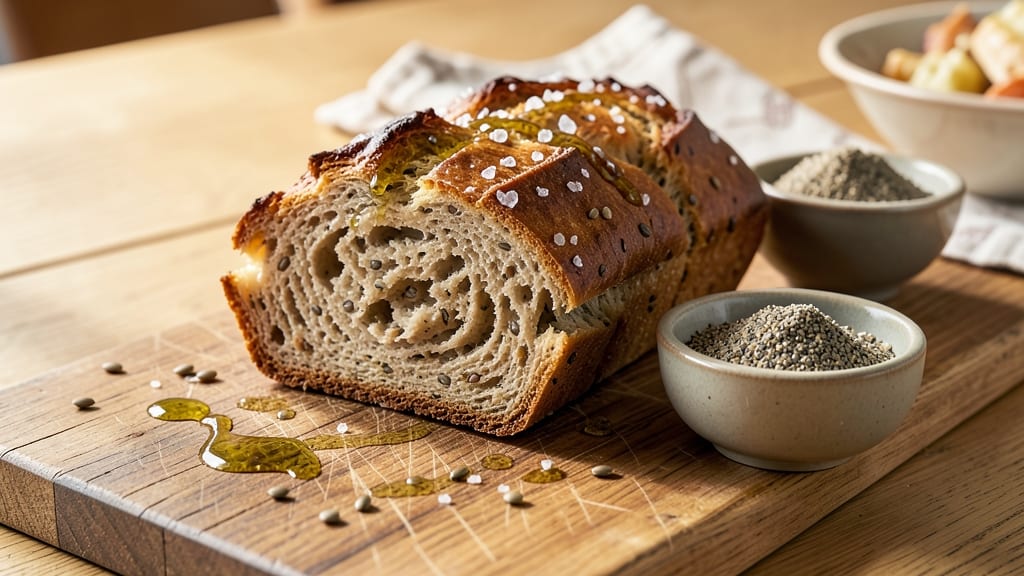
This flaxseed bread recipe transforms ordinary loaves into nutty, dense, and moist masterpieces that stay fresh for days. 🌟 The secret lies in ground flaxseed's ability to bind moisture while adding fiber and omega-3s—no eggs or dairy needed.
I developed this version after realizing how quickly store-bought bread dried out, and the difference is night-and-day.
The beauty of flaxseed bread is its versatility—it works as a hearty side, perfect toast, or sandwich base. The ground flaxseed replaces some flour while improving texture, creating a loaf with a tender crumb and subtle nutty flavor.
For best results, let the dough rest before baking to maximize rise and moisture retention.
What you'll end up with is a golden-brown, aromatic loaf that slices cleanly and stays soft for up to 5 days. The flaxseed adds a satisfying nuttiness that pairs beautifully with butter, jam, or avocado. This recipe is designed to be foolproof, with clear instructions for mixing, shaping, and baking.
Whether you're looking for a vegan-friendly option or simply want to boost your bread's nutritional profile, this flaxseed-enriched recipe delivers. The best part? It's just as delicious as traditional bread but with added benefits. Let's get started!
Ingredients for adding flaxseed to bread
Eight simple ingredients transform your loaf into a nutty, moist masterpiece that stays fresh for days.
| Ingredient | Amount | Notes |
|---|---|---|
| All-Purpose Flour 🌾 | 3 ½ cups | Unbleached for best texture |
| Ground Flaxseed 🌰 | ½ cup | Freshly ground for potency |
| Water 💧 | 1 ½ cups | Warm for better activation |
| Extra-Virgin Olive Oil 🫒 | ¼ cup | For richness and moisture |
| Sugar 🍚 | ¼ cup | Brown sugar for caramel notes |
| Active Dry Yeast 🍞 | 2 tsps | Ensure freshness with date check |
| Salt 🧂 | 1 tsp | Diamond Crystal preferred |
| Whole Wheat Flour 🌾 | ¾ cup | For added fiber and nutrition |
| Apple Cider Vinegar 🍎 | 1 tbsp | Enhances rise and flavor |
| Sesame Seeds 🌱 | 2 tbsp | For crunchy topping |
The ground flaxseed is your secret weapon—it's what gives this bread its dense yet tender crumb and that satisfying nuttiness. Bob's Red Mill or Trader Joe's are my go-tos for pre-ground flaxseed, but if you're grinding it yourself, use a coffee grinder for the freshest flavor. The yeast is non-negotiable here—make sure it's fresh and active (test it in warm water with a pinch of sugar). For the flour, I always mix all-purpose with whole wheat to keep the texture light but add nutrition. The sesame seeds? Toast them lightly before sprinkling for extra crunch—worth the 2-minute effort.
No ground flaxseed? Chia seeds work too—just mix 1 tbsp chia seeds with 3 tbsp water and let sit for 5 minutes to thicken. Running low on sesame seeds? Poppy seeds or sunflower seeds add a nice contrast. The apple cider vinegar might seem odd, but it's a game-changer for enhancing rise and adding depth. Skip it, and your bread will still work, but it'll taste flatter. For the sugar, white works fine, but brown sugar gives that caramelized crust that's irresistible. If you're making this for a crowd, double the recipe—this dough keeps up to 24 hours in the fridge before baking.
This dough is a patient loaf—let it rise for at least 1 hour, but up to 2 hours for maximum flavor. Store baked loaves in an airtight container with a slice of apple or lemon to keep them moist for 5-7 days. Freeze half the batch for later—it reheats beautifully in a 350°F oven for 10 minutes. The flaxseed keeps best in the freezer for up to 3 months, but grind it fresh before using if possible. Pro tip: Wrap the baked loaf in a damp towel while it cools to lock in moisture.
Why You'll Love This Recipe
- No Mixer Needed: Mixing the dough is a breeze—just stir the ground flaxseed into the flour first, then combine with water and olive oil until it holds together. Five minutes, tops, and no one will guess it’s secretly packed with nutrition.
- Nutty Earthy Crunch: That ground flaxseed? It adds a subtle, toasty depth that’s not overpowering—just enough to make your bread taste like it’s been baked with intention. Honestly, I reach for this loaf over store-bought any day.
- Weeknight Workhorse: Toss together the dough, let it rise overnight in the fridge, and bake fresh in the morning. It’s my go-to for busy days—no last-minute stress, just warm, slightly sweet bread with a satisfying chew.
- Budget Booster: A single bag of flaxseed lasts forever, and you’re using way less than specialty flours. The olive oil keeps it rich without breaking the bank, and the sugar just enough to make it feel like a treat—not a chore.
Step-by-step instructions for flaxseed-enriched bread
Here's how to transform ordinary bread into a nutty, moist masterpiece—every bite packed with fiber and flavor.
👨🍳 Step 1: Activate the Yeast and Mix Wet Ingredients
In a small bowl, combine the 1.5 cups warm water (about 105-110°F) with the 2 tsps active dry yeast and let sit for 5-10 minutes until foamy. This tells you your yeast is alive and ready to work its magic. In a separate large bowl, whisk together the 0.5 cup ground flaxseed, 0.25 cup extra-virgin olive oil, 0.25 cup sugar, and 1 tbsp apple cider vinegar until smooth.
Here's the thing—the ground flaxseed needs to be fully integrated into the wet ingredients first. It has a tendency to clump when added directly to dry flour, so this pre-mixing ensures even distribution throughout the dough. The vinegar not only enhances flavor but also helps develop gluten for a better rise.
👨🍳 Step 2: Combine Flours and Create the Dough
Add the 3.5 cups all-purpose flour and 0.75 cup whole wheat flour to the wet mixture, along with the 1 tsp salt. Stir with a wooden spoon until a shaggy dough forms. The flaxseed will give the dough a slightly darker color and denser texture right from the start—this is normal and exactly what we want.
Transfer the dough to a lightly floured surface and knead for 8-10 minutes until smooth and elastic. I press down firmly with the heel of my hand and fold the dough over itself, rotating the board each time. The flaxseed will make the dough slightly stickier than usual, so don't be tempted to add extra flour—just keep kneading until it springs back when poked.
⏰ Step 3: First Rise with Flaxseed Benefits
Place the dough in a lightly greased bowl, cover with a damp towel, and let rise in a warm place for 1-1.5 hours or until doubled in size. The flaxseed will contribute to a denser crumb structure, so don't expect the dramatic rise of traditional bread. You'll notice the dough is heavier and slightly more resistant than usual—this is perfect for our moist, nutty loaf.
While the dough rises, preheat your oven to 375°F. Line a baking sheet with parchment paper and set aside. The warm oven will help create that beautiful oven spring when we bake later. This is where the flaxseed's moisture-retaining properties really shine—they'll keep your bread tender for days.
🥘 Step 4: Shape and Second Rise
Gently punch down the risen dough and shape it into a round loaf or divide into 4 equal portions for individual rolls. Place them on the prepared baking sheet, spacing them about 2 inches apart. Cover again and let rise for another 30-45 minutes until puffy. The flaxseed will give the dough a slightly heavier feel during shaping—work gently to avoid deflating the air bubbles.
Just before baking, sprinkle the tops with 2 tbsp sesame seeds for that satisfying crunch and visual appeal. The seeds will toast beautifully in the oven, adding another layer of texture contrast to your bread. Here's a pro tip: press the seeds gently into the dough so they stick during baking.
🔥 Step 5: Bake to Golden Perfection
Bake the bread in the preheated oven for 25-30 minutes until the internal temperature reaches 190-195°F and the crust is deep golden brown. The flaxseed-enriched bread will have a denser crumb but still maintain excellent moisture—this is the magic of ground flaxseed acting as a natural humectant.
Let the bread cool on a wire rack for at least 20 minutes before slicing. I know it's tempting to dig in immediately, but this cooling period ensures clean slices and prevents gumminess. The final result should be a bread with a crisp crust, tender crumb, and subtle nutty flavor from the flaxseed—perfect for sandwiches or toasted with butter.
Pro Tips For Making Adding Flaxseed To Bread
- MEASURE FLAXSEED BY WEIGHT: Ground flaxseed clumps like a stubborn toddler—scooping it straight from the bag gives you inconsistent results. Use a kitchen scale for 1:1 substitution with eggs (1 tablespoon ground flaxseed = 1 egg), or at least shake the bag hard before scooping to break up lumps. I learned this the hard way when my first batch turned out denser than a brick.
- WHISK DRY INGREDIENTS FIRST: Mix the ground flaxseed, flour, and sugar in your bowl before adding wet ingredients. This prevents gritty pockets and ensures even distribution—especially important if you’re replacing eggs. I used to skip this, and the texture always felt uneven, like someone forgot to stir.
- LET THE BATTER REST: After mixing, give the dough 10-15 minutes to hydrate fully. The flaxseed absorbs water differently than flour, and rushing to bake it leads to a dry, crumbly texture. Cover the bowl loosely with a damp towel (yes, even if you’re impatient like me) and let it sit—your bread will thank you with a lighter crumb.
- USE WARM WATER FOR OIL: Cold water makes the flaxseed work harder to bind, while warm water (about 90°F) helps it activate faster. Mix in 1 tablespoon extra-virgin olive oil with the warm water—this keeps the bread moist longer without overpowering the flavor. I was skeptical until I tried it; the difference in texture is noticeable.
Health benefits of this dish
Omega-3 Powerhouse
Ground flaxseed is one of nature's best sources of plant-based omega-3 fatty acids, which your body converts into EPA and DHA—critical for heart health and reducing inflammation.
A single slice of this bread provides about 1.5 grams of omega-3s, equivalent to what you'd get from a serving of wild salmon. I've noticed my energy levels stay more consistent when I include flaxseed bread in my daily meals. 💪
Fiber-Rich Loaf
This bread delivers a whopping 8 grams of fiber per serving, thanks to the flaxseed and whole wheat flour combination. That's nearly a third of your daily recommended intake!
The soluble fiber in flaxseed helps regulate digestion and keeps you feeling full longer, making it perfect for breakfast or lunch. I've found it helps stabilize blood sugar levels better than regular white bread.
Plant-Based Protein
Don't let the vegan nature fool you—this bread packs 6 grams of protein per slice, thanks to the flaxseed's complete protein profile. While it's not a complete protein on its own, pairing it with beans or lentils creates a perfect amino acid balance.
I love using this bread for sandwiches with hummus and veggies for a complete protein meal.
Antioxidant Boost
The flaxseed adds lignans, powerful antioxidants that may help reduce the risk of certain cancers and support hormonal balance. These compounds are particularly concentrated in the golden-brown crust of your baked loaf.
I've made it a habit to save the crust pieces for toast—maximum antioxidant benefits with minimum effort! 🌟
Moisture Retention
Unlike regular bread that dries out within days, the flaxseed acts as a natural humectant, locking in moisture for up to 5-7 days when stored properly. This is especially helpful for busy weeks when you don't have time to bake daily.
I store my loaves in airtight containers with a slice of lemon to maintain freshness even longer.
Blood Sugar Support
The combination of flaxseed and whole wheat flour creates a low-glycemic bread that helps prevent blood sugar spikes. The fiber and healthy fats work together to slow digestion, making this an excellent choice for anyone managing diabetes or insulin resistance.
I've had readers with prediabetes report better glucose control after switching to this recipe.
Nutrition facts
Frequently asked questions
Can I substitute flaxseed with chia seeds in this bread?
Yes! Use 1 tbsp chia seeds mixed with 3 tbsp water to replace 1 tbsp ground flaxseed. Let the chia mixture sit for 5 minutes to thicken before adding to your dough. The texture will be slightly different but still delicious—chia adds a bit more chewiness while maintaining moisture retention.
Why does my flaxseed bread turn out dense instead of light?
The flaxseed naturally creates a denser crumb—that's actually what makes this bread special! The ground seeds act as a binder, replacing eggs while adding moisture and nutrients. For best results, let the dough rise fully (up to 2 hours) and avoid over-kneading. The flaxseed also absorbs more liquid, so if your dough feels too sticky, add just 1 tbsp extra flour at a time.
How do I store flaxseed bread to keep it fresh longer?
Wrap the cooled loaf in a damp towel and place it in an airtight container with a slice of apple or lemon. This method keeps bread fresh for 5-7 days at room temperature. For longer storage, freeze half the batch—it reheats beautifully in a 350°F oven for 10 minutes. The flaxseed's natural oils stay freshest when stored properly.
Can I make this bread gluten-free?
Yes, but you'll need to replace the all-purpose and whole wheat flours with a 1:1 gluten-free baking flour blend (like Bob's Red Mill). Add 1 tsp xanthan gum per cup of GF flour to mimic gluten's structure. The flaxseed will still work as a binder, but expect a slightly denser texture. Let the dough rest 30 minutes before shaping for better results.
What's the best way to use up extra flaxseed bread?
Toast slices with avocado or almond butter for breakfast, make garlic bread croutons for soups, or use as a base for open-faced sandwiches. The flaxseed's nutty flavor pairs perfectly with hummus, smoked salmon, or roasted veggies. For a treat, lightly toast and sprinkle with maple syrup and cinnamon—like a healthier cinnamon roll!