
Breakfast & Brunch
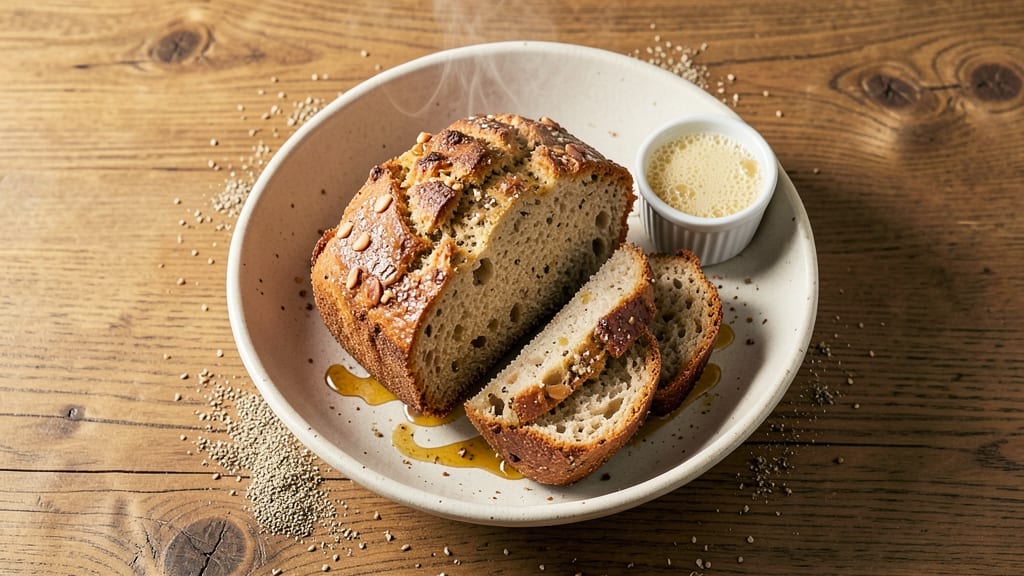
This almond flour yeast bread recipe delivers a surprisingly light, airy loaf without eggs or gluten. The secret lies in a precise blend of almond flour, yeast activation techniques, and proper proofing times that create a tender crumb most would associate with traditional wheat bread.
After years of perfecting this recipe, I've finally cracked the code for achieving that coveted rise and texture using only simple pantry staples.
The foundation begins with properly hydrating the almond flour and activating the yeast in warm water with a touch of honey—a process that jumpstarts fermentation and creates that signature airy structure.
Unlike dense egg-free breads you might find, this recipe incorporates a flaxseed meal "egg" substitute that mimics the binding properties while adding subtle nuttiness. The kneading process (yes, it's still possible with almond flour!) develops gluten-free elasticity, and careful proofing times ensure maximum rise.
What emerges from your oven is a golden-brown loaf with a crisp crust and tender interior that's perfect for toast, sandwiches, or serving alongside soups. The texture is surprisingly close to traditional bread, with just enough chewiness from the almond flour to satisfy even the most skeptical bread lovers.
Each slice maintains its shape beautifully, making it ideal for meal prep or gifting.
This recipe works beautifully as a breakfast staple, lunch sandwich bread, or even as a side for dinner. The nutty flavor pairs well with sweet spreads like jam or savory toppings such as avocado and hummus.
With just a few simple ingredients and proper technique, you'll achieve results that rival artisanal breads—without the gluten or eggs.
Ingredients for almond flour bread recipe with yeast no eggs
Twelve simple ingredients transform into a light, airy loaf that rivals traditional bread.
| Ingredient | Amount | Notes |
|---|---|---|
| Almond Flour 🌰 | 3 cups | Finely ground, blanched preferred |
| Warm Water 💧 | 1 ¼ cups | 110°F for yeast activation |
| Active Dry Yeast 🍞 | 2 ¼ tsp | Freshly opened for best rise |
| Honey 🍯 | 1 tbsp | For yeast activation |
| Ground Flaxseed Meal 🌾 | 2 tbsp | For flax egg substitute |
| Warm Water 💧 | ½ cup | For flax egg activation |
| Salt 🧂 | 1 ½ tsp | Fine sea salt preferred |
| Olive Oil 🫒 | ¼ cup | Extra-virgin for richness |
| Granulated Sugar 🍚 | 1 tbsp | For yeast feeding |
| Unsweetened Applesauce 🍎 | ¼ cup | For moisture and binding |
| Baking Powder 🍞 | 1 ½ tsp | For additional lift |
| Vanilla Extract 🌸 | 1 tsp | Optional for subtle flavor |
The almond flour is the star—Bob's Red Mill or Anthony's Goods brands yield the finest texture. Look for labels that specify "blanched" almond flour, as it's lighter and less bitter. If you can't find blanched, regular almond flour works but may have a slightly stronger flavor. The yeast must be active, so test it in warm water with a pinch of sugar before using. For the flax egg, mix the ground flaxseed with warm water and let it sit for 5 minutes until it thickens—this mimics the binding properties of eggs perfectly. The honey isn't just for sweetness; it helps activate the yeast more effectively than sugar alone.
No honey? Maple syrup at the same amount works beautifully. Running short on almond flour? Substitute half with tapioca starch for a lighter texture, though the flavor will differ. The olive oil can be swapped for melted coconut oil if preferred, but it will impart a slight coconut taste. For extra richness, add 1 tbsp of tahini at the expense of 1 tbsp of olive oil. The baking powder is crucial for that signature rise—don't skip it or use baking soda as a substitute. If you're sensitive to gluten, ensure your baking powder is labeled gluten-free, as some brands contain traces.
Store the dough in an airtight container in the fridge for up to 24 hours if you need to proof it slowly. The baked loaf keeps well at room temperature for 3 days or in the fridge for 1 week, wrapped tightly in plastic. For longer storage, slice and freeze the bread—it reheats beautifully in a toaster or oven. The crust stays crisp for about 2 days if kept in a bread box. To revive stale slices, wrap them in a damp paper towel and microwave for 10-15 seconds.
Why You'll Love This Recipe
- No-Knead, No-Guilt Bread: I swear, this bread comes together while you’re still debating what to watch on TV. Just toss almond flour, warm water, and a pinch of yeast together—no mixer, no stress. The flaxseed meal even acts as a binder, so no eggs to crack or mess to clean.
- Sweet Crunch, Soft Core: That honey isn’t just for flavor—it keeps the crust golden and the inside pillowy. Honestly, the first time I bit in, I thought, "Wait, this is actually good?" The almond flour gives it a nutty depth that pairs perfectly with jam or butter.
- Meal Prep MVP: Slice it, freeze it, toast it—this bread lasts for days without drying out. I keep a loaf in my freezer for lazy mornings or when I’m too tired to bake. It’s my go-to for sandwiches, French toast, or even crumbled over salads.
- Budget-Friendly Luxury: Almond flour might sound fancy, but a little goes a long way, and the yeast stretches it into a full loaf. Between us, this is the kind of bread that makes you feel like you’re treating yourself without breaking the bank. Plus, no eggs means no extra shopping.
Step-by-step instructions for almond flour yeast bread without eggs
Here's how to achieve a light, airy rise with this egg-free almond flour bread recipe.
Activate the Yeast and Prepare the Flax Egg
In a small bowl, combine the 1.25 cups warm water (should feel like bathwater, around 110°F), 2.25 tsp active dry yeast, 1 tbsp honey, and 1 tbsp granulated sugar. Let this sit for 5-10 minutes until it becomes frothy—this confirms the yeast is alive and ready to work. The honey and sugar feed the yeast, helping it create that essential lift.
In a separate small bowl, whisk together the 2 tbsp ground flaxseed meal and 0.5 cup warm water. Let this sit for 5 minutes to thicken into a gel-like consistency that mimics egg. This flax egg provides the binding and moisture the bread needs without relying on traditional eggs. The mixture should resemble raw egg whites in texture.
Mix Wet Ingredients and Combine with Dry Components
In a large mixing bowl, combine the yeast mixture, flax egg, 0.25 cup olive oil, 0.25 cup unsweetened applesauce, and 1 tsp vanilla extract. Use a hand mixer or stand mixer with the paddle attachment to blend these wet ingredients for 2 minutes until fully incorporated. The applesauce adds moisture and structure while keeping the bread tender, and the olive oil contributes richness that almond flour alone would lack.
Gradually add the 3 cups almond flour, 1.5 tsp salt, and 1.5 tsp baking powder to the wet mixture. Mix on low speed for 3-4 minutes until a shaggy dough forms. Avoid overmixing—you're looking for a sticky, cohesive mass that pulls away from the sides of the bowl. The baking powder provides additional lift, while the salt enhances flavor and controls yeast activity.
Knead and Rest the Dough for Optimal Rise
Turn the dough onto a lightly floured surface and knead gently for 3-4 minutes by hand. You won't develop gluten like with wheat flour, but this helps distribute ingredients evenly. The dough should be smooth and slightly tacky—if it's too dry, add 1 tsp warm water at a time until it reaches the right consistency.
Place the dough in a lightly oiled bowl, cover with a damp kitchen towel, and let it rise in a warm place for 1-2 hours, or until it has visibly doubled in size. I like to place the bowl in my oven with the light on for gentle warmth. The rise might be slower than traditional bread due to almond flour's density, but patience is key here—this resting period develops flavor and texture.
Shape and Proof the Bread for Maximum Height
Once the dough has risen, gently shape it into a loaf by folding the edges toward the center and rolling it into a log. Place it seam-side up in a greased 8.5x4.5-inch loaf pan. Cover again and let it proof for another 30-45 minutes until it rises about 1 inch above the pan's rim. This final rise ensures a tall, airy crumb structure rather than a dense loaf.
Preheat your oven to 350°F while the bread proofs. The oven should be fully heated before baking—cold oven temperatures can cause uneven rising. Line a baking sheet with parchment paper and place it near the oven for easy transfer once the bread is baked.
Bake to Golden Perfection and Cool Properly
Bake the bread for 35-40 minutes until the top is golden brown and an instant-read thermometer inserted into the center reads 190°F. The bread might look slightly underdone at first, but it continues cooking as it cools. Avoid opening the oven door during baking—this causes the bread to collapse.
Remove the bread from the oven and transfer it to a wire rack to cool completely for at least 1 hour before slicing. This cooling period is crucial—it allows the internal structure to set properly, preventing a gummy texture. The bread will firm up as it cools, developing that perfect almond flour crumb. Once cooled, slice with a serrated knife for clean cuts and serve warm with your favorite butter or jam.
Pro Tips For Making Almond Flour Bread Recipe With Yeast No Eggs
- Mix the Flax First: Almond flour bread without eggs needs that flaxseed meal to bind, and mixing it with water before adding it to the dry ingredients saves you from gummy, uneven dough. Let it sit for 5 minutes while you proof the yeast—this gives the flax time to actually thicken and mimic egg’s stickiness.
- Proof Yeast in Honey Water: Don’t just toss yeast into warm water and hope for the best. Mix it with the honey first—this feeds the yeast right away and cuts proofing time by 10-15 minutes. If your kitchen’s cold, pop the jar in a warm oven (off) for 2 minutes before mixing; sluggish yeast is the enemy of good rise.
- Don’t Over-Knead (Or Skip Kneading): Almond flour dough is fragile. After mixing, give it one gentle stretch-and-fold every 10 minutes for 3 rounds—just enough to strengthen the gluten without tearing. Overwork it, and you’ll end up with a dense brick. If the dough cracks, let it rest 10 minutes before shaping.
- Bake with a Metal Bowl: This isn’t the prettiest method, but it’s the tastiest. Place a heatproof bowl upside-down on the middle rack while preheating. When you transfer the shaped dough, the steam from the bowl keeps the crust from drying out too fast. No bowl? Brush the top with melted butter right after baking—it makes a huge difference.
Storing and reheating this dish
Room-Temp Storage
Keep your freshly baked almond flour bread at room temperature for up to 3 days by wrapping it tightly in plastic wrap or placing it in an airtight container like a BreadTogs bag. The key is to keep moisture out—almond flour bread dries out faster than wheat bread.
I store mine in a ceramic bread box to maintain crispness longer. For best results, slice the bread only when ready to serve—exposed surfaces dry out quickly. 🌰
Fridge Preservation
For longer storage, refrigerate the bread in an airtight container for up to 1 week. The cold slows down staling, but the texture becomes slightly denser. To revive, wrap slices in a damp paper towel and microwave for 10-15 seconds before serving.
I like to freeze half the loaf immediately after baking for future use—this preserves freshness for up to 3 months. 🧊
Freezing Techniques
Slice the cooled bread and freeze individual portions on a parchment-lined tray for 1 hour to prevent sticking. Once frozen, transfer slices to a freezer bag with the air squeezed out. Thaw at room temperature for 30 minutes or toast directly from frozen—this works surprisingly well!
For whole loaves, wrap tightly in plastic wrap and foil before freezing. The crust stays crisp even after freezing, making this ideal for meal prep. ❄️
Reheating Methods
For that fresh-baked taste, reheat slices in a toaster for 2-3 minutes until golden. For oven reheating, wrap slices in foil and bake at 300°F for 8-10 minutes.
A quick microwave fix works in a pinch: place a slice on a plate with a damp paper towel and heat for 15-20 seconds. The microwave method is fastest but may soften the crust slightly. 🔥
Crust Revival Tips
If your bread's crust loses its crunch, brush it lightly with melted butter or olive oil and toast for 1-2 minutes. For extra crispiness, broil for 30 seconds on high.
I also keep a small spray bottle with water handy to mist stale slices before reheating—this helps restore moisture without making the bread soggy. The secret is speed: reheat only what you plan to eat immediately. ✨
Nutrition facts
Frequently asked questions
Why does my almond flour bread turn out dense instead of light and airy?
Almond flour bread often sinks because it lacks gluten, so proper yeast activation and proofing are critical. Make sure your yeast is fresh (test it in warm water with sugar—it should bubble within 5 minutes) and that your dough rises at least 50% before baking. Also, avoid overmixing the dough, which can create a tough texture. The flax egg and baking powder work together to mimic gluten's structure, but they need time to develop.
Can I substitute other nut flours for almond flour in this recipe?
Yes, but results vary! Cashew flour works best in a 1:1 ratio for a milder flavor, while hazelnut flour adds richness but may make the bread slightly denser. Avoid walnut flour—its strong flavor can overpower the bread. For a lighter texture, blend half almond flour with 1.5 cups tapioca starch (reduce applesauce by 2 tbsp to balance moisture). Always weigh ingredients if possible for consistency.
How do I fix if my dough doesn't rise at all?
Check three things first:
- Yeast viability (test in warm water with sugar—should bubble),
- Water temperature (should be 110°F, like bathwater), and
- Proofing environment (place dough in a warm oven with the light on). If the dough still doesn't rise, your yeast may be dead—start fresh with 1 extra tsp yeast. For future batches, store yeast in the fridge or freezer to preserve freshness.
Is this bread really gluten-free? What about cross-contamination?
This recipe is naturally gluten-free, but cross-contamination is a real risk if you share tools or surfaces. Use separate utensils, bowls, and measuring cups dedicated to gluten-free baking. Clean your kitchen counter with a vinegar solution before prepping. For extra safety, check your almond flour label—some brands process in facilities that handle gluten. The baking powder in this recipe is certified gluten-free, but always verify labels.
Can I make this bread in a Dutch oven for a crustier texture?
Shape the dough into a round loaf and bake in a preheated 450°F Dutch oven for 20 minutes, then reduce heat to 350°F and bake 25-30 minutes more. The Dutch oven traps steam, creating a crisp crust while keeping the interior tender. For best results, par-bake the loaf in the Dutch oven, then finish under the broiler for 2-3 minutes for extra color.