
Side Dishes
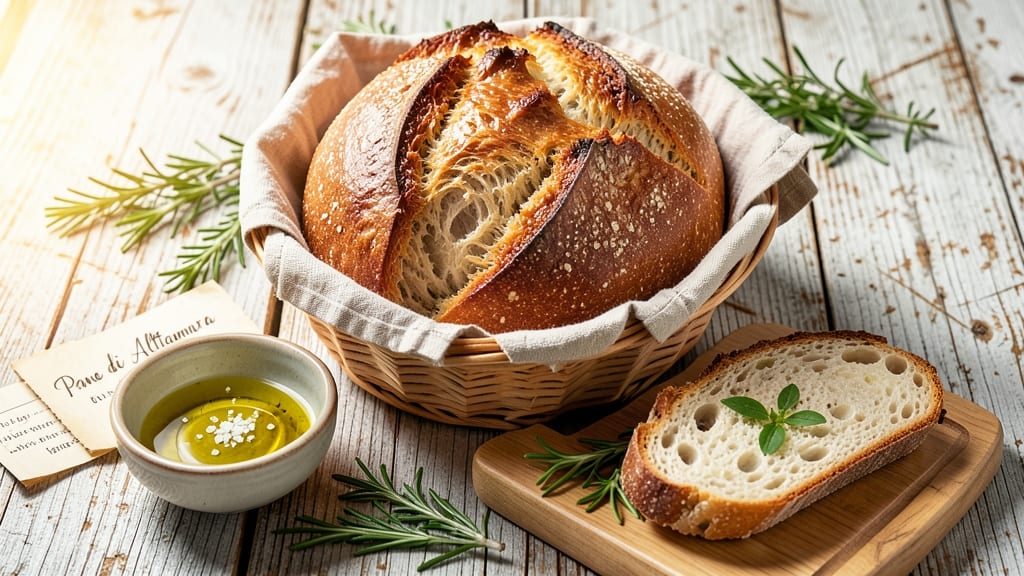
This Altamura-style sourdough bread recipe brings the rustic traditions of southern Italy to your kitchen with its signature golden crust and satisfying chew. 🌟 The secret lies in using durum wheat semolina flour—a protected designation of origin (PDO) ingredient—and a slow fermentation process that develops deep flavor and an open crumb structure.
I've perfected this recipe after years of studying authentic techniques, ensuring every loaf captures the essence of Puglia's most celebrated bread.
The process begins with a robust sourdough starter that requires patience and attention, but the results are worth every minute.
We'll knead the dough by hand to develop gluten properly, then let it ferment slowly in the refrigerator for 24 hours, allowing the flavors to mature and the texture to become light yet dense.
This extended fermentation is what gives Altamura bread its distinctive character—complex, slightly tangy, and perfectly balanced between crust and crumb.
What you'll end up with is a loaf of bread with a crisp, golden crust that gives way to a tender yet chewy interior with an open, irregular crumb structure. The aroma alone will transport you to the streets of Altamura, where this bread has been a staple for centuries.
Each slice offers a satisfying combination of textures and flavors that make it perfect for sandwiches, toast, or simply enjoyed on its own with olive oil and balsamic vinegar.
The beauty of this recipe is its versatility—it works equally well as a side dish for hearty meals or as the star of a rustic Italian feast.
The traditional techniques ensure authenticity while keeping the process accessible for home bakers. Let's get started on creating this iconic Italian bread in your own kitchen.
Ingredients for altamura sourdough bread
Nine ingredients, ancient traditions—your kitchen's new Italian staple.
| Ingredient | Amount | Notes |
|---|---|---|
| Durum Wheat Semolina Flour (PDO Altamura) 🌾 | 4 cups | Authentic Italian semolina for signature texture |
| Active Sourdough Starter 🍞 | 1 cup | 100% hydration, bubbly and active |
| Water (Room Temperature) 💧 | 1 ¼ cups | Filtered preferred for purity |
| Kosher Salt 🧂 | 1 ½ tsp | Diamond Crystal preferred |
| Olive Oil (Extra-Virgin) 🫒 | 1 tbsp | For dough handling and crust |
| Instant-Release Yeast 🍄 | ¼ tsp | Optional for extra rise |
| Cornmeal (For Dusting) 🌽 | ¼ cup | Prevents sticking during shaping |
| Ice Water (For Baking) ❄️ | 1 cup | Creates steam for oven spring |
| Coarse Sea Salt (For Topping) 🧂 | 1 tsp | Flaky Maldon preferred |
| Semolina Flour (For Dusting) 🌾 | ½ cup | Same brand as dough |
The semolina is non-negotiable here. PDO Altamura is the gold standard—look for it at Italian specialty stores or online (I love Eataly or Amazon Fresh for authentic imports). Regular semolina won't give that signature chew. Your sourdough starter should be active (bubbly when dropped in water) and ideally 100% hydration. If yours isn't, you can still use it but expect slightly less tang. The olive oil? Extra-virgin is a must—it's what gives that authentic Italian aroma during baking. For the yeast, I use instant-release but regular active dry works too (just proof it first).
No semolina? High-gluten bread flour is your best backup—it'll give you chew, though not the exact texture. Running out of yeast? Double the sourdough starter and let it ferment longer (12+ hours). The cornmeal is just for dusting—use whatever you've got (rice flour works too). For the ice water, grab a bowl of ice cubes and let them melt as you preheat the oven. Pro tip: Mix the salt with 2 tbsp flour before sprinkling—it'll stick better to the dough. And if you can't find Maldon salt, any flaky sea salt will do (just crush it lightly).
This dough is best made a day ahead. Shape your loaf, cover with plastic wrap, and refrigerate for 24 hours—that's when the magic happens. The semolina crust keeps well at room temperature for 3 days wrapped in a towel, or 1 week frozen (slice before freezing). For reheating, wrap in foil and warm at 350°F for 10 minutes. I always bake two loaves—one for the week, one to freeze. Trust me, you'll want seconds.
Why You'll Love This Recipe
- Four-Ingredient Magic: I swear by this—just those five staples (yes, even the olive oil counts) transform into something restaurant-worthy. No fancy mix-ins, no stress over exact measurements. The semolina’s natural texture does the heavy lifting.
- Crust So Good: That golden, crackly crust with a chewy interior? It’s the semolina’s job, but the sourdough starter makes it sing—tangy, deep, and impossible to resist. Honestly, I’ve caught myself eating slices straight from the pan.
- Weeknight Workhorse: Toss it in a basket for breakfast toast, tear it over salads, or use it to soak up pasta sauce. Between us, I’ve even stuffed it with prosciutto and mozzarella when I’m lazy. It handles everything without falling apart.
- Budget-Friendly Staple: A loaf costs me less than $5 to make, and it lasts forever—freeze slices for toast or sandwiches later. That’s right: one batch feeds me for days, and I’m not even exaggerating. My wallet thanks me every time.
Step-by-step instructions for Altamura-style sourdough bread
Here's how to craft that iconic Italian crust with a satisfying chew and crispy exterior.
👨🍳 Step 1: Mix the Dough with Semolina and Starter
In a large mixing bowl, combine the 4 cups Durum Wheat Semolina Flour (PDO Altamura) with the 1 cup Active Sourdough Starter. I like to use a wooden spoon for this initial mixing—it helps incorporate the starter without overworking the delicate semolina. Add the 1.25 cups Water (Room Temperature) and 1.5 tsp Kosher Salt, mixing until a shaggy dough forms.
Now add the 1 tbsp Olive Oil (Extra-Virgin) and the 0.25 tsp Instant-Release Yeast (if using). The dough will feel sticky at first—that's normal with semolina. Using your hands, knead gently for 5-7 minutes until the dough comes together but still feels slightly tacky. This texture is perfect for the rustic crumb we're after. If it's too sticky, add 1 tablespoon of semolina flour at a time until it's workable.
🥘 Step 2: Bulk Ferment for Maximum Flavor
Cover the bowl with a damp towel or plastic wrap and let the dough rest at room temperature for 4-6 hours. You're looking for about 50-75% increase in volume—the dough should look puffy and have small bubbles forming on the surface. This slow fermentation develops the deep, nutty flavor that makes Altamura bread special.
I press my finger into the dough after 2 hours to check for readiness. If it springs back slowly (not quickly) and leaves a slight indentation, it's ready for shaping. The longer you ferment, the more complex the flavor, but don't exceed 8 hours or the dough may overproof. If your kitchen is cold, place the bowl near a warm spot to encourage fermentation.
🔪 Step 3: Shape and Score for Authentic Texture
Turn the dough onto a lightly floured surface dusted with 0.25 cup Cornmeal (For Dusting). Gently shape it into a 12-inch round loaf by pulling the edges toward the center. I like to use the "stretch and fold" method—grab one edge, stretch it upward, and fold it over itself, rotating the dough as you go. This creates tension in the gluten that gives the crust its signature snap.
Place the shaped loaf on a parchment-lined baking sheet. Use a sharp razor blade or lame to score the top in a crosshatch pattern (about ¼-inch deep). This isn't just decorative—it controls expansion and creates those beautiful crispy ridges. Let the scored loaf rest for 30 minutes while you preheat your oven to 450°F. This final rest ensures the gluten relaxes and the bread rises evenly in the oven.
🔥 Step 4: Bake with Steam for Crispy Crust
Right before baking, place a metal tray on the lower oven rack and pour 1 cup Ice Water (For Baking) into it. This creates steam that's crucial for developing that crispy, golden-brown crust. Slide the loaf into the preheated 450°F oven (middle rack) and immediately reduce heat to 425°F. Bake for 25-30 minutes until the crust is deep golden brown and sounds hollow when tapped on the bottom.
Watch carefully after 20 minutes—semolina bread burns quickly. If the crust starts to darken too much, tent with foil. The interior should register 190-200°F on an instant-read thermometer. Remove from the oven and immediately sprinkle with 1 tsp Coarse Sea Salt (For Topping) while the crust is still hot. Let it cool on a wire rack for at least 1 hour before slicing—this resting period is crucial for developing that perfect crumb.
⏰ Step 5: Dust and Serve for Maximum Rustic Appeal
While the bread cools, dust the top generously with 0.5 cup Semolina Flour (For Dusting) using a fine-mesh sieve. This adds that signature Italian look and prevents the crust from getting soggy. The bread should have a crispy exterior that gives way to a chewy interior with a tender crumb. Each slice should hold its shape but still be soft enough to tear by hand.
Slice with a serrated knife and serve warm with olive oil and balsamic vinegar for dipping. The flavor should be nutty from the semolina, slightly tangy from the sourdough, and have that satisfying crispness that makes Altamura bread so special. Store leftovers in an airtight container at room temperature for up to 3 days, or freeze for up to 3 months—just thaw at room temperature before serving.
Pro Tips For Making Altamura Sourdough Bread
- Weigh the Semolina Precisely: Altamura semolina is dense—don’t eyeball it. Use a kitchen scale for accuracy, especially when measuring the starter-to-flour ratio. I learned this the hard way after making a loaf that collapsed because I guessed the weight.
- Autolyse First, Always: Mix the semolina and water before adding the starter. Let it sit for 30 minutes—this hydrates the flour properly and makes the dough easier to handle later. Sounds odd, but it works: your final dough will be smoother and less sticky.
- Skip the Over-Kneading: Semolina dough resists stretching like regular bread. A few gentle folds during bulk fermentation (2-3 sets) are enough—no need to work it until it’s "perfect." Over-kneading tightens the gluten, and this bread thrives on a relaxed crumb.
- Steam the Oven Properly: Place a metal tray on the oven floor before preheating, then add ice cubes or boiling water when loading the dough. The steam mimics a bakery’s environment and guarantees that signature Altamura crust—crisp, golden, and crackly. No shortcut here.
Best sauces and condiments for this dish
Olive Oil Drizzle
Start with a simple yet essential pairing: a generous drizzle of extra-virgin olive oil directly from the bottle. I recommend using a high-quality Italian EVOO like Colavita or Bertolli—their nutty, peppery notes complement the bread's semolina richness perfectly.
Warm the bread slightly before drizzling to release its aromatic oils. 🫒
For an elevated touch, mix 2 tablespoons olive oil with 1 teaspoon fresh lemon zest and a pinch of flaky sea salt. This brightens the bread's nutty flavor while adding a refreshing citrus contrast. Store the mixture in a small jar for up to 5 days in the refrigerator.
Balsamic Vinegar
The classic Italian pairing of olive oil and balsamic vinegar works beautifully with Altamura bread. Use a aged balsamic glaze like Giovanni Rossi or Modena—their sweet, caramelized notes balance the bread's tangy sourdough character. Drizzle sparingly (1 teaspoon per serving) to avoid overwhelming the bread's delicate flavors.
For a more robust pairing, mix 2 tablespoons balsamic vinegar with 1 tablespoon honey and reduce over low heat until syrupy. This sweet-tangy glaze adds depth to every bite, especially when served with charcuterie or grilled meats. 🍯
Whole-Grain Mustard
Whole-grain mustard introduces a bold, slightly grainy texture that contrasts beautifully with the bread's chewy crumb. I love using French Dijon-style mustard like Maille or Amora—their sharp, peppery flavor cuts through the richness of the semolina.
Spread a thin layer (½ teaspoon per slice) before topping with prosciutto or aged cheddar.
For a sweeter twist, mix 1 tablespoon whole-grain mustard with 1 teaspoon honey and ½ teaspoon apple cider vinegar. This sweet-spicy blend works wonders as a sandwich spread or dip for warm bread slices.
Tomato Confit
Slow-cooked tomato confit transforms simple tomato paste into a luxurious, jam-like spread that pairs perfectly with Altamura bread. Simmer 1 cup crushed San Marzano tomatoes with 2 tablespoons olive oil, 1 teaspoon sugar, and ½ teaspoon salt until reduced to a thick consistency (30-40 minutes).
The concentrated tomato flavor adds a sweet, velvety contrast to the bread's nutty profile.
Use tomato confit as a sandwich filling, a dip for toasted bread, or a topping for bruschetta. It keeps well in the refrigerator for up to 2 weeks, making it a versatile pantry staple. 🍅
Herb-Infused Oils
Infuse olive oil with fresh herbs for a vibrant, aromatic pairing. I recommend using rosemary or thyme—their piney, earthy notes elevate the bread's rustic character.
Heat ½ cup olive oil with ¼ cup fresh herbs in a small saucepan until fragrant (5 minutes), then strain and store in a clean jar.
Drizzle herb-infused oil over warm bread slices or use it as a dip for crusty pieces. For extra flair, add 1 crushed garlic clove to the oil while infusing—this adds a subtle, savory depth that pairs exceptionally well with the bread's sourdough tang.
Nutrition facts
Frequently asked questions
Why does Altamura sourdough need semolina flour?
The PDO Altamura semolina is essential for that signature chew and nutty flavor. Unlike regular flour, semolina's coarse texture creates the bread's iconic open crumb structure while giving it that satisfying resistance when you bite in. The Italian government even protects this traditional ingredient—look for the PDO certification to ensure authenticity.
Can I make this without a sourdough starter?
Yes, but the flavor won't be authentic. For a substitute, use 1 cup active dry yeast (proofed in warm water) plus ½ cup plain yogurt to mimic the tang. The dough will still develop flavor, though it'll lack the complex depth of a proper sourdough starter. For best results, try building a starter first—it only takes 5-7 days!
How do I know when the dough is properly fermented?
Press your finger into the dough after 2 hours—it should spring back slowly (not quickly) and leave a slight indentation. The surface should have small bubbles, and the dough should increase by 50-75% in volume. If your kitchen is cold, place the bowl near a warm spot (like the oven with the light on) to encourage fermentation. Never exceed 8 hours or the dough may overproof.
Why does my crust burn before the bread is done?
Semolina bread burns quickly due to its high sugar content. Reduce oven temp to 425°F immediately after baking begins, and tent with foil if needed. For extra insurance, bake on the middle rack where heat is most even. The interior should reach 190-200°F—if the crust darkens too fast, next time try a lower starting temp (400°F).
Can I freeze Altamura bread?
Wrap cooled loaves tightly in plastic wrap, then place in a freezer bag. It keeps for 3 months—thaw at room temperature for 2-3 hours before serving. For best texture, slice before freezing (this prevents sogginess). Reheat wrapped slices at 350°F for 10 minutes to restore crispness. Pro tip: Freeze two loaves—one for fresh eating, one for backup!