
Side Dishes
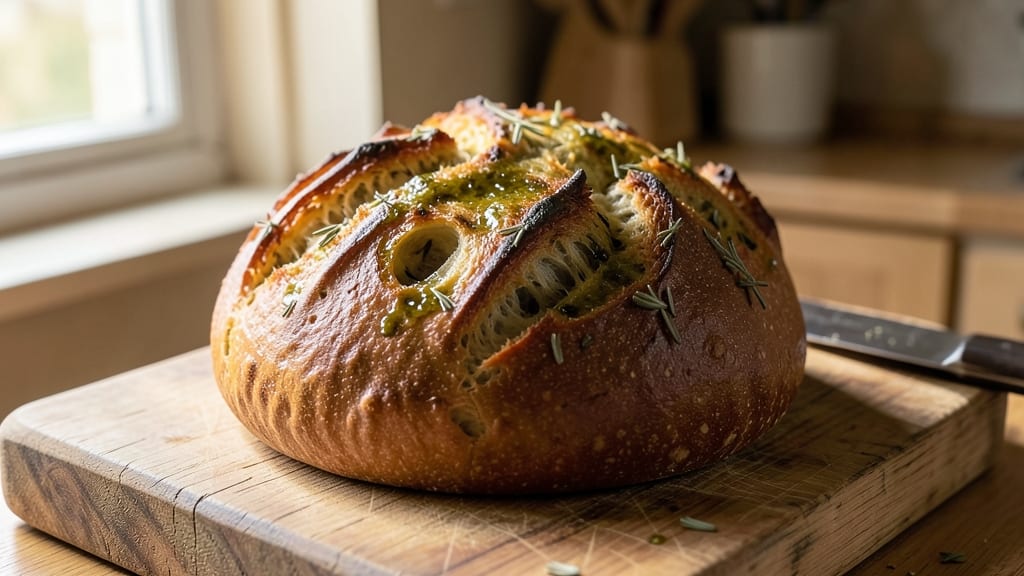
Alton Brown's Italian bread recipe transforms your kitchen into a rustic Italian bakery with just a few key techniques. This recipe captures his signature approach—rich olive oil infusion, aromatic herbs, and the perfect balance of crispy crust and airy crumb.
The secret lies in precise dough hydration and a slow bake that develops deep, golden color without burning.
What sets this apart is Alton's method of incorporating olive oil directly into the dough, creating a bread with intense flavor and a tender crumb. We'll use a mix of bread flour and all-purpose flour for structure, while fresh rosemary or thyme adds that signature Italian aroma.
The dough requires a long fermentation, which develops gluten and flavors—don't skip this step if you want that restaurant-quality texture.
By following these instructions, you'll achieve a loaf with a crispy, crackling crust that gives way to a soft, open crumb. The aroma alone will have everyone gathering around your kitchen.
This bread is perfect for serving alongside soups, dipping in olive oil, or simply enjoying with a slice of aged cheese.
The beauty of this recipe is its versatility—you can shape it into a classic boules, a rustic batard, or even a focaccia-style flatbread. We'll cover all the essential techniques for shaping and baking, plus troubleshooting tips for common issues like dense crumb or pale crust.
Let's get started on creating bread that tastes like it came straight from an Italian trattoria.
Ingredients for alton brown italian bread
Alton Brown's signature Italian bread relies on these simple, quality ingredients for that legendary crust and aroma.
| Ingredient | Amount | Notes |
|---|---|---|
| Bread Flour 🌾 | 3 ½ cups | High-protein for structure |
| All-Purpose Flour 🌾 | ½ cup | For lighter texture |
| Extra-Virgin Olive Oil 🫒 | ¾ cup | High-quality, fruity |
| Active Dry Yeast 🍞 | 2 ¼ tsp | Or 1 packet (7g) |
| Granulated Sugar 🍚 | 1 tbsp | Feeds yeast activation |
| Salt 🧂 | 1 ½ tsp | Diamond Crystal preferred |
| Fresh Rosemary 🌿 | 1 tbsp | Finely chopped, stems removed |
| Warm Water 💧 | 1 ¼ cups | 105-110°F for activation |
| Cornmeal 🌽 | ¼ cup | For dusting parchment |
| Coarse Sea Salt 🧂 | 1 tbsp | For crust enhancement |
| Ice Water ❄️ | ¼ cup | For final dough adjustment |
The yeast is everything here—King Arthur or Bob's Red Mill work best, but any active dry yeast will do. If your kitchen runs cold, pre-warm your water to 105°F (yeast hates cold water). The rosemary should be fresh, vibrant, and fragrant—Trader Joe's usually has great bundles. For the olive oil, California Avocado Ranch or Bertolli are solid choices, but splurge on something fruity if you can. The bread flour is non-negotiable—it's what gives you that professional baker's crumb. If you only have all-purpose, add an extra tablespoon of vital wheat gluten.
No rosemary? Fresh thyme or oregano works in a pinch, but reduce to half the amount. Running low on yeast? Instant yeast works 1:1, but don't use it as a substitute for active dry. The sugar can be swapped for honey (same amount), but it'll ferment faster. For the flour, King Arthur or Caputo Tipo 00 are ideal if you want to get fancy. The coarse sea salt? Maldon is perfect, but any flaky salt will do. Pro tip: if your dough feels too sticky, add ice water 1 tbsp at a time until it's just right—should be tacky but not wet.
This dough needs time—at least 4 hours at room temp or overnight in the fridge. The longer it ferments, the better it tastes. Shape your loaves on parchment dusted with cornmeal, then let them rest 30 minutes before baking. The bread keeps well for 3-4 days wrapped in a cotton towel, or freeze for up to 3 months. For reheating, 5 minutes at 350°F brings back that fresh-baked aroma. And trust me, it's worth the wait—everyone will think you're a professional.
Why You'll Love This Recipe
- No-Knead Magic: I swear by this trick—just mix the bread flour, all-purpose flour, yeast, and a touch of sugar, then let the dough rise while I handle dinner. The olive oil keeps it tender without fuss, and honestly? The hands-off rising makes it my go-to when I’d rather not be glued to the kitchen.
- Crust So Good: That crispy, golden crust with a pillowy interior? It’s all in the olive oil brush and the high-heat bake. The bread flour gives it structure, but the all-purpose keeps it from being too dense—perfect for soaking up marinara or just tearing into fresh.
- Every Meal Upgrade: I keep a loaf in the freezer for lazy mornings—just toast it, and it’s better than store-bought. Or tear it over salads, use it for garlic bread, or even crumble it into soups. Between us, this bread makes everything taste better, and it’s the easiest way to level up any plate.
- Budget-Friendly Staple: A single batch costs pennies, feeds my whole family, and lasts days. The yeast and sugar combo ensures it rises reliably, and the olive oil (even if it’s just a splash) keeps it from tasting like cardboard. I’ll be real: this is the kind of bread that makes grocery bills feel lighter.
Step-by-step instructions for Alton Brown's Italian bread
Here's how to craft that signature olive oil aroma and perfect crust—no shortcuts, just science-backed technique.
Activate the Yeast with Olive Oil and Rosemary
In a large bowl, whisk together the 1.25 cups warm water, 1 tbsp granulated sugar, and 2.25 tsp active dry yeast. Let this sit for 5-10 minutes until it becomes foamy—this confirms your yeast is alive and ready to work. If it doesn't bubble, start over with fresh yeast.
Next, stir in the 0.75 cup extra-virgin olive oil and 1 tbsp finely chopped fresh rosemary. The oil should emulsify slightly, creating a silky mixture. This isn't just flavor—it's the foundation for that signature Italian bread aroma. The rosemary's piney notes will infuse beautifully during the long fermentation.
Mix the Dough and Develop Gluten
Add the 3.5 cups bread flour and 0.5 cup all-purpose flour to the yeast mixture. Sprinkle in the 1.5 tsp salt and mix with a wooden spoon until a shaggy mass forms. Then, using your hands, knead the dough on a lightly floured surface for 8-10 minutes until smooth and elastic.
Here's the thing—this dough needs time to develop gluten properly. You'll know it's ready when it springs back slowly when poked and forms a windowpane when stretched thin. If it feels sticky, add just enough flour to coat your hands, but don't overdo it or you'll toughen the texture.
Bulk Ferment for Maximum Flavor
Place the dough in a lightly oiled bowl, cover it with a damp towel, and let it rise in a warm place for 1.5-2 hours until it has roughly doubled in size. The dough should feel light and airy when pressed gently—it should spring back almost immediately.
During this time, the yeast will consume the sugar and produce carbon dioxide, creating those signature air pockets. The olive oil and rosemary will mingle with the flour proteins, creating complex flavors. I like to do this at room temperature—around 75°F—for consistent results. If your kitchen is cooler, place the bowl near a warm oven with the light on.
Shape and Final Proof
Turn the dough out onto a lightly floured surface and divide it into 4 equal portions. Shape each portion into a 12-inch log, sealing the seams tightly. This creates surface tension that helps develop that crisp crust later.
Place the shaped dough on a parchment-lined baking sheet, cover with a damp towel, and let it proof for another 30-45 minutes until puffy. The dough should feel springy when pressed gently—this final rise is crucial for that airy crumb we're after. Don't skip this step or your bread will be dense.
Score and Bake to Golden Perfection
Preheat your oven to 425°F with a baking stone or inverted baking sheet inside. Once hot, brush the dough with a little more olive oil and sprinkle with 1 tbsp coarse sea salt. Use a sharp razor blade to score the dough in a decorative pattern—this controls expansion and creates that beautiful crust.
Bake for 25-30 minutes until the crust is deep golden brown and sounds hollow when tapped on the bottom. The interior should register 190-200°F on an instant-read thermometer. Immediately transfer to a wire rack and brush with more olive oil while still warm—this locks in moisture and enhances that authentic Italian bread flavor.
Pro Tips For Making Alton Brown Italian Bread
- WEIGH YOUR FLOUR: Alton’s recipe calls for bread flour, but I learned the hard way—using volume measurements (cups) leads to inconsistent dough. Bread flour is lighter than all-purpose, so 1 cup packed vs. scooped changes hydration. Grab a kitchen scale: 425 grams of bread flour is your target. No scale? Spoon flour into the cup, level it off, then tap the counter once—just enough to settle it.
- LET THE YEAST BATH: Skip the warm water shortcut. Alton’s recipe uses a "yeast bath" (mixing yeast with sugar in warm water first), and doing it right matters. Use a thermometer—water should hit 105°F (not boiling, not cold). If your kitchen’s drafty, cover the bowl loosely with a damp towel while it blooms. Yeast that foams aggressively in 5 minutes is ready; sluggish foam means it’s unhappy (and your dough will lag).
- STRETCH, DON’T PUNCH: After the first rise, Alton’s recipe has you deflate the dough and fold it. Resist the urge to punch it down like pizza dough—this recipe relies on gluten structure, not brute force. Use your knuckles to gently press and stretch the dough from the center outward, like tucking in a fitted sheet. Three sets of folds (every 30 minutes) build strength without overworking it. Over-kneaded dough fights back with a tough, chewy crumb.
- OIL THE BOWL FIRST: That extra-virgin olive oil isn’t just for dough—coat the mixing bowl before adding ingredients. A thin layer prevents the sticky dough from clinging when you turn it out later. I used to skip this and ended up with dough stuck to the bowl, requiring a spatula circus. Pro move: Use a pastry brush to spread oil on the sides and bottom—it’s less messy than rubbing it in with your hands.
Regional styles of this recipe
Roman Focaccia Style
Alton Brown’s Italian bread takes inspiration from Rome’s classic focaccia, where olive oil is the star.
For this variation, spread the dough into a 9x13-inch pan on parchment, dimple it with your fingers, then drizzle with 2 tbsp extra-virgin olive oil and sprinkle with ½ tsp coarse sea salt. Top with 1 tbsp chopped rosemary and ¼ cup cherry tomatoes, sliced in half.
Bake at 400°F for 20-25 minutes until golden and fragrant. Serve warm with a sprinkle of flaky salt—perfect for dipping or as a pizza base. 🌿
Tuscan Rosemary Loaf
Tuscany’s rustic breads often feature rosemary and garlic for bold flavor. After shaping the dough into a single 10-inch round, brush the top with melted butter mixed with 1 minced garlic clove. Sprinkle generously with 1 tbsp chopped rosemary and 1 tsp flaky sea salt.
Bake at 425°F for 30 minutes, then broil for 2-3 minutes for extra crispiness. The garlic infuses into the crust, creating a savory depth that pairs beautifully with soups or olive oil. 🧄
Neapolitan-Inspired Ciabatta
For a lighter, airier texture like Naples’ famous ciabatta, replace 0.5 cup all-purpose flour with 0.5 cup bread flour + 1 tbsp vital wheat gluten. Shape the dough into a 12-inch oval with deep dimples pressed into the top.
Brush with olive oil and bake at 400°F for 25 minutes. The gluten creates those signature open crumb holes, perfect for soaking up sauces or dipping in balsamic. 🍞
Sicilian Olive Oil Bread
Sicily’s breads are all about rich olive oil and citrus. Add 1 tbsp grated lemon zest to the dough during mixing for a bright twist. Shape into a 10-inch round and brush the top with olive oil before baking.
After removing from the oven, drizzle with 1 tbsp honey while still warm. The citrus cuts through the oil’s richness, balancing flavors beautifully. Store in an airtight container for up to 5 days. 🍋
Herb-Infused Panettone Twist
For a festive holiday version, reduce the yeast to 1.5 tsp and add ½ cup dried currants and ¼ cup candied citrus peel to the dough. Shape into a 6-inch round and bake at 350°F for 40 minutes.
The slow rise and dried fruits create a moist, sweet-savory loaf perfect for breakfast or dessert. Top with powdered sugar for a celebratory touch. 🎄
Nutrition facts
Frequently asked questions
Why does Alton Brown's recipe use both bread flour and all-purpose flour?
The 3.5 cups bread flour provides the high-protein structure needed for a professional crumb, while the 0.5 cup all-purpose flour adds tenderness and lighter texture. This combination creates that signature Italian bread balance—crisp crust with an airy interior.
Can I substitute fresh rosemary with dried herbs?
Fresh rosemary works best for authentic flavor, but you can use 1 teaspoon dried rosemary if needed. Reduce to half the amount since dried herbs are more concentrated. For variety, try thyme or oregano—just adjust to 1.5 teaspoons total for equivalent aroma.
What's the best way to tell when the dough is fully proofed?
Press gently with one finger—if the dough springs back slowly (not immediately) and leaves a slight indentation, it's ready. For visual confirmation, look for 50-100% increase in volume from the original size. The surface should feel domed and jiggly, not flat.
Why did my crust turn out pale instead of golden brown?
Pale crusts usually mean one of three things: underbaked dough (check internal temp at 190-200°F), insufficient steam (place a baking tray with 1 cup hot water in the oven), or low oven temp (use an oven thermometer to verify 425°F). Brush with olive oil before baking for extra color.
How long can I keep this bread fresh?
Wrap cooled loaves in a cotton towel (not plastic) and store at room temperature for 3-4 days. For longer storage, freeze for up to 3 months. To reheat, warm at 350°F for 5-10 minutes until crispy again. The towel prevents sogginess better than bags.