
Sauces & Condiments
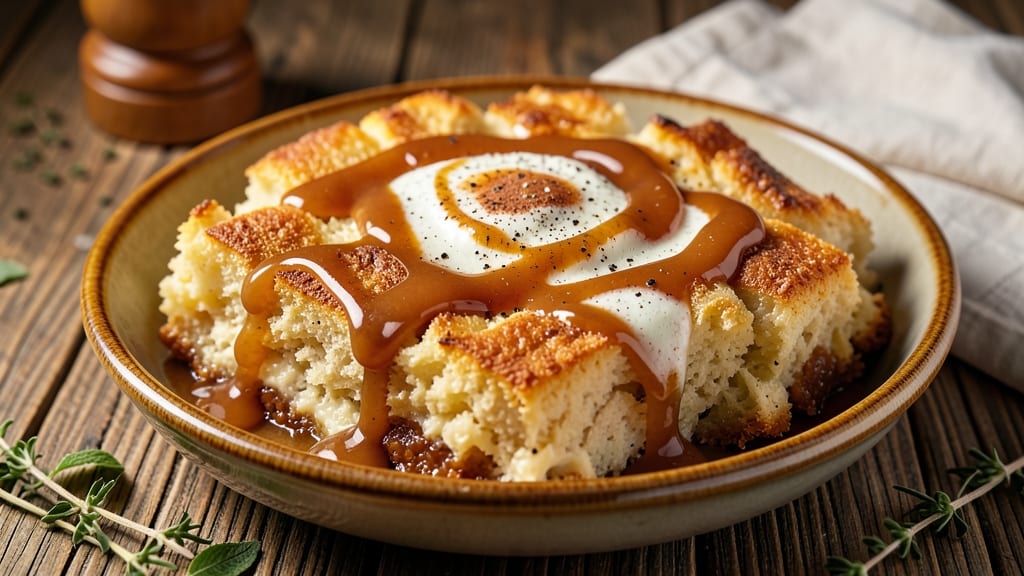
This amaretto bread pudding sauce transforms ordinary desserts into luxurious treats with its rich, nutty depth and velvety texture. 🌟 The secret lies in balancing sweetened amaretto liqueur with warm spices and butter, creating a sauce that's both decadent and foolproof to make.
I developed this recipe after years of experimenting with bread pudding toppings—this version cuts through the custard's richness while adding a sophisticated almond-kissed finish that guests will rave about.
The process is simpler than it sounds: simmering cream, sugar, and butter until fragrant, then whisking in amaretto and vanilla to create a silky, pour-ready sauce. What makes this sauce special is its versatility—it works as a bread pudding drizzle, pancake syrup, or even a dessert dip.
The alcohol content preserves beautifully, so you can make it ahead and store it in the fridge for up to two weeks, ready to elevate any sweet dish.
What you'll end up with is a glossy, aromatic sauce that clings beautifully to warm bread pudding, its nutty flavor complementing the custard's sweetness without overpowering it.
The texture is smooth yet clingy, perfect for drizzling generously over servings. This isn't just a topping—it's the star that turns a simple dessert into something restaurant-worthy.
Pair it with classic bread pudding, French toast, or even ice cream for a grown-up twist. The key to success is patience during the reduction—don't rush it, and you'll achieve that perfect balance of sweet, nutty, and creamy that makes this sauce irresistible. Let's get started!
Ingredients for amaretto sauce for bread pudding
Eight simple ingredients create this luxurious amaretto sauce that'll make your bread pudding unforgettable.
| Ingredient | Amount | Notes |
|---|---|---|
| Heavy Whipping Cream 🥛 | 1 ½ cups | Full-fat for best texture |
| Granulated Sugar 🍚 | ¾ cup | Light brown sugar works too |
| Unsalted Butter 🧈 | ½ cup | Cold, cubed for even melting |
| Amaretto Liqueur 🍸 | ½ cup | Disaronno preferred, 25% ABV |
| Pure Vanilla Extract 🌿 | 1 tbsp | Bourbon vanilla adds depth |
| Ground Cinnamon 🌶️ | ½ tsp | Freshly ground preferred |
| Ground Nutmeg 🌶️ | ¼ tsp | Freshly grated nutmeg better |
| Salt 🧂 | ¼ tsp | Fine sea salt preferred |
The amaretto makes this sauce special—Disaronno is my go-to, but any good-quality amaretto works (just check the alcohol content). Trader Joe's and Whole Foods both carry solid options. The butter should be cold when you add it—this helps create that silky texture. I always grab European-style butter from Costco when I can, but regular unsalted works fine. For the cream, heavy whipping cream is non-negotiable here—light cream won't give you that rich, velvety finish.
No amaretto? Almond extract plus a splash of almond syrup gets you close, though it won't have the same depth. Running short on vanilla? Vanilla bean paste works better than imitation. The spices can be adjusted—add a pinch of cardamom if you're feeling fancy. For the sugar, light brown sugar adds subtle molasses notes that pair beautifully with the amaretto. If you're making this ahead, reduce the alcohol by simmering the sauce uncovered for 5 minutes after adding the amaretto—it'll still taste amazing.
This sauce keeps beautifully—up to 2 weeks in the fridge once cooled. I like to store it in a glass jar with a tight lid, which also makes it easy to grab for last-minute desserts. For a restaurant-style presentation, strain it through a fine-mesh sieve before serving to get that ultra-smooth texture. The sauce thickens as it cools, so warm it gently before drizzling if it's too stiff. A splash of warm cream can loosen it up if needed.
Why You'll Love This Recipe
- Five-Ingredient Magic: I swear, this sauce takes three minutes—just cream, sugar, butter, a splash of amaretto, and vanilla. No straining, no peeling, no fancy techniques. Honestly, the hardest part is waiting for it to thicken.
- Nutty Vanilla Bliss: That amaretto brings almond warmth while the vanilla deepens it—like a hug for your taste buds. The sugar melts into the butter so smoothly, you get this rich, silky sauce that’s dangerously easy to overpour.
- Dessert Upgrade: Drizzle it over bread pudding, pancakes, or even ice cream—suddenly, everything feels fancy. I’ve used it for guests, lazy Sundays, and even as a quick topping for toasted cinnamon rolls. (Yes, even on a Tuesday night.)
- Leftovers That Last: Make a double batch—it keeps for weeks in the fridge and freezes perfectly. I’ve reheated it cold for trifles or warmed it for morning coffee. Between us, I’ve fed a crowd with just this sauce and store-bought pound cake.
Step-by-step instructions for amaretto bread pudding sauce
Here's how to make this rich, nutty sauce that'll elevate your bread pudding to restaurant-quality.
🍳 Step 1: Melt Butter and Sugar for a Silky Base
In a medium saucepan over medium-low heat, melt the 0.5 cup unsalted butter until it's completely liquid but not browned. Add the 0.75 cup granulated sugar and whisk constantly for 3-4 minutes until the sugar dissolves completely and the mixture becomes smooth.
Here's the thing—don't rush this step. You're building the foundation of your sauce, and proper dissolving ensures no grainy texture later. The mixture should look like a thick, golden syrup. If you see any sugar settling at the bottom, just keep whisking until it's fully incorporated.
🥘 Step 2: Add Cream and Simmer Until Thickened
Pour in the 1.5 cups heavy whipping cream all at once and bring the mixture to a gentle simmer over medium heat. Let it cook uncovered for 8-10 minutes, stirring frequently with a wooden spoon, until it thickens enough to coat the back of a spoon.
You'll know it's ready when the sauce pulls away from the sides of the pan slightly and leaves a visible trail when you run your finger through it. This is your signal to move to the next step. If it thickens too quickly, just reduce the heat slightly—you want smooth, not scrambled.
🍳 Step 3: Incorporate Liqueur and Spices
Remove the saucepan from heat and let it cool slightly for 2 minutes. Then stir in the 0.5 cup amaretto liqueur, 1 tbsp pure vanilla extract, 0.5 tsp ground cinnamon, 0.25 tsp ground nutmeg, and 0.25 tsp salt. The mixture will smell incredible—like warm almonds and spiced vanilla.
Give it a taste at this point. The amaretto should be prominent but balanced by the sweetness. If you want more depth, you can add a pinch more cinnamon or nutmeg. I like to let it sit for 5 minutes off heat before straining—this allows the spices to infuse fully.
⏰ Step 4: Strain and Cool for Perfect Texture
Strain the warm sauce through a fine-mesh sieve into a clean bowl to remove any lumps. This ensures your final drizzle is silky smooth. Let it cool to room temperature, stirring occasionally to prevent a skin from forming.
The sauce will thicken further as it cools—this is normal and actually improves the texture. Once cool, it should be thick enough to drizzle elegantly but still pourable. If it gets too thick, you can gently reheat it with a splash of cream to loosen it up.
Pro Tips For Making Amaretto Sauce For Bread Pudding
- Warm the Cream First: Cold heavy cream won’t incorporate sugar or amaretto properly—it’ll just sit there stubborn. Heat the cream in a saucepan until it’s steaming (not boiling) before adding sugar or butter. This makes the sauce silky from the start, not grainy or separated.
- Use Real Amaretto, Not Substitutes: I learned this the hard way—cheap almond-flavored liqueurs taste like cough syrup. Disaronno or Luxardo are the gold standard; use 1-2 tablespoons minimum. If you’re out, a splash of almond extract (½ teaspoon) works in a pinch, but it’s not the same.
- Whisk in Butter Last: Add the butter at the very end, off the heat, and whisk until it melts completely. If you mix it in early, you’ll get lumps that never dissolve, no matter how long you simmer. The sauce should coat the back of a spoon like a dream.
- Strain for Smoothness: Even if your cream is heavy, tiny sugar crystals or butter bits can sneak in. Strain the finished sauce through a fine-mesh sieve into a clean bowl—it’s worth the 30 seconds to avoid a gritty mouthful. (Yes, even if you’re impatient like me.)
Common mistakes when making great amaretto sauce for bread pudding
Over-Simmering Cream
Watch the cream closely—once it reaches a gentle simmer, reduce heat immediately to prevent curdling. I’ve seen this happen when the sauce boils too vigorously, causing the cream to separate. The goal is a slow, controlled thickening that takes 8-10 minutes over medium heat, not a rapid boil.
If you notice the sauce splitting or developing a skin, whisk vigorously and reduce heat to low until it recombines. 🌡️
Skipping the Straining Step
Straining is non-negotiable for that restaurant-quality finish. Even with whisking, tiny butter grains or undissolved sugar can make the sauce grainy. Use a fine-mesh sieve or even a cheesecloth-lined strainer for the smoothest results.
I once served sauce without straining, and while it tasted great, the texture was noticeably less luxurious. Trust me, the extra 30 seconds of effort makes all the difference.
Using Low-Quality Amaretto
Not all amaretto is created equal. Cheap, artificial versions lack the depth and almond complexity that makes this sauce special. Stick with Disaronno (the gold standard) or other premium brands like Giffard.
If you must use a budget option, look for one with at least 25% ABV—lower alcohol content means weaker flavor. I’ve tried the $5 store-brand amaretto once, and while it worked, the sauce tasted flat compared to the real deal.
Your taste buds (and guests) will thank you for splurging slightly here. 🍸
Ignoring the Cooling Phase
Rushing the cooling process can lead to a skin forming on top or uneven texture. Let the sauce cool to room temperature naturally—this allows the flavors to meld and the sauce to thicken properly.
If you’re impatient, place the bowl in an ice bath for 10 minutes while stirring occasionally, but don’t skip this step entirely. I’ve had sauces turn out too thin or develop a rubbery consistency when cooled too quickly. Patience here ensures that perfect drizzle consistency. ⏳
Adding Alcohol Too Early
Introducing the amaretto while the sauce is still hot can cause the alcohol to evaporate too quickly, muting its flavor. Always remove the pan from heat and let it cool slightly (2 minutes) before adding the liqueur.
This gives the amaretto time to infuse fully without losing its signature nutty kick. I once added it too early and ended up with a sauce that tasted more like vanilla than amaretto. A quick pause at this step makes all the difference. 💡
Over-Spicing the Sauce
While cinnamon and nutmeg add warmth, too much can overpower the delicate almond flavor. Start with the 0.5 tsp cinnamon and 0.25 tsp nutmeg as written, then taste before adding more. A little goes a long way—these spices can easily dominate if you’re not careful.
I’ve had sauces turn out cloyingly sweet and spicy when I doubled the amounts. When in doubt, err on the side of caution and adjust gradually. 🌶️
Nutrition facts
Frequently asked questions
Can I substitute amaretto liqueur in this sauce?
Yes, but the flavor will differ. For a similar nutty profile, use 1 teaspoon almond extract plus 2 tablespoons almond syrup (like Torani) per 0.5 cup amaretto. If you don't have either, 1 teaspoon vanilla extract plus 1 teaspoon almond extract is a decent backup, though the almond flavor won't be as pronounced. For a boozy alternative, try 0.5 cup bourbon with an extra 0.5 teaspoon almond extract.
How do I adjust this sauce for a dairy-free version?
Replace the 1.5 cups heavy cream with 1.5 cups full-fat coconut milk (canned, for creaminess) and use 0.5 cup dairy-free butter or coconut oil. The texture will be slightly lighter but still delicious. For extra richness, add 1 tablespoon coconut cream at the end. Note that the sauce may separate slightly when cold—just whisk before serving.
Can I make this sauce ahead of time?
This sauce keeps beautifully in the fridge for up to 2 weeks in an airtight container. The flavors actually improve as it sits, allowing the amaretto and spices to meld. For best results, store it in a glass jar with the lid sealed tightly. When ready to use, gently reheat in a saucepan over low heat with a splash of cream if it thickens too much.
What's the best way to drizzle this sauce on bread pudding?
For a professional look, warm the sauce slightly (just until pourable) and use a spoon or squeeze bottle to create elegant zigzags or a spiral pattern. Let the bread pudding cool slightly first—warm dessert with cold sauce can create condensation. Pro tip: Drizzle just before serving so the sauce doesn't soak into the pudding. For extra drama, dust with powdered sugar or toasted almond slivers after drizzling.
Why did my sauce turn out too thin?
This usually happens from one of three issues: under-simmering the cream (it needs 8-10 minutes of gentle cooking), adding too much liquid (like extra amaretto), or cooling it too quickly. To fix it, place the sauce in a saucepan and heat gently while stirring until it thickens to your desired consistency. For prevention, always simmer the cream until it coats the back of a spoon before adding the liqueur. If it's still too thin after reheating, mix in 1 tablespoon cornstarch dissolved in 1 tablespoon cold water and cook for 1-2 minutes.