
Side Dishes
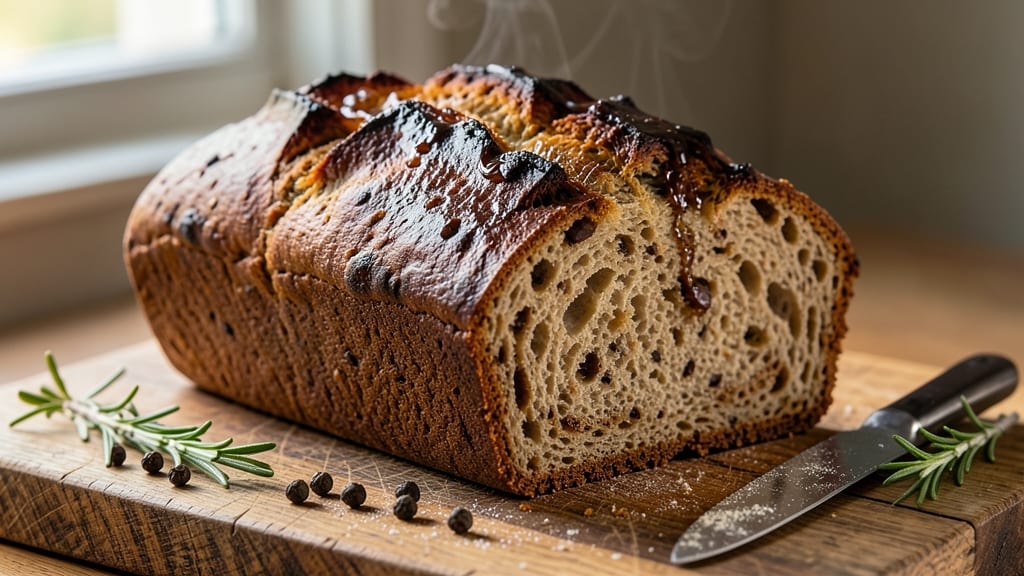
This American pumpernickel bread recipe delivers the signature dark crust and spiced sweetness you crave, with a dense, moist crumb that’s perfect for sandwiches or toast. 🔥 The secret lies in molasses and rye flour, which create that iconic deep color and rich flavor profile—no shortcuts here.
I’ve perfected this version over years of baking, ensuring every slice tastes like a fresh-baked loaf from a European bakery, right in your kitchen.
The process is straightforward but requires patience: mixing a wet, sticky dough, kneading until smooth, and letting it rise twice for maximum flavor development. The molasses adds depth, while cinnamon and allspice give it that classic spiced sweetness.
What sets this apart is the crust—deeply caramelized and almost molasses-like, thanks to a simple baking technique that traps moisture for days.
By the time it emerges from the oven, you’ll have a loaf with a glossy, dark crust that’s almost black and a tender interior that’s slightly sweet with a hint of spice.
It’s the kind of bread that pairs perfectly with sharp cheeses, smoked meats, or even just butter and jam. The best part? It keeps well for up to a week, making it ideal for meal prep.
Ready to bake? This recipe is foolproof—just follow the steps, and you’ll end up with a loaf that rivals anything you’d find in a specialty bakery. Let’s get started!
Ingredients for american pumpernickel bread
Dark rye flour, molasses, and warm spices—these core ingredients create that signature pumpernickel flavor and glossy crust.
| Ingredient | Amount | Notes |
|---|---|---|
| Rye Flour 🌾 | 3 cups | Dark rye for authentic color |
| All-Purpose Flour 🌾 | 1 cup | For structural balance |
| Active Dry Yeast 🍞 | ¼ oz | Or 2 1/4 tsp instant yeast |
| Unsalted Butter 🧈 | ½ cup | Cold, cubed for dough |
| Molasses 🍯 | ½ cup | Dark, unsulphured preferred |
| Granulated Sugar 🍚 | ¼ cup | Light brown sugar works too |
| Large Eggs 🥚 | 1 whole | Room temperature preferred |
| Whole Milk 🥛 | ¾ cup | Warmed slightly for yeast |
| Ground Cinnamon 🌿 | 1 ½ tsp | Freshly ground preferred |
| Ground Allspice 🌶️ | ½ tsp | Key for traditional spice |
| Salt 🧂 | 1 ½ tsp | Diamond Crystal preferred |
| Water 💧 | ½ cup | Warm, not hot |
The rye flour makes or breaks this bread. King Arthur dark rye flour or Bob's Red Mill are my go-tos—they've got that deep, earthy flavor and the right color. If you can only find light rye, mix it with 1 tbsp cocoa powder for color and richness. Molasses is non-negotiable here; unsulphured is best for authentic taste. For the yeast, check the expiration date—old yeast won't rise properly. I always buy mine from Whole Foods bulk section where it stays fresh. The butter should be cold when you mix it in—this helps create that tender crumb.
No molasses? Dark corn syrup plus 1 tsp vinegar gets you close, though it won't be identical. Running short on rye flour? Substitute with half whole wheat flour, but expect a lighter color. For the spices, Penzeys has the best allspice—it's worth the splurge. The cinnamon can be ground from whole sticks if you're feeling fancy. If your dough feels too dry, add 1 tbsp more milk. Too sticky? Sprinkle in 1 tbsp extra flour. The egg helps bind everything, but if you're avoiding it, 1 tbsp ground flaxseed plus 3 tbsp water works as a substitute (let it thicken for 5 minutes first).
This dough is sticky—don't fight it! Use a stand mixer with a dough hook to handle it easily. After the first rise, the dough will be very soft. Shape it gently to avoid deflating it. For the crust, brush with molasses mixed with water before baking—this creates that signature glossy finish. Cool completely on a wire rack (at least 1 hour) before slicing. Wrapped in a clean kitchen towel, it keeps for 5-7 days at room temperature. Freeze slices for up to 3 months—toast straight from frozen for crispy results.
Why You'll Love This Recipe
- No-Knead Nightmare Solved: I swear by this recipe because it actually lets you skip the kneading. Just mix the rye flour, all-purpose flour, and yeast with warm water—no fancy techniques, no aching arms. The molasses and butter do all the heavy lifting while you scroll through your phone.
- Molasses Magic: That deep, caramelized molasses flavor? It’s the star. The rye flour adds a chewy texture, but the molasses gives it this rich, almost chocolatey undertone that pairs perfectly with butter. Honestly, I make it just to toast slices and slather them with cream cheese—it’s that good.
- Meal Prep MVP: This bread keeps for days in the fridge, and it reheats beautifully in the toaster or oven. Between us, I’ve had it for breakfast, lunch, and even as a side for dinner. The rye flour makes it hearty enough to hold up, and the yeast keeps it fresh longer than store-bought.
- Budget-Friendly Staple: Rye flour and molasses are cheap, and a single batch stretches across a week. I’ll be real: my grocery budget thanks me for this. Plus, the butter and yeast are pantry basics, so you’re not buying random ingredients—just what you already have.
Step-by-step instructions for American pumpernickel bread
Here's how to craft that signature deep molasses flavor and dense, spiced rye texture.
👨🍳 Step 1: Activate the Yeast and Mix Wet Ingredients
In a small bowl, combine the 0.25 oz active dry yeast, 0.75 cup warm whole milk, and 0.25 cup granulated sugar. Let it sit for 5-10 minutes until foamy—this tells you your yeast is alive and ready to work. If it doesn't bubble, start over with fresh yeast.
In a separate large bowl, whisk together the 0.5 cup molasses, 1 whole large egg, and 0.5 cup warm water. I like to use a fork first to break up the molasses, then switch to a whisk for a smooth mixture. The molasses will thicken as it cools, so don't worry if it looks syrupy now.
👨🍳 Step 2: Combine Dry Ingredients and Form the Dough
In the same large bowl, add the 3 cups rye flour, 1 cup all-purpose flour, 1.5 tsp ground cinnamon, 0.5 tsp ground allspice, and 1.5 tsp salt. Give it a quick stir with a wooden spoon to distribute the spices evenly through the dry ingredients.
Now pour in the yeast mixture and whisk until everything comes together. The dough will be sticky—this is normal with rye flour. Add the 0.5 cup cold cubed unsalted butter and mix until it's mostly incorporated. The butter should be in small chunks throughout the dough. Cover the bowl with a damp towel and let it rest for 15 minutes.
🍳 Step 3: Knead and Shape the Dense Dough
After the rest, the dough should be more manageable. Turn it out onto a lightly floured surface and knead gently for 5-7 minutes—just until it comes together. Rye dough doesn't need much kneading; overworking it will make the bread tough. Shape it into a 9x5-inch loaf pan by pressing the dough into the corners and smoothing the top.
Here's the thing—this dough is heavy and dense. Don't be tempted to press too hard or it'll compact instead of rising properly. Cover the pan with a damp towel and let it rise in a warm place for 1-2 hours, until it's puffed about 1 inch above the pan. You'll see the edges look slightly rounded when it's ready.
🔥 Step 4: Bake Until Deeply Molten and Crusty
Preheat your oven to 350°F while the dough rises. When ready, score the top of the loaf with a sharp knife in a simple crosshatch pattern—this helps the bread expand and gives it that classic pumpernickel look. Bake for 50-55 minutes until the top is deep brown and the internal temperature reaches 190°F.
For that authentic pumpernickel flavor, I like to bake it another 10-15 minutes at 325°F after the initial bake. This slows the cooking and develops more depth of flavor. The bread is done when it sounds hollow when tapped on the bottom and the crust is dark and crispy.
⏰ Step 5: Cool and Slice for Maximum Flavor
Let the bread cool in the pan for 10 minutes before transferring it to a wire rack. This prevents it from becoming gummy in the center. I know it's tempting to slice immediately, but patience here is key—wait at least 1 hour before cutting. The internal temperature should be around 75°F when fully cooled.
Slice with a serrated knife and you'll see those beautiful layers of spiced sweetness. The crust should be dark and almost molasses-like, with a dense crumb that's slightly chewy. Serve with butter or jam, but remember—this bread tastes best the next day when all the flavors have fully melded together.
Pro Tips For Making American Pumpernickel Bread
- Bloom the Yeast First: Skip mixing yeast directly into dry ingredients—it’s lazy and unreliable. Instead, dissolve it in warm (not hot) water with a pinch of sugar first, then let it sit for 5-10 minutes until frothy. I learned this the hard way after three failed batches where the bread never rose properly.
- Soften Butter Properly: Cold butter makes dense bread, but melted butter weakens structure. Beat the butter until it’s just soft enough to press into the dough with your fingers—about 65°F (18°C). Use a microwave in 10-second bursts if needed, but don’t overdo it.
- Don’t Rush the Molasses: Molasses is thick and sticky—measure it by weight (140g = 1 cup) and let it sit at room temperature for 20 minutes before adding. Cold molasses sinks to the bottom of the dough, leaving pockets of sweetness instead of even distribution.
- Shape Tightly, Then Rest: Pumpernickel dough is stubborn. After kneading, fold the edges toward the center and press firmly to seal any tears—this prevents air gaps. Cover and let it rest 30 minutes before baking; the gluten relaxes, and the crumb becomes uniform. (Yes, even if you’re impatient like me.)
Perfect pairings for american pumpernickel bread
Classic Spreads
Nothing beats this bread with creamy herbed butter—mix ½ cup softened butter with 1 tbsp fresh thyme, 1 tsp lemon zest, and a pinch of salt.
Spread generously on warm slices for a luxurious touch. For a sweet contrast, try blackberry jam from Bon Appétit—its tartness cuts through the molasses richness. 🍯
Cheese Pairings
The dense texture makes it ideal for sharp cheeses. Smoked gouda melts beautifully when toasted, while aged cheddar adds a tangy bite. For a gourmet twist, layer with brie and fig jam—the sweetness and creaminess balance the bread's spiced depth perfectly.
I love this combo for breakfast or light lunches.
Meat Combinations
For heartier meals, pair with corned beef or pastrami sandwiches—the rye's sweetness contrasts the saltiness of cured meats. Add Swiss cheese and mustard for a classic Reuben twist.
If you prefer poultry, smoked turkey breast with horseradish cream creates a delicious alternative. The bread's density holds up well to juicy meats.
Sweet Toppings
Warm slices with cinnamon sugar and a drizzle of honey make a perfect breakfast. For dessert, top with whipped cream and raspberry compote—the tart berries complement the molasses perfectly.
I also love adding chopped walnuts for crunch and texture. These pairings work especially well when served with coffee or tea.
Beverage Matchups
Pair this rich bread with black coffee to enhance its molasses notes. For a sweeter drink, try chai tea—the spices in both complement each other beautifully.
If you prefer alcohol, dark beer like stout or porter balances the bread's sweetness, while dry red wine like Cabernet Sauvignon adds a sophisticated touch. 🍷
Breakfast Ideas
Toast thick slices and top with scrambled eggs, crispy bacon, and avocado for a hearty breakfast. For a sweeter morning, spread with almond butter and banana slices.
The bread's density makes it perfect for soaking up egg yolks or syrup. I often make a batch on Sundays to enjoy throughout the week.
Nutrition facts
Frequently asked questions
Why does my American pumpernickel bread come out too light in color?
The deep color comes from the molasses and rye flour combination. Make sure you're using unsulphured molasses (sulphured versions are lighter) and dark rye flour. For extra depth, brush the loaf with a molasses-water mix before baking. The crust should darken significantly during the final 10-15 minutes at 325°F.
Can I make this bread without molasses? What's the best substitute?
Molasses is key for authentic flavor, but you can substitute with ½ cup dark corn syrup plus 1 tsp vinegar for a similar sweetness. For a closer match, try ½ cup honey plus 1 tbsp coffee—the coffee enhances the bread's depth. Just know the flavor won't be identical, but it'll still be delicious.
How do I store pumpernickel bread to keep it fresh longer?
Wrap the cooled loaf tightly in plastic wrap or place it in an airtight container with a slice of bread or a damp paper towel to prevent drying. It'll stay fresh for 5-7 days at room temperature. For longer storage, freeze slices wrapped in parchment paper for up to 3 months. Toast straight from frozen for best results.
What's the difference between American and traditional German pumpernickel?
American versions use molasses for sweetness and have a softer, more bread-like texture, while traditional German pumpernickel is denser, made with rye malt and baked for 12-24 hours in a steam oven. This recipe captures the American style with its sweeter profile and quicker baking time (1 hour). Both are delicious but serve different purposes!
Can I add raisins or nuts to this recipe?
For sweetness, add ½ cup raisins (soaked in warm water for 10 minutes first) or ½ cup chopped walnuts to the dough during mixing. For extra crunch, sprinkle 1 tbsp sesame seeds on top before baking. Just don't overdo it—too many additions can make the bread dense.