
Side Dishes
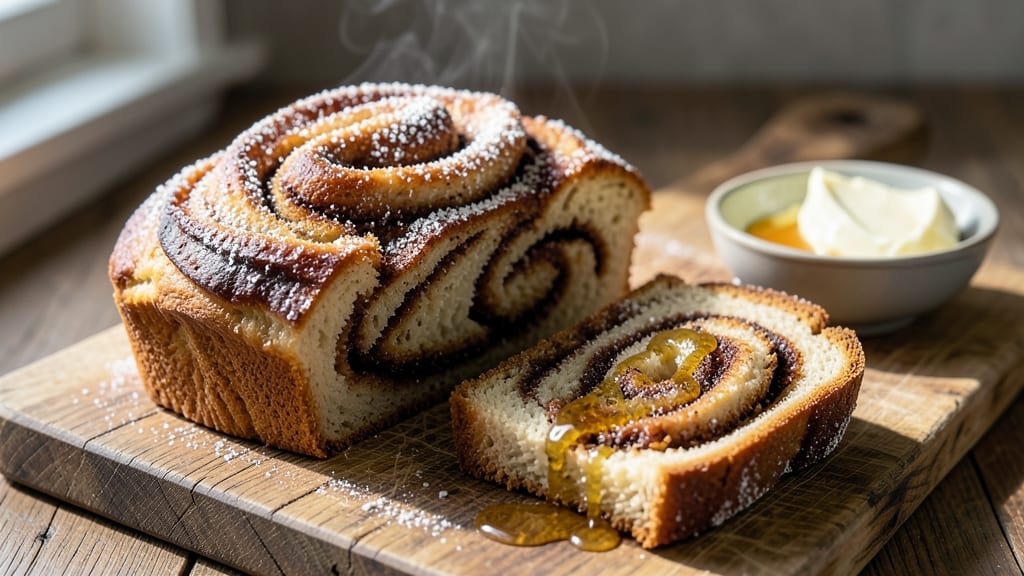
This Amish cinnamon swirl bread recipe brings the comforting aroma of warm spice and golden crust straight from Pennsylvania farmhouses to your kitchen. 🌾 The secret lies in layers of tender dough wrapped in cinnamon-sugar swirls, baked until the crust turns a perfect amber hue—just like my grandmother used to make.
Every slice reveals those signature spiral patterns, where sweet cinnamon and buttery dough create a harmony that feels like a hug in bread form.
The beauty of this recipe is its simplicity: no fancy equipment, just basic ingredients and a few traditional techniques. You'll start with a soft dough that's hand-kneaded for that classic Amish texture, then carefully rolled and swirled with cinnamon-sugar filling before baking.
The result is a loaf that's crisp on the outside, tender inside, and packed with warm cinnamon flavor that makes every bite feel special.
What makes this bread truly exceptional is how it transforms any meal—serve it warm with butter melting into those swirls, or pair it with jam for breakfast. The aroma alone will fill your home with comfort, while the texture delivers that perfect balance of sweetness and spice.
This isn't just bread; it's a taste of tradition that brings people together.
For those who love customization, you can easily add chopped nuts or raisins to the filling for extra texture and depth. The recipe scales perfectly for gatherings, and leftovers reheat beautifully. Here's how to create this homestyle masterpiece that'll have everyone asking for seconds.
Ingredients for amish cinnamon swirl bread
Eight simple ingredients create this iconic Amish cinnamon swirl bread with golden crust and tender swirls.
| Ingredient | Amount | Notes |
|---|---|---|
| All-Purpose Flour 🌾 | 5 cups | Unbleached preferred for better texture |
| Granulated Sugar 🍚 | ½ cup | White or light brown sugar |
| Instant Yeast 🍞 | 2 ¼ tsp | Ensure it's fresh for best rise |
| Unsalted Butter 🧈 | ½ cup | Softened, not melted |
| Large Eggs 🥚 | 1 whole | Room temperature for even mixing |
| Milk 🥛 | ½ cup | Warm to room temperature |
| Salt 🧂 | 1 tsp | Diamond Crystal preferred |
| Ground Cinnamon 🌿 | 2 tbsp | Freshly ground for best flavor |
| Light Brown Sugar 🍚 | ½ cup | Packed lightly |
| Unsalted Butter 🧈 | ¼ cup | Cold, cubed for filling |
| Vanilla Extract 💧 | 1 tsp | Pure extract, not imitation |
| Optional Chopped Walnuts 🥜 | ½ cup | Toasted for extra crunch |
| Optional Raisins 🍇 | ½ cup | Plump, soaked in warm water |
The flour is the foundation—King Arthur or Gold Medal brands work best for that classic Amish texture. Bulk bins at Whole Foods often have the best quality, but regular grocery store flour works fine. For the cinnamon, Penzeys or Trader Joe's carry the best ground cinnamon—avoid the dusty stuff in cheap containers. The yeast needs to be fresh: if it's over six months old, toss it. For the filling, light brown sugar gives that caramelized depth, but white sugar works in a pinch. I always toast my walnuts in a dry pan for 3-4 minutes—they add so much flavor.
No vanilla extract? 1 tsp vanilla sugar (or a scraped vanilla bean) works beautifully. Short on butter? Coconut oil melts the same way, though it has a slight coconut taste. The milk can be any kind—whole milk gives richer flavor, but almond milk works if you're avoiding dairy. For the filling, if you skip nuts or raisins, just add extra cinnamon sugar. The dough should be soft but not sticky—add a splash more milk if needed. Pro tip: Let the dough rise in a warm spot (like a turned-off oven with a bowl of hot water) for that perfect Amish-style rise.
This bread reheats best in a 350°F oven for 5-10 minutes—it's even better the second day. Store wrapped at room temperature for 3 days, or freeze the whole loaf for up to 3 months. For serving, brush slices with melted butter and sprinkle extra cinnamon sugar on top. Leftovers make amazing French toast—worth making extra!
Why You'll Love This Recipe
- No-Knead Magic: I swear by this dough—just mix, let it rise, and fold. No stand mixer, no arm workout. The butter swirls stay thick and gooey even when I forget to preheat the oven just right.
- Sweet Butter Bliss: That cinnamon-sugar swirl? It’s not just dusted on top—it’s folded right into the dough. Every bite has warm, buttery sweetness, and the crust? Crisp enough to hold toast, soft enough to melt in your mouth.
- Breakfast to Brunch: This bread is my lazy weekend hero. Toast it for breakfast, slice it for brunch with jam, or serve it warm with butter at a potluck. (Yes, even on a Tuesday night.) The yeast keeps it fresh for days, so it’s always ready.
- Pantry Staple Power: Flour, sugar, butter, eggs—what’s not to love? It’s cheaper than buying artisanal bread, and the leftovers? Perfect for French toast or bread pudding. I make a double batch and freeze half. No waste, all flavor.
Step-by-step instructions for Amish cinnamon swirl bread
Let's create that perfect homestyle loaf with gooey cinnamon swirls—every slice will be worth the wait.
👨🍳 Step 1: Mix the Dough for a Light and Airy Base
In a large mixing bowl, combine the 5 cups all-purpose flour, 1 tsp salt, and 2.25 tsp instant yeast. Whisk these dry ingredients together to break up any lumps in the flour. This ensures even distribution and helps the yeast activate properly throughout the dough.
In a separate bowl, melt the 0.5 cup unsalted butter until just liquid, then let it cool slightly. Add the 0.5 cup granulated sugar, 1 whole large egg, 0.5 cup warm milk, and 1 tsp vanilla extract to the melted butter. Mix these wet ingredients until fully combined—the mixture should be smooth and slightly glossy. This warm liquid helps activate the yeast for a better rise.
Make a well in the center of your dry ingredients and pour in the wet mixture. Using a wooden spoon or dough whisk, gently combine everything until a shaggy dough forms. Avoid overmixing at this stage—you're just getting things started. The dough will come together more as it develops during kneading.
🍳 Step 2: Knead Until Smooth and Elastic
Transfer the dough to a lightly floured surface and knead for about 8-10 minutes. I like to use the "windowpane test" to check for proper development—stretch a small piece of dough thin enough that you can see light through it without tearing. When it passes this test, your gluten structure is perfect for trapping gas during rising.
If the dough feels sticky, add flour 1 tablespoon at a time until it's smooth but not dry. The ideal dough should be slightly tacky to the touch but not sticky. Kneading develops the gluten network that gives this bread its satisfying chew and helps it rise beautifully. Don't worry if it takes a few minutes to get the hang of it—this is where the magic happens.
🥘 Step 3: Prepare the Cinnamon Filling
While the dough rests, make the cinnamon filling by combining 0.5 cup light brown sugar, 2 tbsp ground cinnamon, and the 0.25 cup cold cubed unsalted butter in a small bowl. Use your fingers to work the butter into the sugar and cinnamon until it resembles coarse crumbs with a few soft butter pieces remaining. This texture ensures flavorful pockets throughout the swirl.
If you're using the optional 0.5 cup chopped walnuts or 0.5 cup raisins, fold them into this mixture now. The nuts add crunch while the raisins provide sweet bursts—both complement the warm cinnamon perfectly. This filling is what makes this bread special, so don't skimp on the cinnamon or skip the butter pieces!
🔪 Step 4: Shape and Swirl the Dough
Roll the rested dough out on a lightly floured surface into a 12x18-inch rectangle about ¼-inch thick. This is where things get fun—spread the cinnamon filling evenly over the dough, leaving a ½-inch border around the edges. This prevents the filling from leaking out during baking and ensures every bite has that perfect cinnamon flavor.
Starting from the long side, tightly roll up the dough into a log, sealing the edge well. For extra swirls, gently press down on the log to flatten it slightly, then roll it back up. This creates those beautiful cinnamon swirls we all love. Place the shaped loaf seam-side down in a greased 9x5-inch loaf pan—the pan should be large enough to hold the dough comfortably without overflowing.
🔥 Step 5: Rise and Bake to Golden Perfection
Cover the loaf pan with a clean kitchen towel and let the dough rise in a warm place for 1-1.5 hours, or until it has nearly doubled in size. The dough should feel light and springy when pressed gently with one finger—this confirms the yeast has done its job. Preheat your oven to 350°F while the dough rises to ensure even baking.
Once risen, bake the loaf for 45-50 minutes until the top is deep golden brown and an instant-read thermometer inserted into the center reads 190-195°F. The bread is done when it sounds hollow when tapped on the bottom. For that perfect crust, I like to brush the top with a little milk just before baking—it adds shine and enhances the caramelization.
Let the bread cool in the pan for 10 minutes, then transfer to a wire rack to cool completely. This resting period allows the filling to set slightly, making it easier to slice without losing those beautiful swirls. Slice while still warm for the most gooey, flavorful experience—each bite should be tender with bursts of cinnamon-sugar goodness.
Pro Tips For Making Amish Cinnamon Swirl Bread
- Chill the Dough Overnight: I learned this the hard way—skipping the overnight cold proof in the fridge makes the swirls spread too much when baking. Wrap the shaped loaf tightly in plastic and let it rest 8–12 hours; the slower rise gives you those clean, defined cinnamon spirals without fighting overactive yeast.
- Use Cold Butter for Swirls: The filling’s consistency is everything. Mix the butter, sugar, and cinnamon into a stiff, cool dough—it should hold its shape when rolled. If it’s too soft, the swirls will melt into a gooey mess before baking. Chill the filling 30 minutes before rolling, even if you’re impatient.
- Don’t Over-Knead the Dough: This isn’t pizza dough—you’re not trying to develop gluten for chew. Knead just until the dough clears the sides of the bowl and feels smooth (about 5–6 minutes by hand). Overwork it, and the bread turns dense instead of tender. Let the yeast do the heavy lifting.
- Brush with Egg Wash Early: Slather the shaped loaf with egg wash before the final proof, not just before baking. The egg sets slightly during proofing, locking in moisture and giving you that golden, crackly crust without drying out the bread. Use 1 egg beaten with 1 tablespoon water—don’t skimp.
Common mistakes when making great amish cinnamon swirl bread
Over-Kneading the Dough
One of the most common mistakes is over-kneading the dough, which develops too much gluten and makes the bread dense rather than tender. I’ve seen home bakers knead for 15+ minutes—way past the needed 8-10 minutes.
Stop when the dough passes the windowpane test (light shines through when stretched thin). Overworked dough loses its airy texture and becomes tough. 💡
Skipping the Rest Period
Many people rush to shape the dough immediately after mixing, but letting it rest for 20-30 minutes before rolling and swirling is crucial. This relaxation step prevents the dough from springing back too much when you roll it out.
Without this rest, your swirls won’t hold their shape, and the filling may leak out during baking.
Uneven Filling Distribution
The cinnamon-sugar filling needs to be spread evenly and leave a ½-inch border around the edges. I’ve seen loaves where the filling pooled in the center, creating a dry outer layer.
Spread the filling thinly but thoroughly—this ensures every bite has that perfect balance of sweet and spiced flavors. Use your fingers to press it gently into the dough for even distribution.
Underestimating Rise Time
Some bakers pull the bread from the oven too soon because they think it’s not risen enough. The dough should nearly double in size before baking—1-1.5 hours is typical, but cold kitchens may need extra time.
A loaf that hasn’t risen properly will be dense and lack that signature Amish texture. Place the pan in a warm spot (like a turned-off oven with a bowl of hot water) to encourage even rising.
Overfilling the Pan
Packing too much dough into the 9x5-inch loaf pan causes overflow and uneven baking. The dough should fill about 75% of the pan’s capacity—any more risks spillage and a misshapen loaf.
If your dough seems too large, let it rise slightly longer before shaping to reduce volume. A well-fitted loaf bakes more evenly and develops a better crust.
Ignoring the Cooling Phase
Slicing the bread too soon after baking is a cardinal sin—it leads to crumbly, uneven slices. Always let the loaf cool in the pan for 10 minutes before transferring to a wire rack.
This allows the filling to set and the structure to firm up. Patience here ensures clean, gooey swirls with every slice. 🥖
Nutrition facts
Frequently asked questions
Can I make this bread without a loaf pan?
Shape the dough into a round loaf or even individual rolls instead of using a pan. For a rustic look, place the shaped dough on a parchment-lined baking sheet and bake at 350°F for 30-35 minutes until golden. The swirls will still form beautifully, and you'll get that classic artisan bread texture.
Why does my dough keep sticking to my hands?
This usually means your dough needs more flour or isn't rested long enough. First, try adding 1 tablespoon flour at a time while kneading. If it's still sticky after 8-10 minutes, let it rest for 20-30 minutes covered with a damp towel before shaping. The dough should be soft but not wet—this is key for that perfect Amish texture.
How can I make this bread extra moist?
For a softer loaf, replace ¼ cup of the milk with ¼ cup sour cream or Greek yogurt in the dough. This adds moisture and richness. You can also brush the baked bread with melted butter while still warm—this keeps it tender for days. For extra flavor, add 1 tsp vanilla extract to the filling too!
Can I freeze this bread?
Yes! Wrap the completely cooled loaf tightly in plastic wrap, then place it in a freezer bag. It'll keep for up to 3 months. Thaw at room temperature for 2-3 hours, then warm in a 350°F oven for 5-10 minutes to restore freshness. The swirls stay intact, and the texture remains perfect when reheated properly.
What's the secret to perfect cinnamon swirls?
The key is rolling the dough thinly and evenly (about ¼-inch thick) and spreading the filling within ½-inch of the edges. Press the edges firmly when rolling to seal the swirls. For extra drama, make two thin swirls instead of one thick one—this creates more flavor pockets! The filling should be coarse but spreadable, not packed like a brick.