
Side Dishes
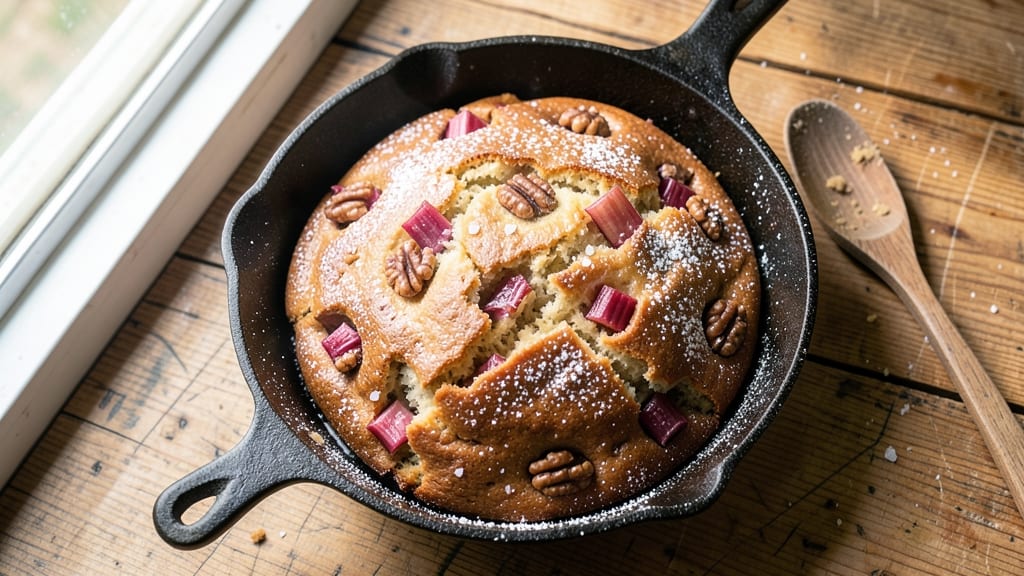
This Amish rhubarb bread recipe brings the comforting flavors of a Pennsylvania farmhouse to your kitchen—tangy rhubarb chunks nestled in a spiced, golden-brown loaf with a crispy top. The secret lies in balancing sweet and tart, using minimal ingredients just like traditional Amish bakers do, while keeping the texture moist and tender. I’ve perfected this version to stay true to heritage methods without sacrificing modern convenience.
The dough starts with a simple yeast-based mix, where rhubarb is folded in just enough to add bright flavor without overpowering the bread’s natural sweetness. Traditional Amish recipes often skipped refined sugar, so I’ve included a honey option for a touch of natural sweetness that caramelizes beautifully during baking.
The result is a loaf with a crunchy crust and a soft, slightly chewy interior that holds up perfectly for slicing.
Baking at 375°F for 30 minutes ensures a golden-brown top with those signature crackled edges Amish bread is known for. The rhubarb stays tender yet retains its tangy bite, creating a perfect balance in every slice.
Whether served warm with butter or toasted for breakfast, this bread delivers the hearty, homestyle satisfaction of a classic Amish kitchen.
For those adapting to modern needs, a gluten-free flour blend works just as well—simply swap the all-purpose flour for a 1:1 substitute. The recipe scales easily for gatherings, and leftovers keep well for days, making it a practical yet special addition to any meal. Let’s get baking!
Ingredients for amish rhubarb bread
Twelve simple ingredients transform into a rustic loaf with crispy edges and tender rhubarb chunks inside.
| Ingredient | Amount | Notes |
|---|---|---|
| All-Purpose Flour 🌾 | 5 cups | Unbleached preferred for texture |
| Rhubarb 🍓 | 2 cups | Diced, tart variety preferred |
| Active Dry Yeast 🍞 | 2 ¼ tsp | Or 1 packet (7g) |
| Granulated Sugar 🍯 | ½ cup | Or honey for traditional sweetness |
| Unsalted Butter 🧈 | ½ cup | Cold, cubed for dough |
| Milk 🥛 | 1 cup | Warm (110°F) for yeast activation |
| Large Egg 🥚 | 1 whole | Room temperature |
| Salt 🧂 | 1 ½ tsp | Diamond Crystal preferred |
| Ground Cinnamon 🌿 | 1 tsp | Freshly ground preferred |
| Ground Nutmeg 🌿 | ½ tsp | Freshly grated for warmth |
| Vanilla Extract 🍯 | 1 tsp | Pure vanilla preferred |
| Coarse Sugar 🍯 | ¼ cup | For crust sprinkle |
The rhubarb is the heart of this recipe—tart varieties like Crimson Cherry hold their shape best during baking. Most grocery stores carry it in the produce section, though local farmers markets often have fresher, more vibrant stalks. If you can't find fresh, frozen rhubarb works in a pinch, but thaw and drain it thoroughly before dicing. For the flour, King Arthur Unbleached yields the best texture, though any all-purpose will suffice. The yeast should be fresh—test it by dissolving in warm water with a pinch of sugar; if it foams within 5 minutes, it's active.
No honey? Brown sugar works perfectly for the traditional sweetness, though it may darken the crust slightly. Substituting milk? Unsweetened almond milk or buttermilk both work, though buttermilk adds subtle tang. For the spices, Penzeys bulk section offers the freshest ground cinnamon and nutmeg, but regular grocery store brands are fine if labeled 'ground' rather than 'whole'. The vanilla extract should be pure—Nestlé or McCormick are reliable brands. If you're making a gluten-free version, Bob's Red Mill 1:1 blend replaces the all-purpose flour seamlessly.
This dough keeps well in the fridge for up to 24 hours before baking, allowing flavors to meld further. For longer storage, freeze the shaped loaf (unbaked) for up to 3 months—thaw overnight in the fridge before baking. Once baked, store wrapped at room temperature for 2-3 days or freeze slices for up to 1 month. The rhubarb chunks stay tender when reheated—wrap slices in foil and warm in a 350°F oven for 5-7 minutes for that fresh-from-the-oven texture.
Why You'll Love This Recipe
- No Chopping Hassle: I swear by this recipe because the rhubarb gets tossed in raw—no peeling, no dicing, just chunk it straight into the dough. The yeast does all the work while you’re making coffee.
- Tart-Sweet Magic: That rhubarb-butter combo? It’s like a hug for your taste buds—bright tang cutting through the buttery richness, with just enough sugar to balance it out. My husband grabs seconds before I even finish my first slice.
- Breakfast or Snack: Serve it warm with jam for breakfast, or let it cool and pack it for lunch—it’s my go-to when I need something substantial but still feels light. Honestly, I’ve eaten it cold at midnight and never regretted it.
- Budget-Friendly Staples: Flour, sugar, butter—these are pantry basics you already have. The rhubarb? You can grow it yourself or grab a cheap bunch at the farmers’ market. Three loaves for the price of one fancy bread? Yes, please.
Step-by-step instructions for Amish rhubarb bread
Transform tart rhubarb into a fragrant, spiced loaf with a signature crunchy crust.
Activate the Yeast and Prepare the Dough Base
In a small bowl, combine the 1 cup warm milk (110°F), 0.5 cup granulated sugar, and 2.25 tsp active dry yeast. Let this sit for 5-10 minutes until it becomes frothy—this confirms the yeast is alive and ready to work. If it doesn't bubble, your yeast may be dead, and you'll need to start over.
In the bowl of a stand mixer fitted with the dough hook, combine the 5 cups all-purpose flour, 1.5 tsp salt, 1 tsp ground cinnamon, and 0.5 tsp ground nutmeg. Mix on low speed until evenly distributed, about 30 seconds. This ensures the spices are fully incorporated before adding liquids, preventing clumping.
Incorporate Wet Ingredients and Mix to Develop Gluten
Add the yeast mixture, 0.5 cup cold cubed unsalted butter, 1 whole large egg, and 1 tsp vanilla extract to the dry ingredients. Mix on medium speed for 3-5 minutes until the dough begins to pull away from the sides of the bowl and forms a shaggy mass. The butter should still be in small cubes—this prevents it from melting too soon and weakening the gluten structure.
Switch to low speed and knead for an additional 5-7 minutes until the dough is smooth and elastic. You'll know it's ready when it springs back slowly when poked. If the dough feels too sticky, add 1-2 tablespoons of flour at a time until it reaches the perfect consistency—it should be slightly tacky but not wet.
Fold in the Rhubarb and Let the Dough Rest
Using a rubber spatula, gently fold in the 2 cups diced rhubarb into the dough. Be careful not to overmix—just distribute it evenly throughout. The rhubarb should be visible in small clusters, not fully dispersed. Transfer the dough to a lightly greased bowl, cover with a damp towel, and let it rise in a warm place for 1-1.5 hours or until it has doubled in size.
This resting period allows the gluten to relax and the yeast to ferment properly. The dough should feel spongy and slightly springy when pressed gently. If your kitchen isn't warm enough, place the bowl near a slightly warm oven with the light on to encourage even rising.
Shape, Proof, and Prepare for Baking
Turn the dough out onto a lightly floured surface and gently shape it into a loaf. Fold the ends toward the center and roll it into a smooth, slightly tapered log. Place the shaped loaf seam-side down in a greased 9x5-inch loaf pan, cover it with a damp towel, and let it proof for an additional 30-45 minutes until it rises just above the rim of the pan.
Preheat your oven to 375°F while the dough proofs. Sprinkle the 0.25 cup coarse sugar evenly over the top of the loaf—this creates the signature crunchy crust. The sugar will caramelize during baking, adding both texture and a subtle sweetness that balances the tart rhubarb.
Bake to a Golden, Crisp Top
Bake the bread for 45-50 minutes until the top is deep golden brown and the internal temperature reaches 190°F. The crust should be firm to the touch, with a satisfying crackle when tapped. If the top browns too quickly, tent the loaf with aluminum foil to prevent over-browning while it continues to bake through.
Remove the bread from the oven and let it cool in the pan for 10 minutes before transferring it to a wire rack to cool completely. This resting period ensures the bread sets properly and prevents a gummy texture. Once fully cooled, slice into 8 even servings—each piece should reveal tender crumb with pockets of juicy rhubarb and a crisp, caramelized crust.
Pro Tips For Making Amish Rhubarb Bread
- Chop Rhubarb Small: I learned this the hard way—big chunks sink to the bottom and make your bread dense. Dice it into ¼-inch pieces so it distributes evenly and cooks through without weighing down the crumb. (Yes, even if you’re impatient like me.)
- Proof Yeast in Warm Milk: Skip the water—mix the yeast with a splash of warm milk (about 110°F) instead. The fat in milk gives the yeast a head start, and your dough will rise faster without overproofing. (Your future self will thank you.)
- Don’t Overmix the Dough: After folding in the rhubarb, stop mixing the second the flour disappears. Overworking the dough kills the yeast and makes the bread tough. Two minutes max—just until it comes together.
- Brush Butter on Cool Bread: Slather that melted butter on the bread while it’s still warm, but not scorching. If you wait too long, it’ll soak in like soup; if it’s too hot, it’ll melt into a greasy mess. Aim for 100°F—just out of the oven but not steaming.
Best sauces and condiments for amish rhubarb bread
Butter Spreads
Warm slices of this rhubarb bread with Amish-style whipped butter—mix ½ cup softened butter with 1 tbsp honey and a pinch of salt. The honey enhances the bread’s natural sweetness while cutting through the rhubarb’s tartness.
For extra richness, add ½ tsp vanilla extract and a pinch of cinnamon for warmth. Spread generously on toasted slices for a decadent breakfast treat. 🧈
Honey-Glazed Drizzle
Combine ¼ cup honey with 1 tsp lemon juice and ½ tsp fresh ginger in a small saucepan. Simmer for 3-4 minutes until slightly thickened, then brush warm glaze over sliced bread.
The tangy-sweet drizzle complements the rhubarb’s tartness perfectly. I love using local wildflower honey for a floral depth that pairs beautifully with the spiced dough. 🍯
Maple-Cream Cheese Swirl
Mix 4 oz softened cream cheese with 2 tbsp pure maple syrup and ½ tsp cinnamon. Spread on bread slices and top with a drizzle of extra maple syrup.
The creamy-sweet contrast balances the rhubarb’s brightness, creating a luxurious dessert-style treat. For extra flair, sprinkle with toasted pecans or crushed graham crackers for crunch. 🌰
Spiced Whipped Cream
Whip ½ cup heavy cream with 1 tbsp powdered sugar, ½ tsp vanilla, and a pinch of nutmeg. Pipe or dollop onto bread slices alongside a scoop of vanilla ice cream for a no-bake dessert.
The cool cream tames the bread’s warmth, while the nutmeg echoes the dough’s spices. Perfect for summer gatherings when you want a lighter option. ❄️
Caramelized Onion Topping
Cook 1 cup thinly sliced onions in 2 tbsp butter over low heat for 20-25 minutes until golden and sweet. Spoon over warm bread slices and finish with a sprinkle of crumbled blue cheese or feta.
The caramelized onions add a savory depth that contrasts the rhubarb’s tartness beautifully. 🧅
Nutrition facts
Frequently asked questions
Can I substitute honey for the granulated sugar in this recipe?
Yes! Traditional Amish recipes often used honey instead of refined sugar. Replace the ½ cup granulated sugar with ⅓ cup honey—it adds natural sweetness and enhances the rhubarb's flavor. The bread will have a slightly deeper color and caramelized notes. For the coarse sugar topping, use 2 tbsp brown sugar instead of white.
How do I know when the rhubarb is ready to pick?
Fresh rhubarb is ready when stalks are 2-3 inches thick, bright red or pink, and snap easily when bent. Avoid green or slimy stalks—they're too tart or fibrous. Harvest in early spring for the sweetest flavor. If using store-bought, choose firm stalks with vibrant color and no soft spots.
Why did my bread turn out dense instead of light and airy?
Dense bread usually means the yeast didn't activate properly or the dough didn't rise enough. First, check your yeast—it should foam within 5-10 minutes in warm milk. If not, use fresh yeast. Also ensure your kitchen is warm enough (75°F+) for rising. For extra lift, let the dough rise until it doubles in size before shaping.
Can I make this gluten-free?
Use a 1:1 gluten-free flour blend like Bob's Red Mill, and add ½ tsp xanthan gum if your blend doesn't include it. The texture will be slightly denser but still delicious. Reduce the milk by 2 tablespoons to account for the blend's moisture content. Let the dough rise 10-15 minutes longer since gluten-free dough rises slower.
How should I store leftover slices?
Wrap cooled slices tightly in plastic wrap or aluminum foil and store at room temperature for 2-3 days. For longer storage, freeze slices on a tray first (to prevent sticking), then transfer to a freezer bag. Reheat in a 350°F oven for 5-7 minutes or microwave for 15-20 seconds—the rhubarb stays tender when reheated properly.