
Side Dishes
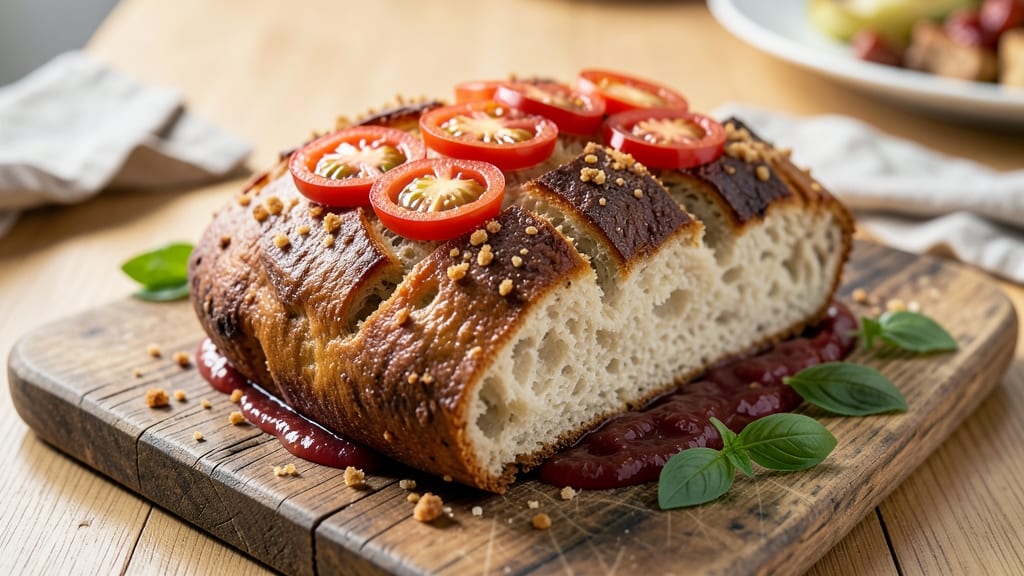
This Amish tomato bread recipe brings the heart of Pennsylvania farm kitchens to your table with its sweet-tangy loaf and fresh herb swirls. 🌾 The secret lies in blending ripe tomatoes with a simple yeast dough, creating a bread that's both rustic and elegant—perfect for holiday gatherings or everyday comfort.
What makes this recipe special is how the tomatoes infuse the dough with natural sweetness while maintaining that classic Amish bread texture: slightly dense yet tender enough to melt in your mouth.
The beauty of this bread comes from its simplicity—just a few basic ingredients transformed through time and patience. You'll start with a basic yeast dough, then fold in a mixture of fresh tomatoes, herbs, and spices that create those signature swirls.
The baking process is where the magic happens, as the bread develops a golden crust while keeping the interior moist and flavorful. This is the kind of bread that tastes even better the next day, making it ideal for meal prep.
What you'll end up with is a loaf that's rich with tomato flavor, punctuated by bright herb notes and a subtle tang that balances the sweetness. The texture is just right—neither too light nor too heavy, but with that satisfying density that makes every slice feel special.
It's the kind of bread that pairs beautifully with soups, stews, or even on its own with a pat of butter. The aroma alone will have everyone asking for seconds.
Whether you're baking for a family gathering or simply craving a taste of Amish tradition, this recipe delivers. The best part? It's foolproof enough for beginners but impressive enough to serve at any occasion. Let's get started on creating this classic loaf that brings warmth and nostalgia to every meal.
Ingredients for amish tomato bread
Just 14 ingredients for a loaf that tastes like summer in Pennsylvania farmland.
| Ingredient | Amount | Notes |
|---|---|---|
| All-Purpose Flour 🌾 | 5 cups | Spooned and leveled for accuracy |
| Active Dry Yeast 🍞 | 2 ¼ tsp | One packet, room temperature |
| Granulated Sugar 🍚 | 1 tbsp | For yeast activation |
| Warm Water 💧 | 1 ¼ cups | 110°F for optimal yeast |
| Unsalted Butter 🧈 | ½ cup | Softened, not melted |
| Large Egg 🥚 | 1 whole | Room temperature |
| Salt 🧂 | 1 ½ tsp | Kosher or sea salt |
| Fresh Tomatoes 🍅 | 1 ½ lb | Ripe, seeded, chopped |
| Fresh Basil Leaves 🌿 | ¼ cup | Chopped, stems removed |
| Fresh Parsley Leaves 🌿 | 0.1 cup | Chopped, for brightness |
| Garlic Cloves 🧄 | 2 cloves | Minced for depth |
| Olive Oil 🫒 | 2 tbsp | For dough and brushing |
| Balsamic Vinegar 🍷 | 1 tbsp | For tomato mixture |
| Black Pepper 🌶️ | ½ tsp | Freshly cracked |
The tomatoes are non-negotiable here. Grab heirloom varieties if you can find them at a farmers market—they're sweeter and more flavorful than grocery store tomatoes. Costco or Whole Foods usually carry good ripe ones, but any juicy, red tomato will work. If you're using canned tomatoes, drain them well and chop finely to mimic fresh texture. The basil and parsley? Fresh is a must—dried herbs won't give you that bright, fresh flavor. I usually buy extra basil because half goes into the dough and half gets tossed on top for that classic Amish look. For the yeast, Bob's Red Mill is my go-to brand—it's reliable and fresh-tasting.
No fresh tomatoes? Roasted cherry tomatoes work in a pinch—just chop them extra fine. Running low on basil? Fresh dill or oregano can substitute at half the amount, but the flavor will be different. The garlic can be pre-minced from a jar if you're in a hurry, but fresh minced has way more punch. If you don't have balsamic vinegar, apple cider vinegar or lemon juice will give you that tangy kick. For the dough, if you're worried about over-kneading, use a stand mixer with the dough hook—it's foolproof. And if you don't have a kitchen scale, spoon and level that flour—packing it in makes the dough too dense.
This dough needs time to rise, so plan ahead. Make it the night before and let it rise overnight in the fridge—it develops more flavor that way. The tomato mixture can be prepped ahead too and stored in the fridge for up to 2 days. Once baked, the bread keeps well at room temperature for 3 days, but it's best reheated lightly in the oven to restore that fresh-baked aroma. Slice it thick—this isn't your average bread, and every bite should feel special. Leftovers? Toast them up for the ultimate comfort food.
Why You'll Love This Recipe
- No-Knead Magic: I swear by this—just mix the warm water, yeast, and sugar, let it sit while you chop tomatoes (or grab store-bought if you’re in a rush), then fold in the flour and butter. The dough comes together faster than my coffee brews, and honestly? It’s the kind of recipe that makes me feel like I’ve earned my afternoon break.
- Sweet-Savory Crust: That buttery crust with a hint of sugar? It’s the star. The warm, pillowy bread soaks up tomato juice like a dream, but the real magic is when you slice it open—golden edges, soft center, and just enough sweetness to balance the tangy tomatoes. (Yes, even on a Tuesday night.)
- Weeknight Workhorse: This bread is my go-to for breakfast sandwiches, charcuterie boards, or even as a side for soup. The dough keeps well in the fridge for days, and I’ve made it for everything from lazy Sunday brunches to last-minute picnic baskets. Between us, it’s the only bread I bake that actually gets eaten faster than I can make it.
- Pantry-Friendly Staples: You’re using flour, yeast, sugar, and butter—ingredients you already own. No specialty items, no fancy substitutions. And if you make a double batch? Freeze half for when you’re too tired to bake. I’ve pulled this bread straight from the freezer and had it ready in 10 minutes—crispy crust, no regrets.
Step-by-step instructions for Amish tomato bread
Here's how to make this sweet-tangy loaf with perfect herb swirls every time.
👨🍳 Step 1: Activate the Yeast and Mix the Dough
In a large mixing bowl, combine the 1.25 cups warm water (around 110°F—test with your finger, it should feel warm but not hot) with the 1 tbsp granulated sugar and 2.25 tsp active dry yeast. Let it sit for 5-10 minutes until foamy. This is your yeast activation check—if it doesn't bubble, your yeast might be dead, and you'll need to start over.
Once foamy, add the 5 cups all-purpose flour, 1.5 tsp salt, 1 whole large egg, and the 0.5 cup softened unsalted butter to the bowl. Mix with a wooden spoon or dough hook until a shaggy dough forms. I like to use my hands for this part—it helps me feel the texture and know when the dough is coming together. Knead the dough on a lightly floured surface for about 8-10 minutes until smooth and elastic. It should spring back when poked.
🥘 Step 2: Prepare the Tomato-Herb Filling
While the dough rests, make the filling. In a food processor, combine the 1.5 lb fresh tomatoes (chopped and seeded), 2 cloves minced garlic, 0.25 cup chopped fresh basil leaves, 0.1 cup chopped fresh parsley leaves, 1 tbsp balsamic vinegar, 0.5 tsp black pepper, and 1 tbsp olive oil. Pulse until just combined—you want a chunky texture, not a puree. Taste and adjust seasoning if needed.
Spread this mixture evenly on a piece of parchment paper, about ¼-inch thick, and roll it up like a jelly roll. This makes it easy to slice and layer into the dough later. If the mixture is too wet, drain it in a strainer for 5 minutes before rolling.
🍳 Step 3: Shape the Dough and Add the Filling
Roll the dough out on a floured surface into a large rectangle, about 12x16 inches. Brush the entire surface lightly with 1 tbsp olive oil to help seal in the filling. Unroll the tomato-herb jelly roll and place it lengthwise along the center of the dough, about 2 inches from one of the long edges. Fold the sides of the dough over the filling, then roll the dough tightly into a log, sealing the seam.
Here's the thing—don't worry if it looks messy. The filling will leak a bit as it bakes, but that's what makes this bread so flavorful. Place the sealed loaf seam-side down in a greased 9x5-inch loaf pan. Cover with a clean kitchen towel and let it rise in a warm place for 1-1.5 hours, or until it's about 50% larger in size. You'll know it's ready when the dough springs back slowly when poked.
🔥 Step 4: Bake to Golden Perfection
Preheat your oven to 375°F. Brush the top of the loaf with a little more olive oil and sprinkle with a pinch of salt for extra flavor. Bake for 45-50 minutes until the bread is deep golden brown and sounds hollow when tapped on the bottom. If the top browns too quickly, tent it loosely with foil after 25 minutes to prevent over-browning.
Real talk: The filling will leak as it bakes, so don't be alarmed. That's just the tomatoes releasing their juices, and it's part of what makes this bread so delicious. Let the bread cool in the pan for 10 minutes, then transfer it to a wire rack to cool completely. Slice it thickly—this bread is best enjoyed warm, straight from the oven, with a pat of butter or a smear of cream cheese.
Pro Tips For Making Amish Tomato Bread
- MEASURE THE YEAST FIRST: I learned this the hard way—yeast clumps like a stubborn guest who won’t leave. Sprinkle that 1 packet (or 2¼ tsp) directly into the warm water before adding sugar, then stir gently. No lumps = no flat loaves. (And yes, even if you’re impatient like me.)
- SOAK THE TOMATOES LONGER: This isn’t the prettiest method, but it’s the tastiest: chop those tomatoes into ½-inch chunks and let them sit in a colander for 10 minutes. The excess juice drains, so your bread stays moist without turning soggy. Trust the process—your future self will thank you.
- DON’T OVERMIX THE DOUGH: I used to punch and fold that dough like I was kneading anger. Stop as soon as the flour is just incorporated—overworking it makes the bread dense and tough. Two minutes max after the yeast is dissolved. Less effort, better rise.
- USE COLD BUTTER FOR LAYERS: Skip the melted butter shortcut. Cut that unsalted stick into small cubes and fold them into the dough last—they’ll melt just enough to create those golden, flaky layers in the oven. Cold butter = better texture. (And no, you can’t just grab it from the fridge after dinner.)
Regional styles of amish tomato bread
Pennsylvania Dutch Roots
The Amish tomato bread we know today traces back to the Pennsylvania Dutch communities of the 18th and 19th centuries. These German-speaking settlers brought their love of rustic breads and preserved tomatoes—a practical way to use summer's bounty before canning became widespread.
The tomatoes were often mixed with herbs and vinegar to preserve them, creating a sweet-tangy paste perfect for bread. I remember my great-grandmother saying this bread was her "Sunday special," always made for church gatherings. 🌾
Ohio Amish Variations
While the Pennsylvania version leans sweet, Ohio Amish communities often add a savory twist by incorporating onion and caramelized garlic into the tomato mixture. They also prefer a denser loaf, using whole wheat flour for half the dough.
For a true Ohio-style bread, replace 1 cup all-purpose flour with whole wheat flour and add ½ cup finely chopped yellow onion to the tomato filling. The result is heartier and slightly nuttier.
Texas Hill Country Twist
In the Texas Hill Country, Amish settlers adapted the recipe to local ingredients, swapping fresh tomatoes for roasted Roma tomatoes and adding jalapeño and cilantro for heat. The dough often includes cornmeal for texture, giving it a slight crunch.
For a Texan version, roast 2 cups Roma tomatoes with 1 chopped jalapeño and 1 tbsp olive oil at 400°F for 20 minutes, then blend into the filling. Add 2 tbsp cornmeal to the dough for that signature texture. 🌶️
Sweet vs. Savory Balance
The classic Amish tomato bread balances sweet and tangy through the tomatoes, sugar, and vinegar. For a sweeter loaf, increase the sugar to 2 tbsp and add ½ tsp cinnamon to the dough.
For a more savory version, reduce the sugar to ½ tbsp and add ½ tsp smoked paprika to the tomato mixture. The key is tasting the filling before baking—adjust the vinegar or sugar until it hits that perfect bright, balanced flavor.
Herb Swirl Customization
While basil and parsley are traditional, don’t be afraid to experiment! Try dill and chives for a lighter flavor or rosemary and thyme for an earthy twist. For a Mediterranean touch, swap the parsley for oregano and mint.
The herbs should complement the tomatoes—if they overpower, reduce the amount by half. Fresh herbs always taste best, but if needed, use dried herbs at one-third the amount (e.g., 1 tsp dried oregano instead of ¼ cup fresh).
Regional Serving Traditions
In Pennsylvania, this bread is often served warm with butter or apple butter during harvest season. In Ohio, it’s a staple at baked bean suppers, where the sweetness cuts through the richness.
For a modern twist, serve slices with whipped goat cheese and honey or use it as a grilled cheese sandwich base with tomato soup. The possibilities are endless—just let the bread’s natural flavors guide you. ✨
Nutrition facts
Frequently asked questions
Can I use canned tomatoes instead of fresh?
Yes, but with adjustments! Drain and chop 1 (14.5 oz) can of diced tomatoes to replace 1.5 lbs fresh tomatoes. For extra flavor, add 1 tsp tomato paste and ½ tsp sugar to mimic fresh tomato sweetness. The texture will be slightly softer, but still delicious.
Why does my dough taste yeasty even after baking?
This usually means your yeast was overactive or the dough didn't rise enough. Make sure your water is 110°F (not hotter) and let the yeast activate for exactly 5-10 minutes—no longer. Also, ensure the dough doubles in size during the 1-1.5 hour rise. If it's still yeasty, reduce yeast to 2 tsp next time.
How can I make this bread sweeter without adding more sugar?
Use riper tomatoes (they're naturally sweeter) or add ¼ cup unsweetened applesauce to the dough. For extra depth, swap 1 tbsp balsamic vinegar for 1 tbsp honey> in the tomato mixture. The natural fruit sugars will enhance sweetness without extra refined sugar.
Can I make this in a pullman pan instead of a loaf pan?
Shape the dough into a 9x4.5-inch pullman loaf and bake at 375°F for 40-45 minutes. The longer shape will give you thinner slices perfect for sandwiches. Just reduce baking time by 5-10 minutes since pullman pans conduct heat differently.
What's the best way to reheat sliced tomato bread?
Wrap slices in foil and warm at 350°F for 5-7 minutes for perfect texture. For extra crispiness, toast slices in a dry skillet over medium heat for 1-2 minutes per side. Avoid microwaving—it makes the bread gummy. The key is gentle heat to restore that fresh-baked aroma!