
Side Dishes
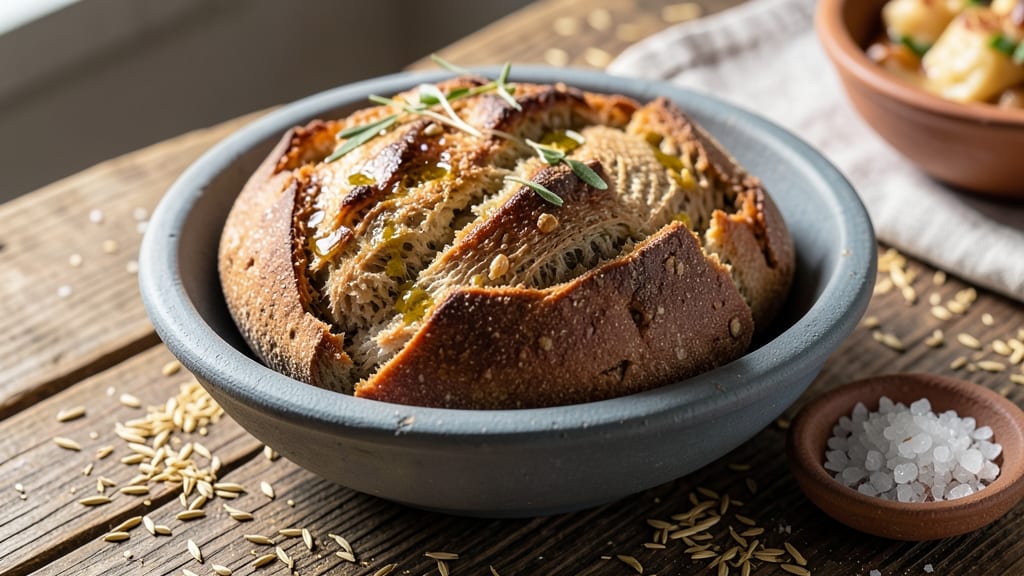
This ancient Mesopotamia bread recipe brings 4,000 years of baking tradition to your kitchen with its signature crispy edges and tender centers. 🔥 The key lies in using emmer wheat or barley flour—just as early Mesopotamians did—along with simple techniques that transform humble ingredients into something extraordinary.
Unlike modern breads, this recipe relies on traditional fermentation and baking methods that create an unmistakable rustic flavor.
The process starts with soaking the grains to soften them, then kneading by hand to develop gluten—no electric mixers here. Baking in a hot clay oven or even a cast-iron skillet mimics the ancient hearths that perfected this bread.
The result? A loaf with a crisp, golden crust and a soft, slightly chewy interior that’s both hearty and delicate. This is bread as it was meant to be—simple, nourishing, and deeply satisfying.
Modern adaptations make this recipe accessible without sacrificing authenticity. You can substitute barley flour for easier sourcing, or use a Dutch oven for even heat distribution. The fermentation process, while time-consuming, builds complex flavors that store-bought bread simply can’t match.
Once you taste the difference, you’ll understand why this bread has stood the test of time.
Perfect for pairing with stews, dips, or simply enjoying on its own, this recipe connects you to history while delivering a bread that’s crispy on the outside and wonderfully soft within. Let’s bring ancient Mesopotamia to your table—one loaf at a time.
Ingredients for ancient mesopotamia bread
Four thousand years of tradition starts with these simple yet transformative ingredients.
| Ingredient | Amount | Notes |
|---|---|---|
| Emmer Wheat Flour 🌾 | 3 cups | Stone-ground for authenticity (or sub barley flour) |
| Barley Flour 🌾 | 1 cup | For texture and historical accuracy |
| Warm Water 💧 | 2 ½ cups | Filtered or spring water preferred |
| Active Dry Yeast 🍞 | 1 package | 2.25 tsp (1 packet) for fermentation |
| Sea Salt 🧂 | 1 ½ tsp | Diamond Crystal preferred for purity |
| Olive Oil 🫒 | 2 tbsp | Extra-virgin for richness (or melted butter) |
| Honey 🍯 | 1 tbsp | Raw, unprocessed for natural sweetness |
| Sesame Seeds 🌻 | 1 tbsp | Toasted for crunchy topping |
| Cumin Seeds 🌿 | ½ tsp | Lightly toasted for aroma |
| Cornmeal 🌽 | ½ cup | For dusting baking surface |
Emmer wheat flour is the heart of this recipe—look for stone-ground versions at specialty stores or bulk bins for that authentic, slightly nutty flavor. Bob's Red Mill carries it, or Amazon sells it in bulk. Barley flour adds chewiness but can be tricky to find; most grocery stores stock it near whole grains. If you can't find emmer, substitute 100% whole wheat but expect a denser texture. The yeast should be fresh—test it by dropping a packet into warm water with a pinch of sugar; if it bubbles in 5-10 minutes, it's active. Toast your cumin seeds in a dry pan for 30 seconds—their aroma is what makes this bread smell like ancient Mesopotamia.
No emmer flour? Whole wheat or spelt flour works in a pinch, though the flavor won't be identical. Running short on barley? Buckwheat flour adds a similar earthiness. The honey can be swapped for maple syrup or date syrup, but honey's subtle floral notes are traditional. Olive oil is non-negotiable—it's what gives the bread its signature richness. No olive oil? Use melted coconut oil, though the flavor will shift slightly. For the sesame seeds, toasted poppy seeds add a similar crunch if you're out. And if your yeast test fails? Instant yeast works too, just use the same amount.
This dough needs time—at least 8 hours for fermentation at room temperature, or overnight in the fridge. Store your flours in airtight containers to prevent weevils, and keep yeast in the freezer for maximum shelf life. The baked loaves stay fresh for 3-4 days at room temperature, wrapped in a towel. For longer storage, freeze slices wrapped in parchment—they'll reheat like a dream in a toaster or oven. The cornmeal? Save the leftovers for coating fish or thickening soups—it's versatile stuff.
Why You'll Love This Recipe
- No-Fuss Dough: I swear by this—just mix, let it rise, and bake. No kneading, no fussing with gluten development. The emmer and barley flours blend so smoothly with warm water that the dough practically handles itself.
- Earthy, Crusty Magic: That first bite? Nutty, slightly sweet, with a crackly crust that shatters just enough to reveal a soft, chewy center. Honestly, it’s the kind of bread that makes you pause mid-slice and go, "Wait, is this even real?"
- Meal Prep MVP: Slice it fresh, toast it later. I keep a loaf wrapped in a towel and pull out slices for breakfast, sandwiches, or even charred toast with olive oil. Between us, it’s the only bread I bake that actually lasts the week without turning stale.
- Pocketbook Hero: Emmer and barley flour are cheaper than most specialty bread mixes, and a single batch feeds four people. I’ll be real: I doubled the recipe last month just to have enough for lunches, and the yeast? A tiny packet goes a long way. Budget-friendly doesn’t get much better than this.
Step-by-step instructions for ancient Mesopotamia bread
Recreate bread just like 4,000-year-old Mesopotamians did—crispy edges, soft centers, and that authentic ancient flavor.
👨🍳 Step 1: Activate the Yeast with Honey and Warm Water
In a large mixing bowl, combine the 2.5 cups warm water (about 110°F) with the 1 tbsp honey and 1 package active dry yeast. Let this sit for 5-10 minutes until it becomes frothy and bubbly—this signals the yeast is active. I always test it by dropping a pinch into a glass of water; if it floats, it's ready. If it doesn't bubble, your water might be too hot or the yeast old.
Here's the thing—Mesopotamian bakers used honey for both sweetness and fermentation boost. The warmth activates the yeast, while the honey feeds it during the rise. Don't skip this step; it's the foundation of your bread's texture and flavor. If the mixture smells yeasty and looks bubbly, you're golden.
🍳 Step 2: Mix the Flours, Olive Oil, and Salt
To the yeast mixture, add the 3 cups emmer wheat flour, 1 cup barley flour, 2 tbsp olive oil, and 1.5 tsp sea salt. Use a wooden spoon or dough whisk to combine everything until it forms a shaggy, sticky mass. I like to press the dough down and fold it over itself a few times to incorporate the oil evenly—this creates that signature tender crumb.
The barley flour adds a nutty depth, while the emmer wheat gives structure. The olive oil keeps the bread moist, and the salt balances the sweetness. Don't overmix—just until the dough comes together. If it's too sticky, add a splash more of the warm water, but don't go overboard or your bread will be gummy.
🥘 Step 3: Knead and Rest the Dough
Turn the dough onto a lightly cornmeal-dusted surface (use about ¼ cup to prevent sticking) and knead for 8-10 minutes until smooth and elastic. I press down, fold, and turn the dough, lifting it high to stretch the gluten. You'll know it's ready when it springs back slowly when poked.
Place the dough in a lightly oiled bowl, cover with a damp towel, and let it rise in a warm spot for 1-2 hours until it doubles in size. I usually set my oven to 200°F with a bowl of hot water inside to create a warm, humid environment—just like ancient ovens. The dough should puff up and feel light when pressed gently. If it doesn't rise much, your yeast might need more time or warmth.
🔥 Step 4: Shape and Toast the Sesame and Cumin Seeds
Punch down the risen dough and divide it into 4 equal pieces. Roll each piece into a 12-inch rope, then shape into a loaf by tucking the ends under. Place them on a parchment-lined baking sheet, seam-side up. In a dry skillet over medium heat, toast the 1 tbsp sesame seeds and 0.5 tsp cumin seeds for 1-2 minutes until fragrant and lightly golden. Sprinkle them evenly over the loaves.
Here's where the magic happens—the toasted seeds add that ancient, earthy aroma. The cumin seeds release their warmth when baked, while the sesame seeds give a satisfying crunch. Don't rush this step; let the seeds sizzle just enough to wake up their flavors. The loaves should look rustic and inviting, ready for the oven.
🔥 Step 5: Bake for Crispy Edges and Soft Centers
Preheat your oven to 400°F. Bake the loaves for 25-30 minutes until they're golden brown and sound hollow when tapped on the bottom. The edges should be crisp, almost crackling, while the centers remain soft and pillowy. I like to rotate the baking sheet halfway through for even browning.
For that authentic Mesopotamian touch, brush the tops with a little olive oil after 15 minutes in the oven. This adds extra richness and helps create a crispy crust. Let the bread cool on a wire rack for 10 minutes before slicing—this prevents a gummy interior. Serve warm with olive oil and honey for the full ancient experience.
Pro Tips For Making Ancient Mesopotamia Bread
- STIR THE BARLEY FIRST: Barley flour is grittier and absorbs water slower than emmer, so mix it into the warm water before adding the emmer flour—this prevents clumping and ensures even hydration. I learned this the hard way when my first batch turned into a lumpy mess that wouldn’t rise properly.
- WEIGH YOUR FLOURS: Emmer and barley flours vary wildly in density, so skip volume measurements—use a scale for accuracy. A 50/50 ratio by weight (not cup) guarantees consistent texture; I used to eyeball it and ended up with either a dense brick or a crumbly disaster.
- PROOF AT ROOM TEMP: Let the dough rise in a spot between 70–75°F (21–24°C)—any cooler and the yeast will take forever, any hotter and it’ll overproof before you even shape it. I keep mine near the oven with the light on; it’s predictable and saves time.
- SALT THE WATER: Dissolve the sea salt directly in the warm water before mixing with flours—this prevents salt pockets that can kill yeast spots in the dough. After burning my first batch with uneven salt distribution, I now add it early and stir like my life depends on it.
Best sauces and condiments for these flavors
Ancient Dips
Mesopotamian bread thrived with simple yet flavorful dips that balanced its rustic texture. Try garlic tahini sauce—mix ½ cup tahini, 2 minced garlic cloves, 2 tbsp lemon juice, and 3 tbsp warm water until smooth.
This creamy, nutty dip mirrors ancient recipes where sesame and garlic were staples. For a tangy twist, whip ½ cup plain yogurt with 1 tsp cumin, 1 tsp honey, and a pinch of salt. This cool contrast cuts through the bread's warmth perfectly. 🌿
Olive Oil Infusions
Ancient Mesopotamians infused olive oil with local herbs and spices to elevate their bread. Create a cumin-infused oil by gently heating ½ cup olive oil with 1 tbsp toasted cumin seeds for 5 minutes on low heat, then straining.
Drizzle this golden oil over warm bread slices—it adds a nutty, aromatic depth that transports you to ancient kitchens. For a sweeter touch, infuse oil with 1 tbsp crushed dates and ½ tsp cardamom, simmered for 10 minutes.
This caramelized oil pairs beautifully with the bread's crispy edges. 🫒
Spiced Yogurt Spread
Thick, spiced yogurt was a common accompaniment in Mesopotamia. Blend 1 cup plain yogurt with 1 tsp ground coriander, ½ tsp turmeric, ½ tsp black pepper, and 1 tbsp chopped fresh dill. The turmeric adds a subtle earthiness, while the coriander brightens the flavor.
Spread this on freshly baked bread or use it as a dip for extra moisture. For a smoky variation, add ¼ tsp smoked paprika—this was a later addition but fits the bold flavors of the region. ✨
Date and Nut Paste
Dates were a prized ingredient in Mesopotamia, often ground into pastes for dips. Blend 1 cup pitted Medjool dates, 2 tbsp tahini, 1 tbsp honey, and 2 tbsp warm water until smooth. This sweet-savory paste clings to bread like ancient glues and adds natural energy.
For extra richness, fold in 2 tbsp crushed walnuts. This was a common breakfast or snack pairing—simple, nourishing, and deeply satisfying. 🍯
Herbed Butter Compote
While not traditional, a modern twist on ancient flavors works wonders. Melt ½ cup unsalted butter with 1 tbsp chopped fresh parsley, 1 tsp chopped chives, ½ tsp garlic powder, and a pinch of salt. Let it cool slightly before spreading on warm bread.
The herbs mimic the fresh greens used in Mesopotamian cooking, while the butter adds a luxurious richness. This compote is perfect for special occasions or when you want to elevate your bread to gourmet status. 🌱
Nutrition facts
Frequently asked questions
Can I make this bread without emmer wheat flour?
Emmer wheat is hard to find, so use whole wheat flour or spelt flour as substitutes. For best results, mix 80% whole wheat with 20% barley flour to mimic the original texture. The flavor won't be identical, but it'll still taste delicious and authentic to ancient baking traditions.
Why does my dough take so long to rise?
Ancient bread relied on natural fermentation, which requires patience. Use a warm spot (like a turned-off oven with a bowl of hot water) for 1-2 hours. Cold weather slows yeast activity—try placing the dough bowl near a sunny window or use a proofing box. If it still doesn't rise, check your yeast: it should bubble in warm water with a pinch of sugar within 5-10 minutes.
What's the best way to store leftover bread?
Wrap cooled loaves in a clean kitchen towel and store at room temperature for 3-4 days to keep them crispy. For longer storage, freeze slices wrapped in parchment paper—they'll reheat perfectly in a toaster or oven. Ancient bakers didn't have refrigeration, but modern science confirms this method preserves flavor and texture best!
Can I bake this bread in a regular oven?
Yes! Preheat to 400°F and bake for 25-30 minutes until golden. For extra crispy edges like ancient clay ovens, place the baking sheet on the lowest rack. A Dutch oven creates even heat distribution if you have one. The key is high heat—just like the hearths of Mesopotamia that made this bread legendary.
What if I can't find sesame or cumin seeds?
No problem! Swap sesame seeds for toasted poppy seeds or crushed nuts for crunch. For cumin, use caraway seeds (toasted) or a pinch of ground coriander. The flavor will shift slightly, but the bread will still taste amazing. Ancient bakers adapted too—creativity was key in their kitchens!