
Side Dishes
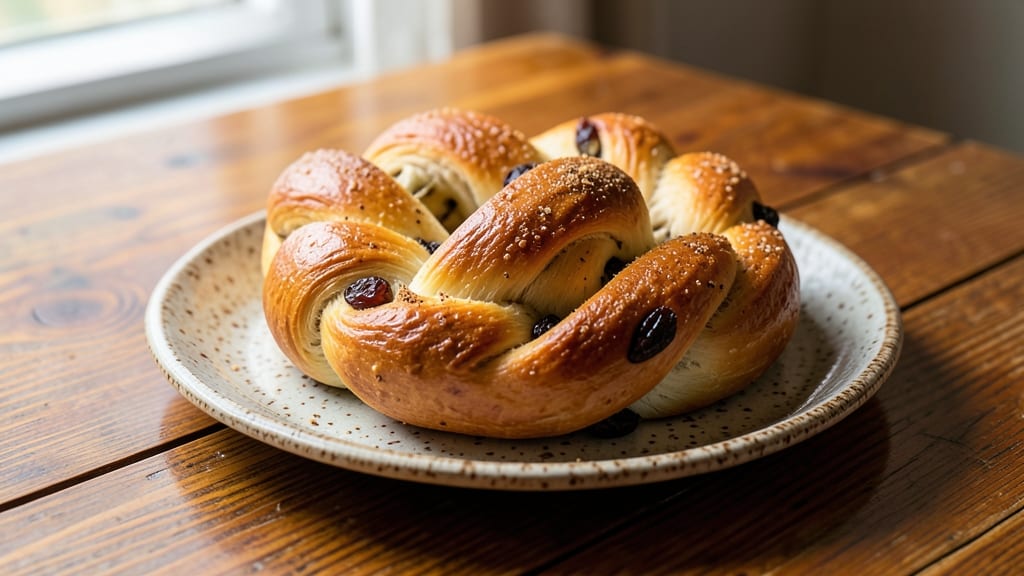
This Armenian Easter Choreg recipe brings the warmth of tradition to your kitchen with its sweet raisin-studded bread and golden crust. 🌟 The rich history of Choreg dates back centuries as a symbol of renewal and prosperity during Easter celebrations, making it more than just a dessert—it's a cultural centerpiece.
Every bite carries the essence of Armenian heritage, from the tender dough to the aromatic spices that infuse the air as it bakes.
The recipe begins with a simple yet transformative dough made from flour, yeast, and a touch of sugar, which creates the perfect balance between sweetness and subtle warmth. Raisins are folded into the dough, ensuring each piece delivers bursts of juicy sweetness against the flaky crust.
The shaping technique is key—rolling the dough into a traditional braided form or round loaf—adding both visual appeal and structural integrity for baking.
Baking at the right temperature ensures a crisp, golden exterior while keeping the interior soft and inviting. The aroma that fills your kitchen as it bakes is unmistakable—warm, spiced, and slightly sweet, a scent that instantly transports you to Easter celebrations.
This bread is perfect for sharing, whether as a centerpiece at a family gathering or a sweet treat to mark the season of renewal.
With just a few simple ingredients and a bit of patience, you can create a bread that carries the weight of tradition while fitting seamlessly into your modern kitchen.
The process is straightforward, yet the result is undeniably special—proof that some of life’s best flavors come from recipes passed down through generations. Let’s get started on crafting this timeless Easter treasure.
Ingredients for armenian easter bread choreg
Traditional Armenian spices and sweet raisins make this golden crust bread a centerpiece for Easter celebrations.
| Ingredient | Amount | Notes |
|---|---|---|
| All-Purpose Flour 🌾 | 4 cups | High-protein for structure |
| Active Dry Yeast 🍞 | 1 package | 2¼ tsp per package |
| Granulated Sugar 🍚 | ½ cup | For yeast activation |
| Unsalted Butter 🧈 | ½ cup | Softened, full-fat preferred |
| Warm Milk 🥛 | 1 cup | Whole milk, 110°F |
| Large Eggs 🥚 | 1 whole | Room temperature |
| Salt 🧂 | 1 tsp | Diamond Crystal preferred |
| Ground Cinnamon 🌿 | 1 tsp | Freshly ground for warmth |
| Ground Cardamom 🌿 | ½ tsp | Optional but traditional |
| Seedless Raisins 🍇 | 1 cup | Plump, not shriveled |
| Extra-Virgin Olive Oil 🫒 | 2 tbsp | For dough and brushing |
| Granulated Sugar (Topping) 🍚 | ¼ cup | For golden crust |
| Coarse Sugar (Topping) 🍚 | ¼ cup | For crunchy texture |
| Toasted Slivered Almonds 🌰 | ½ cup | For garnish |
The yeast is the heart of this recipe—Bob’s Red Mill or Saf-Instant work best for reliability. If your raisins look dry, soak them in warm milk for 10 minutes before folding into the dough (they’ll plump up beautifully). For the spices, Penzeys carries authentic Armenian cardamom if you want to go all out, but regular grocery store ground cardamom works too. The butter should be soft but not melted—just press it with your finger to test. If it’s too firm, microwave for 10 seconds.
No cardamom? Skip it—this isn’t a dealbreaker. The cinnamon is non-negotiable though—it’s what gives Choreg that warm, cozy spice. For the raisins, golden raisins at half the amount add a lovely hue. The dough will feel sticky, but don’t add extra flour—it’ll tighten up as it rests. If you’re short on time, use 1 tbsp instant yeast instead of the whole package, but let it proof for 10 minutes longer. The almonds? Toast them in a dry pan for 2 minutes until fragrant—they’ll add crunch that makes every bite special.
This dough needs 2 hours of rising time—don’t rush it! Cover it with a damp towel to keep it from drying out, and place it in a warm spot (like the oven with the light on). For shaping, roll it into a 3-strand braid or round loaf—traditional, but a simple oval works too. Brush the top with melted butter and sprinkle the sugars right before baking. The crust will be golden and crisp in 30-35 minutes at 375°F, but keep an eye on it—ovens vary. Store leftovers wrapped at room temperature for 3 days, or freeze the whole loaf for 3 months.
Why You'll Love This Recipe
- Golden Rise Guaranteed: I swear by this dough’s magic—just mix, let it proof, and bake. No fancy techniques, no waiting hours. That warm milk and butter combo makes the bread so tender, it practically melts in your mouth.
- Sweet Butter Magic: Honestly, the sugar and butter in the dough create this perfect balance—rich but not cloying, with a subtle sweetness that pairs beautifully with savory dishes. It’s the kind of flavor that makes you reach for seconds without even thinking.
- Easter Centerpiece Ready: Between us, this bread looks stunning when braided and baked—ideal for Easter tables or holidays. But here’s the best part: it’s just as impressive in plain loaf form for everyday meals.
- Budget-Friendly Luxury: Flour, yeast, sugar, butter, and milk? You’ve got this covered without breaking the bank. Plus, it keeps for days, so I’m always making a double batch—one for now, one for later.
Step-by-step instructions for Armenian Easter choreg
Let's bring this traditional Armenian sweet bread to life with its signature golden crust and plump raisins!
👨🍳 Step 1: Activate the Yeast and Mix the Dough
In a small bowl, dissolve the ½ cup granulated sugar in ½ cup warm milk (about 110°F) until fully dissolved. Sprinkle the 1 package active dry yeast over the top and let sit for 5-10 minutes until foamy. This is your yeast activation test—it should bubble and foam like a tiny champagne party!
In a large mixing bowl, combine the 4 cups all-purpose flour, 1 teaspoon salt, 1 teaspoon ground cinnamon, and ½ teaspoon ground cardamom. Make a well in the center and add the yeast mixture, ½ cup softened unsalted butter, 1 whole large egg, and 2 tablespoons extra-virgin olive oil. Mix with a wooden spoon until a shaggy dough forms. Real talk: it'll look messy at first—that's normal!
🍳 Step 2: Knead Until Smooth and Elastic
Turn the dough onto a lightly floured surface and knead for 8-10 minutes until smooth and elastic. You'll know it's ready when it springs back when poked and doesn't stick to your fingers. I press down gently on the dough during kneading—this develops the gluten that gives choreg its perfect structure.
If the dough feels too sticky, add 1 tablespoon flour at a time until it comes together nicely. Once smooth, return the dough to the bowl, cover with a damp towel, and let rise in a warm place for 1-1½ hours or until doubled in size. The kitchen should smell like warm cinnamon and promise—this is the magic happening!
🥘 Step 3: Fold in Raisins and Shape the Loaf
After the first rise, punch down the dough and fold in the 1 cup seedless raisins. Gently knead just until incorporated—you don't want to deflate the dough completely. Shape into a round loaf and place it in a greased 9x5-inch loaf pan, covering the top with a damp towel. Let it rise again for 30-45 minutes until just above the pan rim.
Here's the thing—don't over-rise it or the bread will collapse. You want it to just peek over the edges, like a happy little bread dome. While it rises, preheat your oven to 350°F and prepare your egg wash by beating the remaining 1 tablespoon olive oil with 1 tablespoon warm milk.
🔥 Step 4: Bake with Sugar Topping for Golden Crust
Brush the risen dough with the egg wash, then sprinkle evenly with the ¼ cup granulated sugar and ¼ cup coarse sugar mixture. This creates that beautiful golden crust we all love! Bake for 40-45 minutes until the top is deep golden brown and a toothpick inserted comes out clean.
If the top browns too quickly, tent with foil. The bread should smell like warm spices and caramelized sugar—pure joy in bread form! Remove from the oven and immediately sprinkle with the ½ cup toasted slivered almonds while still warm so they stick.
⏰ Step 5: Cool and Serve Traditional Style
Let the choreg cool in the pan for 10 minutes before transferring to a wire rack. This resting period is crucial—it allows the bread to set properly and prevents a gummy texture. For best results, serve at room temperature so all those flavors can shine.
The perfect choreg should have a crisp golden crust with crunchy almonds, tender yet slightly chewy crumb, and plump raisins throughout. Slice it thick and share with loved ones—this bread is made for celebrating! Store leftovers wrapped in a clean kitchen towel to keep it fresh for up to 3 days.
Pro Tips For Making Armenian Easter Bread Choreg
- Use Room-Temp Butter: The dough for choreg needs butter that’s soft but not greasy—about 65°F (18°C). Cut the butter into small cubes first, then let it sit out for 20-30 minutes while you mix the yeast. Cold butter fights the gluten, and you’ll end up with a denser loaf that’s harder to shape. (Yes, even if you’re impatient like me.)
- Skip the Over-Kneading: This dough is delicate—knead just until it pulls away from the bowl, about 5-7 minutes by hand. Overworking it makes choreg tough and dry. After the first rise, handle it gently when shaping; stretch, don’t punch. My grandmother swore by this, and she was right: patience here means a lighter, fluffier crumb.
- Proof Until It Almost Doubles: The second rise is where choreg gets its signature airiness. Place the shaped loaf in a warm spot (like a turned-off oven with a cup of boiling water) and let it rise until it’s just shy of doubling—about 1.5 to 2 hours. If you wait for full doubling, the top will collapse when baked. (Your future self will thank you.)
- Brush with Melted Butter: After baking, brush the warm loaf with 2-3 tablespoons of melted unsalted butter while it’s still in the pan. This isn’t just for shine—it adds moisture and a subtle richness that dried-out store-bought bread can’t match. Do it quickly before the butter soaks in; the bread will stay soft for days. (Does it look weird? Yes. Does it work? Every single time.)
Troubleshooting great armenian easter bread choreg
Dough Too Sticky
If your choreg dough feels like it’s gluing itself to your hands, resist the urge to add extra flour—this will tighten the gluten and make the bread dense. Instead, wet your hands slightly with water or olive oil before handling.
I’ve found that using a dough scraper helps too—it keeps your hands clean while shaping. The dough should feel tacky but manageable, like wet playdough.
If it’s still too sticky after kneading, cover it with a damp towel and let it rest for 10 minutes—this often helps it come together better. 💫
Yeast Not Activating
If your yeast mixture sits for 10 minutes and doesn’t bubble, it’s likely dead or your milk wasn’t warm enough. First, check the temperature—it should be 110°F (like a warm bath).
If that’s correct, try fresh yeast from the store or test it in a small bowl with 1 tsp sugar and ¼ cup warm water. If it still doesn’t activate, your yeast may be old.
I keep mine in the fridge to extend its life, but it’s best used within 3-4 months for peak performance.
Bread Collapses During Baking
A collapsed choreg usually means the dough overproofed or wasn’t shaped properly. To prevent this, keep an eye on the second rise—it should take 30-45 minutes max until it just peeks over the pan. If it rises too quickly, your kitchen might be too warm.
Shape the dough gently but firmly into a round loaf, and don’t poke it too much after shaping. For extra support, place a baking sheet on the rack below the pan to catch any potential drips—this also helps with even baking. 🔥
Raisins Stay Dry
Dry raisins can make your choreg taste bland and chewy. Soak them in warm milk or water for 10-15 minutes before folding them into the dough.
If you forget, toss them in a bowl with 1 tbsp honey or olive oil for a few minutes—this plumps them up and adds extra flavor. I also like to warm the raisins slightly in the microwave for 20 seconds to soften them before mixing.
This ensures they stay juicy and sweet throughout the bread.
Crust Too Pale
A pale crust means your choreg isn’t caramelizing properly. First, make sure your oven is fully preheated to 350°F—cold spots can prevent browning. Brush the dough with egg wash and sprinkle the sugar topping right before baking, not after.
If the crust still looks dull, broil it for 1-2 minutes at the end, watching closely to avoid burning. For extra color, add ½ tsp turmeric to the sugar topping—it’s a trick I picked up from Armenian bakers for that golden hue. ✨
Dense or Gummy Texture
Over-kneading or underproofing can lead to a dense choreg. Knead just until the dough is smooth and elastic (8-10 minutes max), and let it rise until it doubles in size—no more, no less. If your bread turns out gummy, it might not have baked long enough.
Check the internal temperature with a thermometer—it should reach 190°F. For extra tenderness, brush the cooled bread with a little melted butter or honey after baking. This adds moisture and balances the texture beautifully.
Nutrition facts
Frequently asked questions
Can I make Choreg without raisins?
While raisins are traditional, you can substitute 1 cup dried figs, apricots, or even chopped dates for a different flavor profile. For a nutty twist, try ½ cup chopped walnuts or pistachios instead. Just soak dried fruits in warm milk for 10 minutes first to prevent dryness in the bread.
Why does my Choreg smell amazing but taste bland?
The spices are key! Ensure you use freshly ground cinnamon and cardamom—pre-ground spices lose potency quickly. If your kitchen smells great but the flavor is lacking, try adding ½ teaspoon vanilla extract to the dough or sprinkling a pinch of ground cloves on top before baking for deeper warmth.
How do I store Choreg for Easter celebrations?
Wrap cooled Choreg tightly in a clean kitchen towel or beeswax wrap to keep it fresh for 3-4 days at room temperature. For longer storage, freeze the whole loaf (unwrapped) for up to 3 months. To reheat, wrap frozen slices in foil and warm in a 350°F oven for 5-7 minutes until crispy again.
Can I make Choreg without a loaf pan?
Yes! Shape the dough into a round loaf or traditional braid, then place it on a parchment-lined baking sheet. Brush with egg wash and bake at 375°F for 35-40 minutes, rotating halfway for even browning. For extra flair, create a decorative cross pattern on top with a sharp knife before baking.
What makes Choreg different from regular sweet bread?
Choreg's magic comes from its spiced dough, golden sugar crust, and symbolic raisins representing prosperity. The slow rise and careful shaping create its signature tender crumb, while the almond topping adds texture. Unlike commercial sweet breads, Choreg's flavors develop through traditional techniques passed down for generations.