
Side Dishes
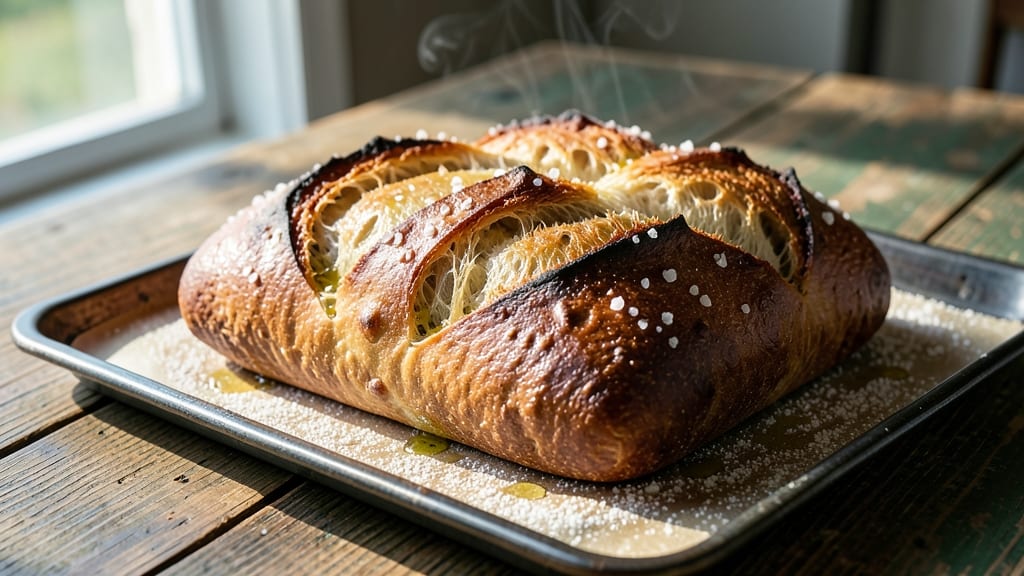
Arrowhead Mills ciabatta bread delivers that signature artisan texture—crispy golden crusts with irresistibly chewy, airy centers. 🌟 The secret lies in a high-hydration dough that develops its signature open crumb structure during proofing, creating pockets perfect for soaking up olive oil or dipping into soups.
This recipe uses Arrowhead Mills' high-protein flour for that signature chew and structure, while traditional techniques ensure professional results at home.
The process begins with a simple yet precise dough formula that requires just a few ingredients but delivers restaurant-quality texture. Unlike dense breads, ciabatta's unique character comes from its high moisture content (about 75% hydration) and minimal kneading—allowing gluten to develop naturally during the long proofing period.
The shaping technique, with its signature dimpled surface, creates those coveted air pockets that make every bite satisfying.
By the time it emerges from the oven, your ciabatta will have a crispy exterior that gives way to a soft, open interior with just the right amount of chew.
The aroma alone will transform your kitchen into an Italian bakery, and the texture—when served warm with extra virgin olive oil—is what makes this bread truly special.
Whether you're serving it with charcuterie, using it for sandwiches, or simply enjoying it with a bowl of soup, this recipe delivers the real deal.
This method is designed for home bakers who want professional results without the complexity. With just a few hours of hands-off time (including proofing), you'll have bread that rivals what you'd find in specialty bakeries.
The key is patience—letting the dough work its magic during proofing creates that signature texture that sets ciabatta apart from other breads. Let's get started on creating your perfect loaf.
Ingredients for arrowhead mills ciabatta bread
Arrowhead Mills flour and a few precise ingredients create restaurant-quality ciabatta at home.
| Ingredient | Amount | Notes |
|---|---|---|
| Arrowhead Mills High-Protein Flour 🌾 | 3 ½ cups | Unbleached, for optimal gluten development |
| Active Dry Yeast 🍞 | ¼ oz | Or 2.25 tsp (1 packet) |
| Extra-Virgin Olive Oil 🫒 | ¾ cup | High-quality, fruity variety preferred |
| Warm Water 💧 | 1 ¾ cups | 105-110°F for optimal yeast activation |
| Diamond Crystal Kosher Salt 🧂 | 1 ½ tsp | Adjust to taste after baking |
| Cornmeal 🌽 | ¼ cup | For dusting baking surface |
| Semolina Flour 🌾 | ¼ cup | For dusting proofing basket |
| Coarse Sea Salt 🧂 | ½ tsp | For sprinkling before baking |
The Arrowhead Mills high-protein flour is non-negotiable here—its 12% protein content delivers that signature chew and open crumb structure. King Arthur or Caputo bread flour work as alternatives if you can't find Arrowhead Mills, but expect slightly different texture. For yeast, Saf-Instant is ideal as it doesn't require activation, but standard active dry yeast works if bloomed in warm water. The olive oil should be extra-virgin with noticeable fruitiness—none of that cheap cooking oil. I always buy mine from Whole Foods bulk section or Trader Joe's for the best quality. Water temperature is critical: too hot kills yeast, too cold prevents activation—aim for 105-110°F.
No Diamond Crystal kosher salt? Morton kosher salt works but measures differently—use half the amount. For the coarse sea salt, Maldon flaky salt creates those signature crunchy pockets, but any coarse salt will do. Running short on semolina? Fine cornmeal works in a pinch. The dough's high hydration (75%) means it's stickier than traditional bread dough—don't fight it. If your kitchen feels too humid, lightly oil your mixing bowl to prevent sticking. For proofing, I use a banneton basket lined with a floured towel, but a well-floured bowl works too. The key is patience: let the dough rise until it's 50% larger than its original size—this creates those signature air pockets.
Freshly baked ciabatta stays crisp for 2-3 days at room temperature, wrapped in a clean kitchen towel. For longer storage, freeze the cooled loaf wrapped in plastic—up to 3 months. To revive, warm in a 350°F oven for 5-10 minutes until crisp again. The dough can be shaped and refrigerated overnight for 12 hours before baking—just add 30 minutes to proofing time. For extra flavor, brush warm loaves with garlic-infused olive oil before serving. The texture improves as it cools, so resist the urge to cut into it immediately—wait at least 1 hour for that perfect balance of crispy crust and chewy interior.
Why You'll Love This Recipe
- No-Knead, No-Fuss Magic: I swear by this method—just mix, let it rise, and bake. The Arrowhead Mills high-protein flour does all the heavy lifting, so you don’t have to punch or fold like some bread recipes demand. Honestly, my lazy Sunday mornings just got a whole lot better.
- Crispy Outside, Cloud Inside: That olive oil bath? Pure gold. The crust crackles like a fresh baguette from a Parisian bakery, but the interior stays soft and airy—no gummy centers here. Between us, it’s the kind of bread that makes you pause mid-bite just to appreciate it.
- Weeknight Sandwich Hero: Toss it in a lunchbox, tear it for dipping, or use it to soak up marinara like a sponge. I’ve made this for everything from charcuterie boards to quick pasta nights, and it never lets me down. (Yes, even on a Tuesday night.)
- Budget Stretch with Big Payoff: A single batch feeds my family for days—think toast, garlic bread, or croutons for salads. The Arrowhead Mills flour is a steal, and a little goes a long way, so your wallet stays happy while your kitchen smells like heaven.
Step-by-step instructions for artisan ciabatta bread
Here's the method for crafting professional-quality ciabatta with a crisp crust and signature air pockets.
👨🍳 Step 1: Activate the Yeast and Mix the Dough
In a large mixing bowl, combine the 1.75 cups warm water (between 105-110°F) with the 0.25 oz active dry yeast. Let it sit for 5-10 minutes until frothy—this confirms your yeast is active. If it doesn't bubble, start over with fresh yeast.
Add the 3.5 cups Arrowhead Mills High-Protein Flour and 1.5 tsp Diamond Crystal Kosher Salt to the bowl. Mix with a wooden spoon until a shaggy dough forms. Then add the 0.75 cup Extra-Virgin Olive Oil and continue mixing until the dough comes together. The high-protein flour will create a sticky, elastic dough—this is normal and essential for ciabatta's signature texture.
🥘 Step 2: Knead and Develop Gluten
Turn the dough onto a lightly floured surface and knead for 8-10 minutes until smooth and elastic. You'll know it's ready when it passes the "windowpane test"—stretch a small piece and it should thin to translucent without tearing. The high-protein flour requires more kneading than all-purpose flour to develop proper gluten structure.
Shape the dough into a loose ball, place it back in the bowl, cover with a damp towel, and let it rest at room temperature for 1 hour. This initial rest allows the gluten to relax slightly, making it easier to shape later. The dough should nearly double in size during this time—this indicates proper yeast activity.
🍳 Step 3: Shape and Proof the Dough
After the rest, turn the dough out onto a surface lightly dusted with semolina flour. Using wet hands, gently shape the dough into a rough rectangle about 12x8 inches. Fold the long sides toward the center, then fold the top and bottom over to create a sealed package. This technique builds structure while creating those signature ciabatta air pockets.
Place the shaped dough seam-side up in a lightly oiled bowl, cover, and let it proof at room temperature for 1-2 hours until it has nearly doubled in size. The dough should feel light and springy when pressed gently. If it rises too quickly, refrigerate for 30 minutes to slow fermentation—this helps control the rise and improves flavor development.
🔥 Step 4: Bake for Crispy Crust and Airy Centers
Preheat your oven to 450°F with a baking stone or inverted baking sheet on the middle rack. Line a baking sheet with parchment paper and dust generously with cornmeal. Transfer the proofed dough to the prepared sheet and score the top with a sharp razor at ½-inch intervals, cutting about ½-inch deep. This creates the characteristic open crumb structure.
Sprinkle the dough with 0.5 tsp coarse sea salt and bake for 20-25 minutes until the crust is deep golden brown and sounds hollow when tapped. The internal temperature should reach 190-200°F. For extra crispiness, you can also bake for the last 5 minutes with a tray of boiling water in the oven to create steam.
⏰ Step 5: Cool and Serve for Optimal Texture
Remove the ciabatta from the oven and transfer it to a wire rack to cool completely. This 1-2 hour cooling period is crucial—it allows the steam inside to redistribute, resulting in that signature chewy texture. Cutting into bread too soon will make it gummy rather than airy.
Once fully cooled, slice the ciabatta with a serrated knife. The interior should reveal large, irregular holes surrounded by tender, chewy strands. Serve warm with your favorite olive oil dip or use it for sandwiches—each bite should deliver a perfect balance of crispy crust and airy, open crumb.
Pro Tips For Making Arrowhead Mills Ciabatta Bread
- WEIGH YOUR FLOUR: The Arrowhead Mills high-protein flour packs differently than all-purpose—don’t scoop. Use a kitchen scale for precision, especially if your recipe calls for 400g or more. I learned this the hard way when my first loaf turned dense; the extra 20g of flour made all the difference.
- PROOF THE YEAST IN OLIVE OIL: Skip the sugar water—mix your yeast with a teaspoon of warm extra-virgin olive oil instead. The fat helps the yeast activate faster and gives the dough a subtle richness from the start. (Yes, even if your recipe says water, trust me on this.)
- STRETCH THE DOUGH LONG: Don’t just fold—stretch that Arrowhead Mills dough like taffy until it resists but doesn’t tear. The high-protein flour needs aggressive stretching to develop gluten properly. I used to cut corners here, and my ciabatta always felt heavy.
- BAKE UNTIL 205°F: Your oven might run hot or cold, so ignore the "golden brown" rule. Use a thermometer to confirm the internal temperature hits 205°F before pulling the loaf. I’ve pulled bread too soon, only to watch it collapse later—this guarantees a crisp crust and chewy center.
Dietary considerations for these flavors
Gluten-Free Adaptation
For a gluten-free version, replace the Arrowhead Mills high-protein flour with a 1:1 gluten-free bread flour blend like King Arthur Measure for Measure. Add 1 tsp xanthan gum per cup of flour to mimic gluten's structure.
The dough will be stickier, so use more semolina flour when shaping. Expect a denser texture—gluten-free ciabatta won't have the same airy crumb, but it'll still be delicious. 🌾
Low-Carb/Keto Option
Swap the flour for almond flour or coconut flour (use 3 cups almond flour and ½ cup coconut flour for a 1:1 replacement). Add 1 extra egg and ¼ cup psyllium husk powder to bind the dough.
Reduce water to 1 cup—this high-fat, low-carb version will be denser but perfect for keto diets. Proof for only 45 minutes to prevent over-fermentation.
Dairy-Free Notes
This recipe is naturally dairy-free, but if you're using butter-flavored olive oil (like Mazzola), verify it's dairy-free. For extra richness, add 1 tbsp nutritional yeast to the dough—it adds a cheesy flavor without dairy.
Always check labels on all ingredients, especially if you have severe allergies. The texture remains identical to the original recipe. 🧀
Allergen-Friendly Swaps
For nut allergies, use sunflower seed flour instead of almond flour in the keto version. If you're avoiding olive oil, substitute with avocado oil (neutral flavor) or coconut oil (adds slight sweetness).
For yeast allergies, try a sourdough starter instead—replace the yeast with ½ cup active starter and reduce water by ¼ cup to maintain hydration.
Sugar-Free Considerations
This recipe is naturally sugar-free, but if you're using honey or maple syrup in any dips, opt for monk fruit sweetener or erythritol instead. For a sweet ciabatta, add 1 tbsp honey to the dough—it enhances fermentation and adds subtle sweetness.
The bread's texture remains unchanged, but the flavor profile becomes slightly sweeter. 🍯
Nutrition facts
Frequently asked questions
Why does Arrowhead Mills flour make such a difference in ciabatta?
The 12% protein content in Arrowhead Mills flour creates that signature chewy texture and open crumb structure. Unlike all-purpose flour, it develops more gluten during mixing, which traps gas during proofing and creates those signature air pockets. For best results, don't substitute with lower-protein flours like bread flour.
Can I make ciabatta without a proofing basket?
Use a well-floured bowl or even a parchment-lined loaf pan. The key is to create a dimpled surface before baking—press your fingers into the dough to make indentations. This mimics the basket's effect and helps create those airy pockets. Just be sure to dust it generously with semolina or cornmeal to prevent sticking.
What's the best way to tell when ciabatta is fully proofed?
Gently press two fingers into the dough—if it springs back slowly (not immediately) and leaves a slight indentation, it's ready. The dough should also feel light and airy, with about 50% more volume than when you shaped it. If it rises too quickly, refrigerate for 30 minutes to slow fermentation.
Why did my ciabatta turn out dense instead of airy?
Most likely, your dough didn't proof long enough or wasn't kneaded properly. The high-protein flour needs 1-2 hours of proofing at room temperature to develop those air pockets. Also, ensure you're using warm water (105-110°F) for yeast activation and kneading for 8-10 minutes to develop gluten. If it's still dense, try adding 1 extra tablespoon of olive oil next time.
How should I store leftover ciabatta?
Wrap the cooled loaf in a clean kitchen towel and store at room temperature for 2-3 days—this keeps it crispy. For longer storage, freeze the bread wrapped in plastic for up to 3 months. To revive, warm in a 350°F oven for 5-10 minutes until crisp again. Never store it in an airtight container—this traps moisture and makes it soggy.