
Side Dishes
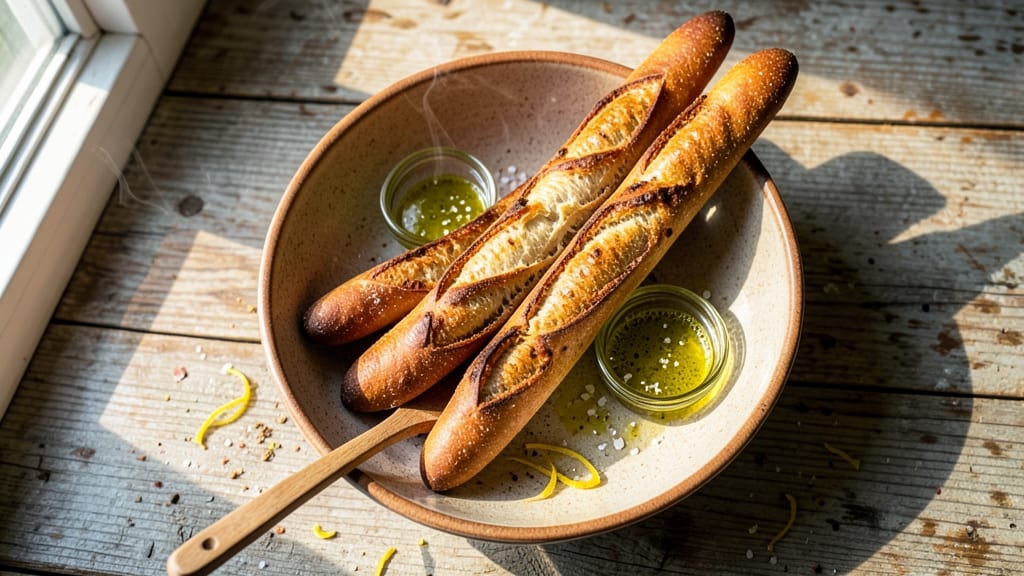
This artisan baguette bread recipe delivers the perfect balance of a crispy crust and airy interior that rivals any Parisian bakery. The secret lies in precise dough development, proper proofing, and steam baking—techniques that transform simple ingredients into restaurant-quality bread.
I've perfected this method over years of baking, ensuring every baguette achieves that signature crackly exterior and tender crumb.
What sets this recipe apart is the attention to detail at each stage. We'll start with a straightforward dough made from just five ingredients, then focus on proper kneading and proofing times to develop gluten and flavor.
The shaping technique creates those iconic long, tapered loaves, while the steam during baking creates that coveted crispy crust without compromising the soft interior.
By following these steps, you'll achieve baguettes with a golden-brown, shatteringly crisp exterior that gives way to an open, airy crumb inside. The aroma alone will have everyone gathering around your kitchen, and the texture will make you forget you made it at home.
This is the kind of bread that elevates any meal from ordinary to extraordinary.
The beauty of this recipe is its versatility—use your fresh baguettes for sandwiches, dipping in olive oil, or serving alongside soups and salads. With just a few hours of hands-on time (and some patience during proofing), you'll have bread that tastes like it came from a traditional French bakery.
Let's get started on creating your perfect baguettes.
Ingredients for artisan baguette bread
Five simple ingredients transform into restaurant-quality baguettes with crispy crusts and airy interiors.
| Ingredient | Amount | Notes |
|---|---|---|
| All-Purpose Flour 🌾 | 3 ½ cups | High-protein for better gluten development |
| Active Dry Yeast 🍞 | ¼ tsp | Fresh yeast preferred if available |
| Granulated Sugar 🍚 | ½ tsp | Feeds yeast for activation |
| Salt 🧂 | 1 tsp | Diamond Crystal preferred |
| Water 💧 | 1 ½ cups | Room temperature, 70°F |
| Olive Oil 🫒 | 1 tbsp | Extra-virgin for richness |
| Cornmeal 🌽 | ¼ cup | For dusting baguettes |
| Ice Cubes ❄️ | 1 cup | For creating steam |
The flour is non-negotiable here. King Arthur or Caputo Tipo 00 if you want to splurge, but high-protein all-purpose works in a pinch. The yeast needs to be fresh—if it's past its prime, your baguettes will be flat. King Arthur brand sells it in tiny jars that last months in the freezer. Water temperature matters: too hot kills the yeast, too cold slows it down. Aim for room temp (70°F)—stick your finger in the water, if it feels warm but not hot, you're good. The olive oil adds richness and helps create that signature crispy crust.
No cornmeal? Semolina or rice flour works just as well for dusting. Short on yeast? Instant yeast at half the amount gets you close. The sugar can be swapped for honey or maple syrup if you prefer, but stick to the same amount. Salt is crucial—Diamond Crystal dissolves better than table salt. For the steam, you can also use a metal bowl of boiling water on the oven rack if you're baking multiple baguettes. And if you can't find extra-virgin olive oil, light olive oil will work, but the flavor won't be as rich.
Store your dough in the fridge for up to 24 hours if you need to proof it overnight—just let it come to room temp before shaping. Baked baguettes stay fresh for 2-3 days wrapped in a clean kitchen towel, but they're best the day they're made. For longer storage, freeze shaped (unbaked) baguettes on a tray, then transfer to a bag. Toast directly from frozen—no thawing needed. The key to reheating is a hot oven: 375°F for 5 minutes brings back that crispy crust.
Why You'll Love This Recipe
- I’ll be real: this recipe costs me pennies per loaf. A few cents for yeast, a splash of sugar, and the rest is flour and water. Plus, the leftovers? They last days in the freezer—perfect for toast, sandwiches, or soaking up soup. That’s efficiency I can get behind.
- Pantry Staples Only: I swear by this recipe because it uses what’s already in my cupboards—no odd ingredients or last-minute grocery runs. Just flour, yeast, sugar, salt, and water. That’s it. No fuss, no stress, just a perfect baguette every single time.
- Crust That Cracks: Honestly, nothing beats that satisfying snap of a well-baked crust—this recipe delivers. The secret? A quick ice-water dip before baking gives you that golden, shatteringly crisp exterior while keeping the inside tender. It’s the little details like this that make it feel like a bakery buy.
- Weeknight Hero: Between us, this is my go-to when I need something fresh but don’t have time for elaborate prep. Toss the dough together in the morning, let it rise while I’m at work, and boom—warm, crusty bread for dinner. It’s the kind of thing that makes lazy nights feel like a victory.
Step-by-step instructions for artisan baguette bread
Here's how to make a perfect baguette with that iconic crispy crust and light, airy interior.
Activate the Yeast and Mix the Dough
In a large bowl, combine the 1.5 cups water at room temperature with the 0.5 tsp granulated sugar and 0.25 tsp active dry yeast. Let this sit for 5-10 minutes until the mixture becomes frothy and bubbly—this confirms your yeast is alive and ready to work.
Once bubbly, add the 3.5 cups all-purpose flour and 1 tsp salt to the bowl. Mix with a wooden spoon until a shaggy dough forms. Then, drizzle in the 1 tbsp olive oil and mix again until the dough comes together. The dough should be slightly sticky but not wet—if it's too dry, add a splash of water.
Knead the Dough Until Smooth
Turn the dough out onto a lightly floured surface and knead for 8-10 minutes until it becomes smooth and elastic. You'll know it's ready when it springs back slowly when poked and leaves a clean surface. This kneading step develops the gluten, which gives your baguettes their signature chewy texture.
If the dough feels too sticky, wet your hands slightly and continue kneading. Avoid adding too much flour, as this can make the crust tough. Once kneaded, shape the dough into a ball, lightly oil it, and place it back in the bowl. Cover with a damp towel and let it rise in a warm spot for 1-2 hours, or until it has doubled in size.
Shape and Proof the Baguettes
Once the dough has risen, punch it down to release the air, then divide it into 4 equal portions (about 1 cup each). Roll each portion into a long, thin log, about 16 inches long and 1 inch wide. Place them seam-side up on a baking sheet lined with parchment paper.
Cover the baguettes loosely with the damp towel and let them proof for another 30-45 minutes until they've risen slightly and look puffy. This final proofing step is crucial for that light, airy crumb. Preheat your oven to 450°F with a baking stone or inverted baking sheet inside while the baguettes proof.
Create Steam and Bake for Crispy Crust
Just before baking, sprinkle the 0.25 cup cornmeal evenly over the baguettes—this helps create that classic rustic look. Add the 1 cup ice cubes to a small oven-safe dish and place it on the lower rack of the oven. The ice will create steam, which is key for that crispy crust.
Bake the baguettes for 20-25 minutes until they're deep golden brown with a hollow sound when tapped on the bottom. Rotate the baking sheet halfway through for even baking. The steam from the ice cubes will give you that perfect oven spring and crispy exterior.
Cool and Serve Warm
Remove the baguettes from the oven and let them cool on a wire rack for 5-10 minutes. This resting time allows the steam inside to redistribute, ensuring a light, airy crumb. Serve warm with your favorite butter or dip—you'll love that satisfying crunch with every bite.
If you're not serving them immediately, store the baguettes in a paper bag at room temperature for up to 2 days. For extra crispiness, reheat them in the oven at 350°F for 5 minutes before serving.
Pro Tips For Making Artisan Baguette Bread
- STRETCH THE DOUGH: I learned this the hard way—skipping the 10-minute stretch after shaping makes the baguette dense. Gently tug the dough’s sides apart until you see slight resistance, then fold it back. This builds gluten structure without overworking it, giving you that signature crispy crunch.
- USE COLD WATER: My grandmother swore by this, and she was right: cold water (around 60°F) slows yeast activity just enough to let gluten develop properly. If your kitchen’s warm, resist the urge to use hot water—it’ll wake the yeast too fast, leading to a gummy, uneven rise.
- STEAM THE OVEN: Skip the spray bottle—steam is non-negotiable for that perfect crust. Place a metal tray on the oven rack, fill it with boiling water, then close the door for 5 minutes before baking. The burst of steam mimics a professional bakery’s steam deck, guaranteeing a crispy exterior and chewy interior.
- SALT THE WATER: I was skeptical until I tried it: dissolve the salt directly in the water before mixing, not in the flour. This ensures even distribution, which prevents bland pockets in the dough. Trust me, your baguette’s flavor will be noticeably brighter—no guessing if you’ve seasoned it enough.
Wine and beer pairings for this artisan baguette bread
Crisp White Wine
Pair your freshly baked baguettes with a dry white wine like Sauvignon Blanc or Chardonnay from the Loire Valley. The citrus and mineral notes in a crisp Sancerre cut through the buttery richness of the crust while complementing the airy crumb.
I love a chilled glass of Vouvray—its honeyed apple and flinty minerality balances the baguette's caramelized edges. 🍷
Light Beer Pairings
A French lager like Kronenbourg 1664 or Stella Artois is my go-to for beer lovers. The light, effervescent body and subtle malt sweetness won’t overpower the baguette’s delicate flavors.
For something more adventurous, try a Belgian witbier—the corianander and orange peel notes add a refreshing contrast to the crust’s crispness. 🍺
Red Wine for Heartier Spreads
If you’re serving your baguettes with charcuterie, pâté, or roasted meats, a light-bodied red like Pinot Noir or Beaujolais works beautifully. The cherry and earthy undertones in a Bourgogne Passetoutgrains enhance the baguette’s toasted notes without competing. Avoid heavy reds—they’ll overpower the bread’s delicate texture. 🍇
Non-Alcoholic Options
For a refreshing non-alcoholic pairing, try sparkling water with lemon—the effervescence cleanses the palate between bites. A cold glass of hibiscus iced tea adds a tart, floral note that pairs surprisingly well with the baguette’s crust.
For something richer, a chilled cup of chai tea complements the bread’s buttery warmth. 💧
Olive Oil Dipping
Skip the wine entirely and serve with extra-virgin olive oil drizzled over the warm baguettes. A robust Italian olive oil like Colavita or California’s Corto adds a fruity, peppery finish that enhances every bite.
Sprinkle with flaky sea salt and a pinch of red pepper flakes for a simple, elegant pairing. 🫒
Nutrition facts
Frequently asked questions
Can I make this artisan baguette recipe without a baking stone?
Place an inverted baking sheet on the middle rack while preheating. The heat will distribute similarly to a stone, though you may need to rotate your baguettes more often for even browning. For extra crispiness, add ice cubes to a tray on the lower rack to create steam.
Why did my baguettes turn out dense instead of airy?
This usually happens from underproofing or over-kneading. Make sure your dough doubles in size during the first rise (1-2 hours) and proof again for 30-45 minutes before baking. Also check your yeast—it should bubble actively within 5-10 minutes when mixed with water.
How do I get an extra crispy crust without burning the inside?
The secret is steam! Place ice cubes in a tray on the oven rack before baking, or spray the oven walls with water. Bake at 450°F for 20-25 minutes, then finish under the broiler for 1-2 minutes if needed. Rotate the pan halfway through for even browning.
Can I make baguettes ahead of time?
Yes! Shape the dough and refrigerate for up to 24 hours before proofing. Let it sit at room temperature for 1 hour before final proofing and baking. For storage, wrap cooled baguettes in a clean kitchen towel—they'll stay fresh for 2-3 days at room temperature.
What's the best way to reheat stale baguettes?
Preheat oven to 350°F and wrap the baguette in foil. Bake for 5-10 minutes until crispy again. For toasting, use a dry skillet over medium heat for 1-2 minutes per side. The key is high heat and quick reheating to restore that satisfying crunch!