
Side Dishes
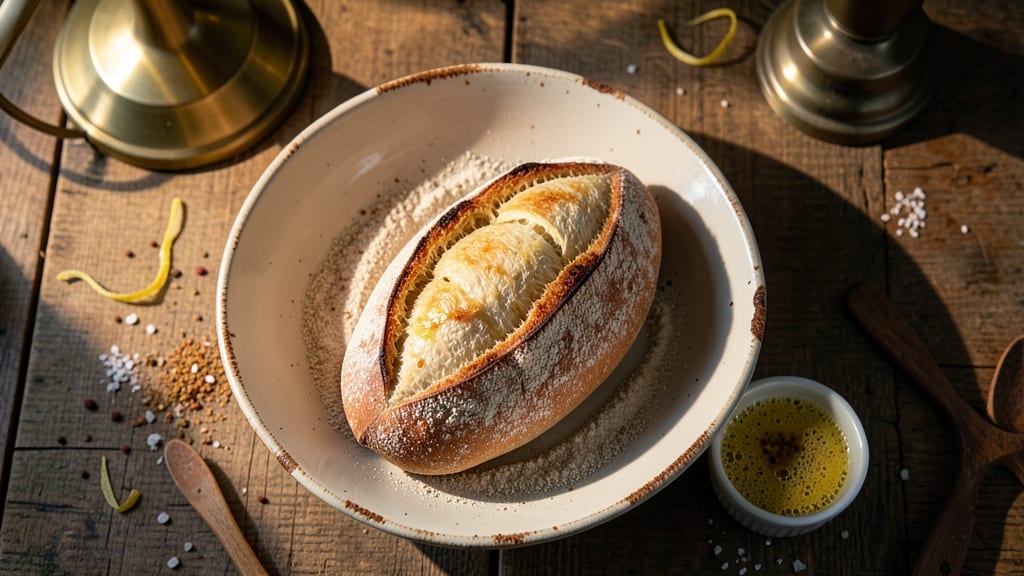
This artisan country French bread recipe delivers the perfect balance of crisp crust and chewy interior that makes every bite satisfying. The traditional method—using just flour, water, yeast, and salt—creates a rustic loaf with an open crumb and golden crust that's impossible to resist.
I've perfected this technique over years of baking, ensuring the dough develops proper gluten structure for that ideal texture.
The process begins with a simple dough that undergoes bulk fermentation, shaping, and proofing before baking in a Dutch oven to trap steam and create the signature crust.
While traditional methods require patience, this recipe includes modern adaptations like a longer fermentation window that makes it more approachable for home bakers. The key to success lies in scoring the dough before baking and maintaining consistent oven temperature.
What you'll end up with is a loaf that's crisp on the outside and tender on the inside, with a rustic appearance that makes it perfect for serving alongside soups or charcuterie boards.
The aroma alone will fill your kitchen with warmth, and the texture offers that satisfying contrast with every bite. This bread is worth the effort—it's the kind of loaf that elevates any meal.
Whether you're baking for a special occasion or simply want to master a classic technique, this recipe delivers professional-quality results at home. The process may take time, but the reward is a loaf that rivals anything you'd find in a French bakery.
Let's get started on creating your perfect country French bread.
Ingredients for artisan country french bread
Simple ingredients crafting legendary French country bread with crisp crust and chewy heart.
| Ingredient | Amount | Notes |
|---|---|---|
| All-Purpose Flour 🌾 | 5 cups | High-protein preferred for chewy texture |
| Active Dry Yeast 🍞 | ¼ tsp | Fresh yeast preferred, not instant |
| Large Eggs 🥚 | 1 whole | Room temperature for best mixing |
| Warm Water 💧 | 1 ¾ cups | 105-110°F for activating yeast |
| Granulated Sugar 🍚 | ¼ tsp | Activates yeast, not for sweetness |
| Salt 🧂 | 1 ½ tsp | Kosher or sea salt preferred |
| Extra-Virgin Olive Oil 🫒 | ½ tsp | For dough handling, not baking |
| Cornmeal 🌽 | ½ cup | For dusting Dutch oven |
| Ice Water ❄️ | ½ cup | For final shaping strength |
The flour is everything here—King Arthur or Caputo Tipo 00 if you want to splurge, but regular all-purpose works too. King Arthur's high-protein flour gives that perfect chewy texture, but even store-brand flour pulls it off. The yeast? Fresh is ideal (you'll find it in the refrigerated section at Whole Foods or Trader Joe's), but instant yeast works if you adjust the activation time. Pro tip: if your kitchen's warm, use cool water (90°F) instead of warm to prevent overproofing. The sugar might seem like nothing, but it's what wakes up that yeast—don't skip it even if you're not baking something sweet.
No yeast? Sourdough starter at 1 tbsp works in a pinch (it'll taste different but still delicious). Running out of eggs? 1 tbsp ground flaxseed + 3 tbsp water replaces it perfectly. Olive oil shortage? Melted butter gives similar richness, though it'll add flavor. The cornmeal is non-negotiable for that perfect crust—Bob's Red Mill is my go-to brand. For the ice water, grab a thermometer if you're nervous—it should be 35°F to strengthen the dough. Want to skip the ice? Just chill your regular water in the freezer for 10 minutes.
This dough is a patient one—24 hours of cold fermentation develops the best flavor. Store it in the fridge in a sealed container with a damp towel. The shaped loaf keeps 3 days at room temp wrapped in a towel, or 1 week in the fridge. Freeze fully baked loaves for 3 months—just thaw at room temp. The crust gets crunchier as it cools, so slice it fresh from the oven for maximum satisfaction. Leftovers? Toast them—second day is even better.
Why You'll Love This Recipe
- No-Knead Magic: I swear by this dough—just mix, let it rise, and bake. The yeast and warm water do all the work while you sip coffee or binge your favorite show. Honestly, I’ve made it on lazy Sundays and late-night cravings, and it never disappoints.
- Golden Crust, Soft Heart: That crispy exterior with a pillowy interior? It’s all in the egg wash and proper baking time. The sugar in the dough caramelizes just enough to give it that just-baked aroma that fills your whole kitchen. (Yes, even on a Tuesday night.)
- Weeknight Wonder: Toss it in a basket for breakfast toast, tear it over salads, or freeze slices for quick sandwiches later. I keep a loaf in the fridge all week—it’s my go-to for anything from charcuterie boards to school lunches. No fancy prep, just pure utility.
- Budget-Friendly Staple: Five ingredients, one loaf that lasts. The eggs add richness without breaking the bank, and the dough stretches far enough to feed my whole family. Between us, this is how I stretch grocery money without sacrificing taste.
Step-by-step instructions for artisan country French bread
Here's how to craft that perfect rustic loaf with a crisp crust and airy interior.
Activate the Yeast and Mix the Dough
In a large bowl, combine the 1.75 cups warm water (about 105-110°F) with the 0.25 tsp granulated sugar and 0.25 tsp active dry yeast. Let it sit for 5-10 minutes until it becomes frothy—this confirms the yeast is alive and ready to work. If it doesn't bubble, your yeast is dead, and you'll need to start over.
Add the 5 cups all-purpose flour and 1.5 tsp salt to the bowl. Mix with a wooden spoon or your hands until a shaggy dough forms. Then drizzle in the 0.5 tsp extra-virgin olive oil and the 1 whole large egg. Knead the dough for 8-10 minutes by hand (or 5-6 minutes in a stand mixer with a dough hook) until it's smooth and elastic, pulling away from the sides of the bowl. The dough should feel slightly tacky but not sticky.
First Rise and Shape the Dough
Lightly oil a large bowl, place the dough inside, and cover it with a damp kitchen towel or plastic wrap. Let it rise in a warm place (like the top of your oven with the light on) for 1-1.5 hours, or until it has nearly doubled in size. You'll know it's ready when you poke it gently and it springs back slowly.
Once risen, turn the dough out onto a lightly floured surface and divide it into 4 equal pieces (about 8 ounces each). Shape each piece into a round ball, then gently flatten it into an oval and fold the edges toward the center to form a rustic shape. This creates tension in the dough, which helps develop flavor and texture during baking.
Second Rise and Prepare for Baking
Place the shaped dough pieces on a floured baking sheet, cover them with a damp towel, and let them rise again for 30-45 minutes until they've puffed up slightly. Meanwhile, preheat your oven to 450°F and place a Dutch oven (with lid) inside to heat for 30 minutes. The Dutch oven will create steam, giving your bread that classic crusty exterior.
Sprinkle the bottom of the hot Dutch oven with 0.5 cup cornmeal to prevent sticking. Carefully transfer the dough pieces into the Dutch oven, spacing them about 1 inch apart. Cover with the lid and bake for 20 minutes. Then remove the lid and bake for another 10-15 minutes until the bread is deep golden brown and sounds hollow when tapped on the bottom.
Cool and Enjoy
Let the bread cool on a wire rack for at least 30 minutes before slicing. This resting time allows the crumb to set, making it easier to slice and preventing a gummy texture. The crust should be crisp and shatterable, while the interior should be soft and chewy with an open, airy crumb.
Slice and serve warm with butter or olive oil for dipping. Store any leftovers in an airtight container at room temperature for up to 3 days, or freeze for up to 3 months. The flavor only improves over time, so this bread is perfect for toasting or using in sandwiches!
Pro Tips For Making Artisan Country French Bread
- Mix with Your Hands: DESCRIPTION: After combining flour, yeast, and sugar, grab a wooden spoon and scrape the dough bowl’s sides—then switch to your hands. The gluten develops faster when you work it directly, and you’ll spot sticky spots to fix early. (Yes, even if your dough looks like a mess at first.)
- Proof at Room Temp: DESCRIPTION: Skip the fridge for the first rise—just leave the dough in a warm spot (like a turned-off oven with the light on) for 1–1.5 hours. Cold slows yeast, but room temp gives it the energy to double properly. I learned this the hard way when my dough took three hours to rise in a drafty kitchen.
- Shape Like a Tight Wrap: DESCRIPTION: Roll the dough into a log, then fold the ends toward the center like you’re sealing a letter. This traps steam and creates tension for that classic crust. If it looks lumpy, don’t stress—just tuck it under and let the oven work its magic.
- Steam the Pan: DESCRIPTION: Before baking, flip a metal bowl upside down on the oven rack and pour boiling water into it. The steam mimics a bakery’s deck oven and gives you that golden, crackly crust. (Pro move: Do this right when you load the bread in—no waiting.)
Creative variations of artisan country french bread
Herb-Infused Variations
Add 1 tbsp fresh rosemary or thyme to the dough during mixing for an aromatic twist. I like using Penzeys brand dried herbs if fresh isn't available—just reduce to 1 tsp since dried is more concentrated.
For a garlic kick, mix 1 minced garlic clove into the olive oil before adding it to the dough. These herbs infuse beautifully during the long fermentation, creating complex flavors. 🌿
Seeded Rustic Loaves
Fold 2 tbsp sunflower seeds or sesame seeds into the dough after the first rise for texture contrast. I prefer Bob's Red Mill sunflower seeds for their nutty flavor. For extra crunch, sprinkle seeds on top before baking.
These seeds add visual interest and a satisfying bite that pairs perfectly with soups or charcuterie. The seeds toast slightly during baking, enhancing their flavor.
Whole Wheat Adaptation
Replace 1 cup of all-purpose flour with whole wheat flour for a nuttier, denser loaf. I recommend King Arthur whole wheat flour for its balanced texture. Add 1 extra tablespoon of water since whole wheat absorbs more moisture.
The crust will be slightly darker, but the interior remains chewy. This version is perfect for those wanting more fiber while keeping the rustic charm. 🌾
Olive Oil Encrusted Top
Brush the tops of shaped loaves with extra-virgin olive oil before baking for a glossy, flavorful crust. I use California Gold brand for its rich taste. After removing the lid, drizzle another ½ teaspoon of olive oil over the bread for extra richness.
This technique creates a shatterable crust with subtle olive notes that complement any meal.
Sweet Twist: Honey Oat Bread
Replace ½ cup of water with ½ cup honey and add ½ cup rolled oats to the dough for a lightly sweetened loaf. I use local raw honey for depth of flavor. The oats add a subtle crunch and hearty texture.
This version works beautifully with jam or as a breakfast loaf. The honey caramelizes beautifully during baking, giving the crust a golden hue. 🍯
Nutrition facts
Frequently asked questions
Why does my artisan French bread turn out dense instead of crusty?
Underproofed dough is the #1 culprit—it needs 1-1.5 hours to fully rise before shaping. Also check your yeast: if it didn't bubble in warm water, it's dead. Try using 1 tsp fresh yeast next time. Another fix? Add 1 extra tablespoon of water if your kitchen's dry, as hydration affects gluten development.
Can I make this bread without a Dutch oven?
Use a heavy baking sheet with a metal bowl inverted over the loaves to trap steam. Preheat the bowl in the oven for 20 minutes first. For extra crispness, bake on a pizza stone or cast iron skillet instead. Just expect a slightly less dramatic crust than a Dutch oven.
How do I know when the bread is fully baked?
Look for deep golden brown crust AND listen for a hollow sound when tapped on the bottom. The internal temperature should reach 190-200°F. Pro tip: If the crust browns too quickly, tent with foil after 15 minutes to prevent over-browning while the interior finishes baking.
What's the best way to reheat stale French bread?
Wrap the bread in foil and warm at 300°F for 10-15 minutes to revive the crust without drying it out. For crispy slices, toast directly in a 400°F oven for 3-5 minutes until golden. Never microwave—it turns bread rubbery! The key is gentle, even heat to restore that bakery-fresh texture.
Can I make this dough ahead of time?
Yes! Shape the dough and refrigerate it overnight for 12-24 hours before baking. The cold slows fermentation, giving you more control over timing. When ready to bake, let it sit at room temperature for 1 hour before shaping and proofing. This method actually improves flavor through slow gluten development.