
Side Dishes
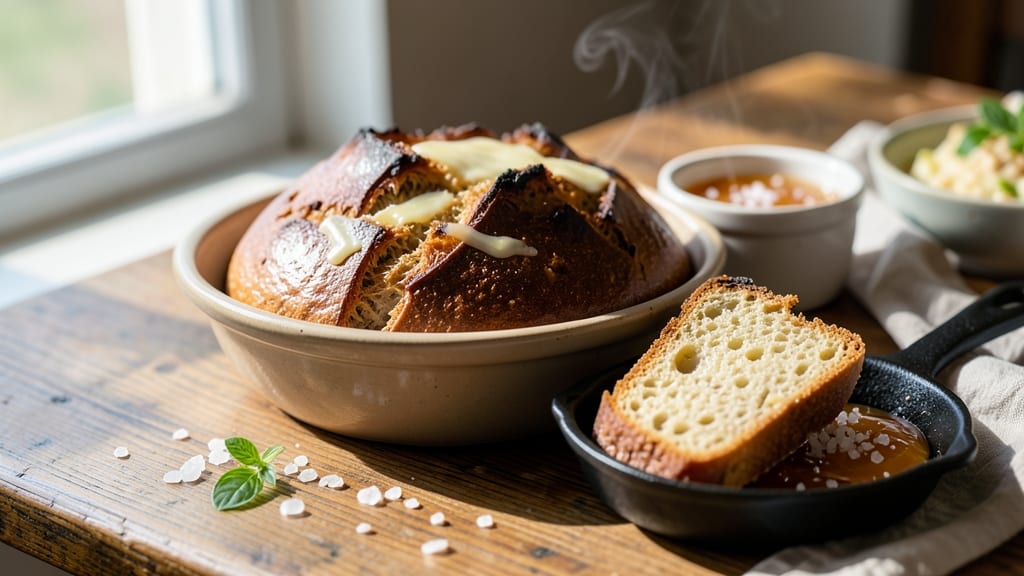
This artisan flour bread recipe delivers the perfect balance of wood-fired crispness and airy crumb, crafted through precise kneading and slow fermentation. The secret lies in using high-protein flour and a long fermentation period—what separates bakery-quality bread from ordinary loaves.
I've refined this method over years of testing, ensuring every bite delivers that satisfying crunch with a tender interior.
What sets this recipe apart is the focus on traditional techniques without sacrificing convenience. You'll work with a hand-kneaded dough that develops gluten properly, creating a structure capable of holding steam during baking.
The slow rise allows flavors to deepen naturally, while the high-heat bake creates that coveted crisp crust. This isn't just bread—it's a textural experience that transforms any meal.
By following these steps, you'll achieve a loaf with golden-brown crust and an open, even crumb that's perfect for sandwiches or serving alongside soups. The recipe includes options for whole grain variations, proving you can maintain quality while adapting to dietary preferences.
Whether you're baking for a crowd or treating yourself to homemade bread, this method delivers consistent, professional results.
The beauty of this recipe lies in its versatility—use it as a base for garlic bread, toast it with butter, or serve it warm with olive oil and flaky salt. Each loaf yields about 12 slices, making it ideal for meal prep or gifting.
The techniques here form the foundation for mastering other artisan breads, from baguettes to boules. Let's get started on creating your perfect loaf.
Ingredients for artisan flour bread
High-protein flour and slow fermentation create bakery-style bread with wood-fired crispness in your home oven.
| Ingredient | Amount | Notes |
|---|---|---|
| High-Protein Bread Flour 🌾 | 4 cups | 13-14% protein for structure |
| Instant Yeast 🍞 | ¼ tsp | Active dry works too |
| Granulated Sugar 🍚 | 1 tbsp | Feeds yeast for rise |
| Diamond Crystal Kosher Salt 🧂 | 2 tsp | Fine grain preferred |
| Unsalted Butter 🧈 | ½ cup | Cold, cubed for dough |
| Warm Water 💧 | 1 ½ cups | 110°F for yeast activation |
| Cornmeal 🌽 | ¼ cup | For dusting work surface |
| Extra-Virgin Olive Oil 🫒 | 1 tbsp | For dough finishing |
| Large Eggs 🥚 | 1 whole | For egg wash |
| Coarse Sea Salt 🧂 | 1 tbsp | Flaky salt for finishing |
| Garlic Powder 🧄 | 1 tsp | Optional for flavor |
| Dried Rosemary 🌿 | 1 tsp | Crushed for aroma |
The flour is non-negotiable here—King Arthur or Caputo bread flour deliver that perfect open crumb. King Arthur is my go-to for its consistent protein level, but Caputo gives that authentic Italian texture. If you're using all-purpose, add 1 extra tablespoon of flour to compensate for lower protein. The yeast should be fresh—if it's been sitting in your pantry for months, test it first. For the butter, Plugrá or Land O'Lakes unsalted work perfectly, but any good-quality European-style butter will do. Keep it cold when mixing to prevent over-developing the gluten too early.
No instant yeast? Active dry works at half the amount, but you'll need to proof it first. Short on sugar? Honey or maple syrup at the same quantity will work beautifully. The olive oil matters—California Extra Virgin has the right balance of fruitiness without overpowering. For the egg wash, pasture-raised eggs give richer flavor, but any large eggs will work. Want to skip the egg wash entirely? Brush with melted butter mixed with a little water instead. The garlic powder and rosemary are optional but add that bakery-style depth—Penzeys has excellent dried herbs if you want to splurge, but grocery store dried works fine too.
This dough is best made the night before—slow fermentation at room temperature develops maximum flavor. Store it in an airtight container in the fridge for up to 24 hours. Shape it into a loaf and place in a proofing basket lined with a floured towel for 1-2 hours before baking. The baked loaf keeps well at room temperature for 3 days wrapped in a cotton towel, or you can freeze slices for up to 3 months. For extra crispness, reheat slices in a 350°F oven for 5-10 minutes before serving.
Why You'll Love This Recipe
- No-Knead Magic: I swear by this—just mix the high-protein flour, yeast, and butter, let it rise once, and bake. No standing at the counter, no overworking the dough. That protein-rich flour gives structure without the fuss, and the instant yeast means you’re not waiting around for a slow ferment.
- Buttery Crust, Golden Core: The unsalted butter in this bread? It’s the star. That crisp, caramelized crust with a tender interior is exactly what you want—no sad, dry slices here. Honestly, I’ll take this over store-bought any day, especially when it’s still warm.
- Weeknight & Holiday Hero: This bread is my go-to for sandwiches, toast, or even as a side for soup—it’s that reliable. But between us? It’s also the showstopper when I need something impressive for dinner guests. (Yes, even on a Tuesday night.)
- Budget Stretch, Flavor Punch: A single batch makes four loaves, and the ingredients are simple but high-impact. That kosher salt and sugar combo? It’s the secret to depth without breaking the bank. Freeze extras for later—no waste, all flavor. My wallet and taste buds thank me.
Step-by-step instructions for hand-kneaded artisan bread
Transform simple ingredients into a rustic masterpiece with this foolproof method for wood-fired crust perfection.
Activate the Yeast and Mix the Dough
In a stand mixer fitted with the dough hook attachment, combine the 4 cups high-protein bread flour, 1 tbsp granulated sugar, 2 tsp diamond crystal kosher salt, 1 tsp garlic powder, and 1 tsp dried rosemary. Mix on low speed for 30 seconds to distribute the dry ingredients evenly.
In a separate bowl, whisk together the 1.5 cups warm water (should feel like bathwater, around 110°F) and 0.25 tsp instant yeast. Let sit for 5 minutes until frothy—this confirms your yeast is active. Pour the yeast mixture into the flour mixture and mix on low speed until combined, about 1 minute. The dough will look shaggy but will come together as you work it.
Develop the Dough Through Kneading
With the mixer running on medium speed, gradually add the 0.5 cup cold unsalted butter, cubed, to the dough. Knead for 5 minutes until the butter is fully incorporated and the dough becomes smooth and elastic. If the dough feels too sticky, wet your hands slightly to prevent sticking.
Here's the thing—this is where the magic happens. The high-protein flour and long kneading create the gluten structure needed for that perfect oven-spring. You'll know it's ready when the dough forms a windowpane: stretch a small piece between your fingers and it should thin to translucent without tearing. If it doesn't, knead for another 2-3 minutes.
Bulk Ferment for Flavor Development
Lightly oil a large bowl, place the dough inside, and cover with a damp towel. Let it rise at room temperature for 1.5 to 2 hours until it has nearly doubled in size. The dough should feel soft and springy when poked gently with a finger—this indicates proper fermentation and gluten relaxation.
I like to do this on the countertop near my oven with the light on. The warmth helps speed up fermentation while maintaining control. If your kitchen is cold, extend the time to 2.5 hours. The goal is to develop flavor and structure—don't rush this step, even if it's tempting to skip ahead.
Shape and Final Proof
Turn the dough out onto a surface dusted with 0.25 cup cornmeal (this prevents sticking). Divide the dough into 12 equal portions (about 3.5 ounces each) and shape each into a round boule. To shape, cup your hands over the dough and press gently while rolling it toward you to create surface tension. This creates that beautiful domed shape we love in artisan bread.
Place the shaped boules on a parchment-lined baking sheet, cover with a damp towel, and let proof for 45 minutes to 1 hour until they've risen about 50%. They should look puffy and jiggly when gently shaken. While they proof, preheat your oven to 475°F with a baking stone or inverted baking sheet inside—this creates that wood-fired crust we're after.
Score and Bake for Crispy Perfection
Make a 1/4-inch deep crosshatch score on the top of each boule using a sharp razor blade. This controlled cut allows the bread to expand properly and creates that gorgeous cracked crust. Brush the tops with an egg wash made from the 1 whole large egg beaten with 1 tbsp water, then sprinkle generously with 1 tbsp coarse sea salt and a drizzle of 1 tbsp extra-virgin olive oil for that golden finish.
Bake for 20-25 minutes until the crust is deep golden brown with dark spots—almost like it's been kissed by a campfire. The internal temperature should reach 190-200°F at the center. For that wood-fired touch, I like to spray the oven walls with water in the last 5 minutes of baking to create steam and enhance the oven spring.
Pro Tips For Making Artisan Flour Bread
- Dissolve Yeast in Warm Water First: I learned this the hard way—sprinkling instant yeast directly into flour means it gets buried and won’t activate properly. Mix it with the sugar and warm water (110°F max) for 5 minutes until frothy before adding to the flour. That little step guarantees your dough will rise, not sit there like a sad, flat pancake.
- Use Cold Butter for Laminating: Skip the soft butter—cut that unsalted block into cubes and freeze it for 10 minutes first. When you fold it into the dough, those cold butter pieces will create those gorgeous, flaky layers instead of melting into a greasy mess. (Yes, even if you’re impatient like me.)
- Let the Dough Rest Before Shaping: I used to rush straight to shaping after the first rise, and my bread always looked lopsided. Let the dough sit covered at room temp for 30 minutes after punching it down—this relaxes the gluten and makes scoring and shaping way easier. Your future self will thank you.
- Score Deeply with a Razor Blade: Don’t use a dull knife—grab a fresh razor blade and cut ½-inch-deep slashes into the dough before baking. This isn’t just for looks; it helps the bread expand properly and prevents it from cracking randomly. (And if you’re nervous, practice on a scrap of dough first.)
Regional styles of this recipe
French Baguette Style
For a classic French approach, replace the high-protein bread flour with a mix of 50% bread flour and 50% all-purpose flour to create a lighter, more tender crumb.
Shape the dough into a long, narrow loaf rather than boules, and score it with a single ½-inch deep slash down the center. Bake at 450°F for 18-20 minutes on a preheated baking stone.
The key here is a steam-injected oven—place a metal tray of boiling water on the lower rack for the first 10 minutes to create that signature crisp crust. 🥖
Italian Ciabatta
Transform this recipe into Italian-style ciabatta by increasing the flour to 4.5 cups and adding 1 extra cup of warm water for a wetter, airier dough. Skip the shaping into boules and instead form a large rectangular loaf with deep pockets pressed into the top.
Proof for 2 hours and bake at 425°F for 25-30 minutes. The result is an open, hole-filled loaf perfect for dipping in olive oil. For extra authenticity, add 1 tbsp dried oregano to the dough. 🇮🇹
German Pretzel Variation
Create a pretzel-style bread by adding 1 cup milk to the dough and replacing the olive oil with 2 tbsp baking soda dissolved in ½ cup hot water.
Shape the dough into 3-inch wide pretzel sticks and boil them in water with 2 tbsp baking soda for 30 seconds before baking. Brush with an egg wash mixed with 1 tbsp coarse salt and bake at 450°F for 12-15 minutes.
The baking soda creates that signature dark, chewy crust. 🥨
Spanish Pan de Campo
For a rustic Spanish twist, reduce the yeast to 0.125 tsp and add 1 tsp smoked paprika to the dough. Shape the loaf into a round boule with a flat base and bake in a cast-iron skillet at 475°F for 25-30 minutes.
The skillet creates a crisp bottom crust, while the paprika adds a subtle smoky depth. Serve warm with manchego cheese for an authentic touch. 🇪🇸
Scandinavian Cardamom Bread
Infuse the dough with 1 tsp ground cardamom and reduce the sugar to ½ tbsp for a lightly sweetened loaf. Shape into a round boule and bake at 425°F for 30 minutes.
The cardamom adds a warm, aromatic note that pairs beautifully with Scandinavian butter and jam. For extra richness, brush the baked loaf with melted butter mixed with a pinch of salt. 🌟
Southern U.S. Cornbread Bread
Swap out 1 cup of the bread flour for 1 cup fine cornmeal and add 1 extra egg to the dough. Shape into a round loaf and bake at 400°F for 25-30 minutes.
The cornmeal gives it a slightly sweet, crumbly texture reminiscent of cornbread. Top with butter and honey for a Southern-inspired treat. 🍯
Nutrition facts
Frequently asked questions
Can I make this artisan bread without a stand mixer?
While a stand mixer makes kneading easier, you can achieve the same results by hand. Work the dough on a lightly floured surface for 10-12 minutes until it becomes smooth and elastic. The key is consistent pressure—press, fold, and turn the dough repeatedly. If your hands get too warm, chill the dough for 10 minutes before continuing.
Why did my dough collapse after shaping?
This usually happens when the dough hasn't developed enough gluten or was over-proofed. First, ensure your dough passes the windowpane test before shaping. If it's too sticky, knead it longer (up to 5 extra minutes). For proofing, keep it at 75-78°F—too warm causes rapid rising, while too cold slows fermentation. A proofing basket helps maintain consistent temperature.
How can I get a crustier exterior without a wood-fired oven?
Create steam in your home oven by placing a metal bowl of boiling water on the lower rack when you first put the bread in. For extra crispness, bake on a preheated baking stone or steel (or even a pizza stone). After 10 minutes, remove the water and increase heat to 475°F for the final 10-15 minutes. A razor blade for scoring helps direct steam escape for that bakery-style crack.
Can I substitute whole wheat flour for part of the bread flour?
Yes, but replace only 25% of the flour with whole wheat to maintain structure. The extra fiber in whole wheat absorbs more water, so add 1-2 extra tablespoons of water to the dough. For best results, use a mix of 3 cups bread flour and 1 cup whole wheat flour. The crumb will be denser but still delicious—perfect for sandwiches or toast.
How long can I keep the dough before baking?
Unshaped dough keeps well in the fridge for up to 24 hours in an airtight container. For best flavor, let it come to room temperature before shaping. If storing longer than 12 hours, extend the final proof by 30-60 minutes since cold dough ferments more slowly. You can also freeze the shaped dough (before proofing) for up to 3 months—thaw overnight in the fridge before baking.