
Side Dishes
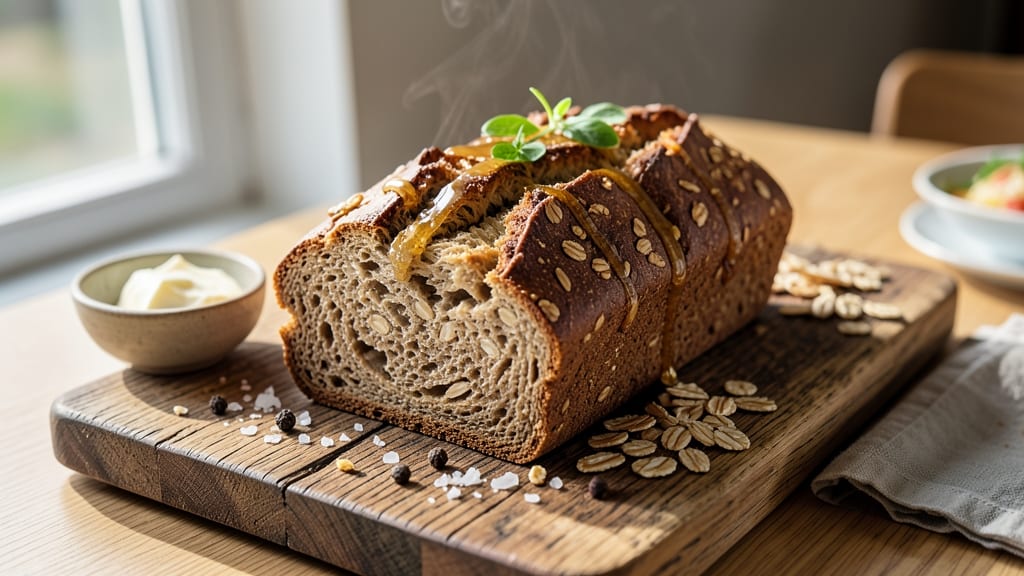
This artisan oat bread recipe delivers the perfect marriage of crispy crust and tender crumb with a subtle nutty sweetness that makes every slice unforgettable.
The secret lies in a precise blend of whole-grain oats and bread flour, combined with a slow fermentation that develops deep flavor while creating an open, airy crumb structure. I've perfected this recipe over years of baking, adjusting techniques to ensure consistent results even for home bakers.
The process begins with a well-hydrated dough that incorporates oats for texture and nutrition, then undergoes a cold proof overnight for maximum flavor development. This slow fermentation not only enhances taste but also creates that signature artisan crumb you'd expect from a professional bakery.
The dough is shaped into a classic boules, scored beautifully before baking at high heat to achieve that coveted crispy crust.
What you'll end up with is a loaf that's crispy on the outside with a shatteringly crisp crust that gives way to a soft, open crumb studded with oat specks.
The nutty sweetness from the oats complements the bread's natural flavor without overpowering it, creating a loaf that's perfect for sandwiches, toast, or simply enjoying with butter. The aroma alone will transform your kitchen into a bakery.
This recipe accommodates both traditional methods and modern shortcuts—whether you're using a sourdough starter for authentic flavor or quick yeast for faster results, the techniques ensure you'll achieve that artisan quality. Let's get started on creating your perfect loaf of oat bread.
Ingredients for artisan oat bread
Twelve ingredients that transform into a loaf with a shatteringly crisp crust and nutty-sweet crumb.
| Ingredient | Amount | Notes |
|---|---|---|
| Bread Flour 🌾 | 3 cups | High-protein for structure |
| Old-Fashioned Rolled Oats 🥣 | 1 ½ cups | Steel-cut works too |
| Active Dry Yeast 🍞 | 2 ¼ tsp | Or 1 packet quick-rise |
| Granulated Sugar 🍚 | 1 tbsp | For yeast activation |
| Salt 🧂 | 1 ½ tsp | Kosher or sea salt |
| Unsalted Butter 🧈 | ½ cup | Cold, cubed for dough |
| Whole Milk 🥛 | 1 ¼ cups | Room temperature |
| Large Eggs 🥚 | 1 whole | Room temperature |
| Honey 🍯 | 1 tbsp | For subtle sweetness |
| Water 💧 | ½ cup | Warm, not hot |
| Cornmeal 🌽 | ¼ cup | For dusting |
| Coarse Sea Salt 🧂 | 1 tsp | For scoring |
The oats are the secret weapon here—King Arthur or Bob's Red Mill make the best for texture and nutrition. Steel-cut oats add extra chew, but rolled oats work perfectly for that classic crumb. The bread flour gives structure, so King Arthur or Caputo are ideal if you want to splurge. Yeast is non-negotiable for that airy crumb, and Saf-Instant lets you skip the waiting game if you're in a hurry. For the butter, Land O'Lakes or Plugrá make all the difference—full-fat is essential for that rich flavor. Milk should be whole for tenderness, and organic whole milk from the store works great if you don't want to use raw. The honey adds subtle sweetness, so Manuka or local raw honey will elevate the flavor even more.
No bread flour? All-purpose plus 1 tbsp vital wheat gluten gets you close. Out of honey? Maple syrup or agave works in a pinch, but reduce by 1 tsp since it's sweeter. Butter too expensive? Olive oil or coconut oil can replace it, though the texture will be slightly different. For a sourdough twist, swap the yeast for 1 cup active sourdough starter—just reduce the water to 0.25 cup. The egg adds richness, but if you're avoiding it, 1 tbsp flaxseed meal + 3 tbsp water works as a binder. And if you're scoring the loaf, a razor blade gives the cleanest cuts, but a sharp knife works too.
This dough is best made the night before—cold proof in the fridge overnight develops the most flavor. Store the shaped loaf, wrapped in a clean kitchen towel, in the fridge for up to 3 days before baking. Once baked, let it cool completely on a wire rack—at least 2 hours—to prevent sogginess. For longer storage, wrap tightly in plastic and freeze for up to 3 months. The crust stays crispy for 2 days if stored in a paper bag at room temperature, but honestly, it's best enjoyed fresh. And if you have leftovers? Toast it—nothing beats warm oat bread with butter.
Why You'll Love This Recipe
- No-Knead Magic: I swear by this method—just toss the dough, let it rise overnight, and bake straight from the fridge. The oats add a satisfying chew without extra work, and honestly? The hands-off rising means I can sleep through most of it.
- Toasted Crunch: That first bite? The oats toast up into little golden pockets while the inside stays soft—like a hug from a bakery loaf. The sugar caramelizes just enough to make it taste like you slaved over it, even though you didn’t.
- Weeknight Workhorse: I freeze slices for quick toast or sandwiches all week. It’s my go-to for breakfast, lunch, or even a fancy charcuterie board—no one guesses it’s just flour, oats, and yeast doing the heavy lifting.
- Pantry Staple Power: Five ingredients, minimal cost, and it keeps for days. Between us, this bread is my secret weapon for stretching groceries without sacrificing flavor. Plus, the yeast stretches so well—I’ve doubled the recipe for a crowd and never had leftovers.
Step-by-step instructions for artisan oat bread
This method delivers a rustic loaf with crispy crust and tender, nutty crumb—every time.
👨🍳 Step 1: Activate the Yeast and Mix Wet Ingredients
In a small bowl, combine the 1.5 cups old-fashioned rolled oats with the 1.25 cups whole milk and let soak for 10 minutes. This hydrates the oats and mellows their texture. In a separate large bowl, whisk together the 0.5 cup warm water, 1 tbsp granulated sugar, and 2.25 tsp active dry yeast. Let this sit for 5-10 minutes until foamy—this confirms your yeast is active.
To the yeast mixture, add the 1 whole large egg, 1 tbsp honey, and 0.5 cup unsalted butter cut into small cubes. Whisk gently until the butter melts and the mixture is smooth. The honey adds subtle sweetness while helping the dough brown beautifully in the oven.
👨🍳 Step 2: Combine Wet and Dry Ingredients
Add the soaked oats (with their liquid) to the wet mixture, then gradually whisk in the 3 cups bread flour and 1.5 tsp salt until a shaggy dough forms. The high-protein bread flour gives this loaf its sturdy structure, while the oats add chewy texture and nutty flavor. If the dough feels too sticky, add 1 tablespoon flour at a time until it comes together when pressed.
Turn the dough onto a lightly floured surface and knead for 8-10 minutes until smooth and elastic. You'll know it's ready when it springs back slowly when poked. The dough should be slightly tacky but not sticky—this ensures a tender crumb without being gummy.
🥘 Step 3: First Rise and Shaping
Lightly grease a large bowl with olive oil, place the dough inside, and cover with a damp kitchen towel. Let it rise in a warm place for 1-2 hours or until doubled in size. The warm environment helps the yeast work efficiently, while the towel prevents the dough from drying out.
Once doubled, punch down the dough to release air, then divide it into two equal portions. Shape each into a round boule by pulling the edges toward the center and sealing the seam. For extra flavor, sprinkle a pinch of 1 tsp coarse sea salt on the surface before final shaping.
🔥 Step 4: Second Rise and Baking
Line a baking sheet with parchment paper and dust lightly with 0.25 cup cornmeal. Place the shaped boules on the prepared sheet, cover again, and let rise for 30-45 minutes until puffy. Preheat your oven to 425°F with a baking stone or inverted baking sheet on the middle rack.
Just before baking, use a sharp knife or razor to score the top of each boule in a decorative pattern. This prevents over-expansion and creates that beautiful artisan look. Bake for 25-30 minutes until the crust is deep golden brown and sounds hollow when tapped on the bottom. The interior should register 190-200°F on an instant-read thermometer.
⏰ Step 5: Cool and Enjoy
Remove the bread from the oven and transfer to a wire rack to cool completely. This step is crucial—cooling prevents the crumb from becoming gummy. The loaf will continue to firm up as it cools, and the crust will develop even more depth of flavor.
Slice with a serrated knife for clean cuts that reveal the tender crumb and nutty oat flecks. Serve warm with butter or jam, or toast slices for a hearty breakfast. The combination of crispy crust and chewy interior makes every bite satisfying—worth every minute of the process!
Pro Tips For Making Artisan Oat Bread
- Toast Your Oats: Toss the rolled oats in a dry skillet over medium heat for 3-4 minutes until they’re golden and nutty—this deepens their flavor and prevents a raw, gritty bite. (Yes, it’s an extra step, but your bread will taste like it came from a bakery.)
- Hydrate the Yeast Properly: Mix the yeast with warm water (105–110°F) and a pinch of sugar first, then let it sit for 5–10 minutes until frothy before adding to the flour. Cold water? It’ll wake up sluggish. Too hot? You’ll kill it. Test the temp with your finger—should feel like bathwater.
- Skip the Over-Kneading: This dough is sticky and dense—knead just until it pulls away from the bowl (about 8–10 minutes). Overwork it, and the oats turn to mush, making the bread gummy. (I learned this after a batch that collapsed like a sad soufflé.)
- Steam the Loaf: Place a metal tray on the oven rack below your bread pan and pour in 1 cup of boiling water when you bake. The steam keeps the crust from drying out too fast and gives you that chewy, bakery-style interior. (No tray? A foil packet of water works—just don’t forget it.)
Flavor customization for these flavors
Sweet Variations
Add 1 tbsp cinnamon and ½ cup chopped dried fruit (like raisins or cranberries) to the dough for a breakfast loaf with warm spice notes. For extra richness, swap the honey for 2 tbsp maple syrup and fold in ¼ cup chopped walnuts—this adds crunch and depth. 🍯
Herb-Infused Twist
Boost the dough with 1 tbsp fresh rosemary or thyme for a savory, aromatic bread perfect for soups or charcuterie boards. For a Mediterranean touch, mix in 2 tbsp finely chopped sun-dried tomatoes and 1 tsp dried oregano before shaping. The herbs complement the oats beautifully.
Seed and Nut Enhancements
For texture and extra nutrition, stir in ¼ cup pumpkin seeds or sunflower seeds during the final knead. For a protein-packed loaf, add ½ cup chopped almonds or pecans—toast them first in a dry pan for 2-3 minutes to enhance their flavor.
These additions add a satisfying crunch to every bite.
Whole Grain Boost
Replace ½ cup of bread flour with ½ cup whole wheat flour or spelt flour for added fiber and heartiness. For a seed-based twist, substitute ½ cup of oats with ½ cup ground flaxseed—this adds a nutty depth and omega-3s. The dough will be slightly denser but still tender.
Cheesy and Savory
Fold in ½ cup shredded sharp cheddar or Parmigiano-Reggiano during the final knead for a cheesy loaf perfect for sandwiches. For a herby-savory version, mix in 1 tbsp dried sage and ¼ cup grated Pecorino Romano—this creates a rustic, flavorful loaf with a crisp crust.
Nutrition facts
Frequently asked questions
Can I make this oat bread without a bread machine?
This recipe is designed for hand-kneading—no bread machine needed. The dough requires 8-10 minutes of kneading by hand until it's smooth and elastic. The slow fermentation (especially the overnight cold proof) actually makes handmade bread taste better by developing deeper flavor. Just be patient with the kneading and let the dough rise fully.
Why does my crust keep turning out pale instead of crispy?
Pale crusts usually mean one of three things: insufficient steam, too-low oven temp, or dough that's too wet. Preheat your oven to 425°F with a baking stone or inverted sheet pan for 30 minutes before baking. Place a tray of boiling water in the oven for steam, and score the dough deeply just before baking. Also ensure your dough isn't overly sticky—add 1 tbsp flour if needed during kneading.
How do I store leftover oat bread to keep it fresh?
Wrap the cooled loaf tightly in plastic wrap or place it in an airtight container. For 2-3 days of freshness, store at room temperature. To extend freshness to 5 days, refrigerate. For longer storage, freeze the bread (sliced or whole) for up to 3 months. The best way to revive stale bread? Wrap slices in a damp paper towel and heat in a 350°F oven for 5-10 minutes.
Can I substitute rolled oats for steel-cut or quick oats?
Rolled oats are ideal for this recipe, but you can use steel-cut oats if you prefer extra chewiness—just soak them for 15 minutes instead of 10 minutes to soften. Quick oats will make the bread denser since they're more processed. For a compromise, blend steel-cut oats briefly in a food processor to create a texture between rolled and quick oats. The flavor difference is minimal, but texture will vary slightly.
What's the best way to reheat sliced oat bread?
For crispy crust and warm interior, wrap slices in foil and heat at 350°F for 5-8 minutes. For extra crispiness, toast slices in a dry pan over medium heat for 1-2 minutes per side. The microwave works in a pinch (wrap in a damp paper towel, 10-15 seconds on high), but it tends to make the crust rubbery. Always reheat from room temperature for best results.