
Side Dishes
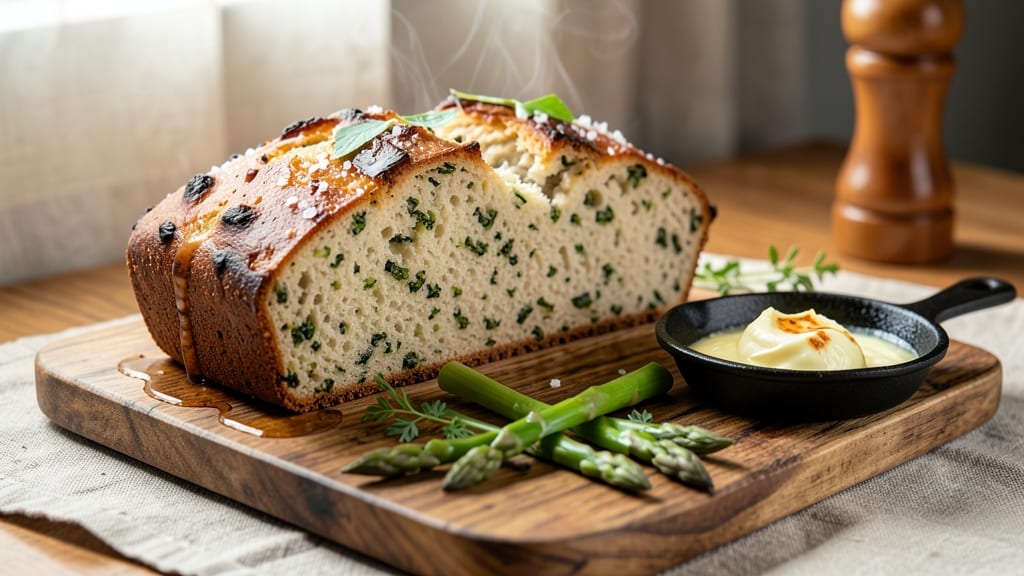
This asparagus bread recipe transforms spring's most beloved vegetable into a flavorful, herb-infused loaf that sneaks nutrition into every slice. The secret lies in blanching and finely chopping tender asparagus spears, which blend seamlessly into the dough without altering its satisfying texture.
What makes this recipe stand out is how it balances fresh herbs with the subtle sweetness of asparagus, creating a loaf that's both comforting and unexpectedly vibrant.
The process begins with a simple dough that incorporates the prepared asparagus mixture, ensuring even distribution for consistent flavor in every bite. Unlike traditional bread recipes, this version relies on a straightforward kneading method that yields a tender crumb and a beautifully golden crust.
The addition of garlic and thyme elevates the asparagus's natural flavor, while a touch of parmesan adds depth that pairs perfectly with soups, salads, or as a standalone side.
What you'll achieve is a loaf that's remarkably moist and aromatic, with the subtle earthiness of asparagus complementing the bread's natural sweetness. The crust develops a satisfying crunch while maintaining a soft interior, making each slice irresistibly inviting.
This recipe is designed to be both approachable for beginners and impressive enough for gatherings, proving that vegetables can enhance bread without compromising its classic appeal.
For those looking to customize, consider adding sun-dried tomatoes or roasted red peppers to the dough for extra depth, or sprinkling everything bagel seasoning on top before baking for a savory twist.
The bread stores well at room temperature for 2-3 days or can be frozen for up to a month, making it an excellent make-ahead option for busy weeks.
Ingredients for asparagus bread
Transform tender asparagus into a fragrant loaf with these carefully balanced ingredients.
| Ingredient | Amount | Notes |
|---|---|---|
| Asparagus Spears 🌱 | 1 ½ lb | Tender, blanched and finely chopped |
| All-Purpose Flour 🌾 | 5 cups | Unbleached, high-protein preferred |
| Active Dry Yeast 🍞 | ¼ oz | Or 2.25 tsp, fresh preferred |
| Warm Water 💧 | 1 ¼ cups | 110°F for optimal yeast activation |
| Granulated Sugar 🍚 | 1 tbsp | For yeast activation |
| Unsalted Butter 🧈 | ½ cup | Cold, cubed for dough incorporation |
| Large Eggs 🥚 | 2 whole | Room temperature for even mixing |
| Garlic Cloves 🧄 | 4 cloves | Minced, for aromatic depth |
| Fresh Thyme Leaves 🌿 | ¼ cup | Chopped, stems removed |
| Parmesan Cheese 🧀 | ½ cup | Freshly grated, for umami richness |
| Diamond Crystal Kosher Salt 🧂 | 1 ½ tsp | Adjust to taste |
| Black Pepper 🌶️ | ½ tsp | Freshly cracked |
| Olive Oil 🫒 | 2 tbsp | For dough and crust brushing |
| Cornmeal 🌽 | ¼ cup | For dusting bread pan |
The asparagus is the foundation—choose bright green, firm spears with tightly closed tips. Blanching them for 2 minutes before chopping preserves their vibrant color and subtle sweetness. For the yeast, King Arthur or Bob's Red Mill brands are reliable, but any active dry yeast will work. The thyme should be freshly harvested from your garden or a trusted farmers market—dried thyme lacks the bright herbal notes this recipe demands. Parmesan matters here; Parmigiano-Reggiano grated yourself delivers the most complex flavor profile, though a quality pre-grated version in a sealed jar works in a pinch.
No fresh thyme? Dried thyme at one-third the amount suffices, though the flavor will be more muted. Substituting asparagus? Finely chopped spinach or zucchini works, but texture may vary slightly. The butter should be cold but not frozen when incorporated into the dough—this ensures proper layering for a tender crumb. For the eggs, room temperature is critical; cold eggs can cause the dough to become gummy. If you're avoiding dairy, vegan butter or coconut oil maintains moisture without compromising texture, though the flavor will differ slightly.
This loaf develops best when shaped and proofed overnight in the refrigerator, allowing flavors to meld. Wrap tightly in plastic wrap and store for up to 3 days at room temperature, or freeze for 3 months by wrapping tightly in foil. For reheating, 5 minutes at 350°F restores freshness. The bread pairs beautifully with whipped goat cheese or a sharp mustard—perfect for elevating simple soups or salads. Any leftovers can be transformed into croutons or breadcrumbs for future use.
Why You'll Love This Recipe
- No-Waste Wonder: I swear by this trick—using leftover asparagus stems instead of tossing them. The bread turns them into something ridiculously good, and you’ll never buy pre-made bread again.
- Earthy Sweet Crunch: That first bite? Warm, slightly sweet from the sugar, with tender asparagus threads weaving through the dough. It’s like a hug from a spring garden—crusty outside, pillowy inside.
- Lunchbox Hero: Between us, I’ve packed this for work more than I’d admit. It reheats beautifully, and the kids actually ask for it. (Yes, even on a Tuesday night.) Plus, it’s way cheaper than store-bought loaves.
- Yeast Magic Shortcut: Honestly, the dough comes together in five minutes—just mix, let it rise, and bake. No kneading, no fuss. The yeast does all the work while you sip your coffee or scroll through your phone.
Step-by-step instructions for herb-infused asparagus bread
Transform humble ingredients into a fragrant, veggie-packed loaf with this precise method.
Prepare the Asparagus and Yeast Mixture
Start by blanching the 1.5 lb asparagus spears in boiling salted water for 2 minutes, then immediately shock in ice water to halt cooking. Drain thoroughly and finely chop the cooled asparagus using a food processor or sharp knife. The goal is a paste-like consistency that will blend seamlessly into the dough.
In a separate bowl, whisk together the 0.25 oz active dry yeast, 1.25 cups warm water (110°F), and 1 tbsp granulated sugar. Let this mixture sit for 5-10 minutes until it becomes frothy and bubbles form at the surface. This activation step ensures your bread rises properly. The yeast should transform from dormant granules to active, effervescent cells ready to work their magic in the dough.
Mix the Dough Components
In the bowl of a stand mixer fitted with the dough hook attachment, combine the 5 cups all-purpose flour, 1.5 tsp diamond crystal kosher salt, 0.5 tsp black pepper, and 0.5 cup freshly grated parmesan cheese. Mix on low speed just until these dry ingredients are evenly distributed. This creates a homogeneous base for the wet ingredients to incorporate smoothly.
Add the 2 whole large eggs (room temperature) and 0.5 cup cold cubed unsalted butter to the mixer. Increase the speed to medium and let the mixture knead for 3-4 minutes until the butter begins to emulsify and the dough starts pulling away from the sides of the bowl. This step develops gluten structure while incorporating the fat for a tender crumb.
Incorporate the Asparagus and Aromatics
Remove the dough from the mixer and transfer it to a clean work surface lightly dusted with flour. Make a well in the center and add the yeast mixture, chopped asparagus, 4 minced garlic cloves, and 0.25 cup chopped fresh thyme leaves. Using your hands, gently fold these ingredients into the dough until fully incorporated. The asparagus should distribute evenly throughout without creating pockets.
Knead the dough by hand for 5-7 minutes until it becomes smooth and elastic. You'll know it's ready when it springs back slowly when poked with your finger. If the dough feels too sticky, add flour 1 tablespoon at a time until it reaches a workable consistency. The asparagus will make the dough slightly denser than traditional bread dough, so don't be alarmed if it requires a bit more kneading time.
First Rise and Shaping
Lightly grease a large mixing bowl with 1 tbsp olive oil and place the dough inside. Cover the bowl with a damp kitchen towel and let it rise in a warm place for 1-1.5 hours or until the dough has doubled in size. The warm environment (around 75°F) helps activate the yeast for optimal rise. You'll notice the dough becomes puffy and develops small bubbles on the surface as it ferments.
Once doubled, punch down the dough to release air and shape it into a rectangular loaf. Place the shaped dough seam-side down into a 9x5-inch loaf pan that has been lightly coated with 0.25 cup cornmeal. The cornmeal creates a barrier that prevents sticking and gives the bread a beautiful, rustic crust. Cover the pan with a towel and let the dough rise for another 30-45 minutes until it's just slightly above the pan's rim.
Bake to Golden Perfection
Preheat your oven to 375°F with a baking sheet on the lower rack to create steam. Brush the risen dough with the remaining 1 tbsp olive oil and sprinkle with additional 0.25 cup cornmeal for texture. Bake for 35-40 minutes until the bread develops a deep golden brown crust and registers 190-200°F internally when measured with an instant-read thermometer.
Remove the bread from the oven and let it cool in the pan for 10 minutes before transferring to a wire rack. This resting period allows the internal structure to set and prevents a gummy crumb. Once completely cooled, slice the bread to reveal the beautiful marbled effect from the asparagus and herbs. The interior should be tender with pockets of moist, flavorful asparagus throughout, while the exterior boasts a crisp, aromatic crust.
Pro Tips For Making Asparagus Bread
- Blanch Asparagus First: The raw asparagus needs a quick 2-minute boil in salted water before chopping—this softens the fibers so they blend smoothly into the dough. Skip this, and you’ll end up with a bread that tastes like you’re chewing on a stalk of grass.
- Use Lukewarm Water: That yeast packet says "warm water," but I learned the hard way—too hot kills it, too cold makes it lazy. Test it by sticking your pinky in: if it feels like bathwater, you’re golden. Cold water? The dough will take forever to rise, and your patience will wear thin.
- Don’t Overmix the Dough: Once the chopped asparagus is folded in, stop mixing after 2-3 turns. Overworking it turns the bread dense and chewy—like eating a sponge instead of something light. Let the gluten relax; it’ll thank you with a tender crumb.
- Proof the Dough Twice: The first rise is obvious, but the second—after shaping—is where magic happens. Give it 30-45 minutes in a warm spot until it’s puffed and jiggly. This isn’t optional; it’s the difference between a bread that collapses and one that holds its shape like a pro. (Yes, even if you’re impatient like me.)
Flavor customization for this asparagus bread
Herb-Infused Variations
Swap the thyme for fresh rosemary (use 0.2 tbsp finely chopped) and add 1 tsp lemon zest to the dough for a bright, citrusy twist. The rosemary pairs beautifully with asparagus's natural sweetness while adding a piney aroma that elevates the crust.
I find this version works especially well with grilled fish or Mediterranean-inspired meals. 🌿
Spicy Kick Option
For heat lovers, fold in 1 tbsp Calabrian chili paste or ½ tsp red pepper flakes along with the asparagus mixture. The heat mellows slightly during baking but leaves a subtle warmth that lingers.
Balance it with an extra ½ cup grated parmesan to soften the intensity. This variation pairs perfectly with spicy soups or charcuterie boards.
Cheesy Twist
Replace half the parmesan with ½ cup shredded fontina cheese for a creamier, more decadent loaf. Fontina melts beautifully during baking, creating pockets of gooey goodness throughout. I recommend using a mix of both cheeses for a balance of sharpness and creaminess.
This version is ideal for serving with tomato-based sauces or as a hearty sandwich base.
Sun-Dried Tomato Boost
Add ¼ cup chopped sun-dried tomatoes (oil-packed) to the dough for a Mediterranean-inspired flavor. Their concentrated sweetness complements the asparagus while adding a chewy texture. I like to chop them finely so they distribute evenly.
This variation works especially well when paired with antipasto platters or as a side to roasted vegetables.
Garlic Lover's Version
Increase the garlic to 6 cloves (finely minced) and add 1 tsp garlic powder to the dough for an extra punch. The garlic infuses the bread with deep, savory notes that pair perfectly with the asparagus.
For an even stronger garlic flavor, let the dough rest in the refrigerator overnight before baking—this allows the garlic's oils to develop fully. 🧄
Everything Bagel Seasoning Topping
For a fun, textured crust, sprinkle 1 tbsp everything bagel seasoning (sesame seeds, poppy seeds, garlic, onion, salt) on top of the loaf before baking. The seeds add crunch and visual appeal while enhancing the bread's savory profile.
This variation is perfect for serving with cream cheese or as a side to bagels and lox. The seasoning blends beautifully with the asparagus's earthy notes.
Nutrition facts
Frequently asked questions
Can I use frozen asparagus instead of fresh?
Yes, but with a few adjustments! Thaw and drain frozen asparagus thoroughly, then chop it finely. Since frozen asparagus is often less tender, you may want to blanch it for 3-4 minutes after thawing to restore texture. The flavor will be slightly milder than fresh, but it still works beautifully in the dough.
Why does my asparagus bread turn out dense?
Dense bread usually means one of two things: either the asparagus wasn't chopped finely enough (creating pockets) or the dough didn't rise properly. For best results, process the asparagus until it's nearly paste-like, and ensure your yeast is active by testing it in warm water first. Also, don't skip the first rise time—rushing this step can prevent proper gluten development.
How can I make this bread without dairy?
Swap the butter for ½ cup coconut oil or vegan butter (solid at room temperature) and replace the parmesan with ½ cup nutritional yeast for a cheesy flavor. Use plant-based milk to adjust dough consistency if needed. The texture will be slightly different but still delicious. For extra richness, add 1 tbsp olive oil to the dough.
Can I make this as a quick bread instead of yeast bread?
Replace the yeast with 2 tsp baking powder and 1 tsp baking soda, and reduce the flour to 4 cups. Mix the batter with the asparagus, then bake in a greased 9x5-inch loaf pan at 350°F for 45-50 minutes. The texture will be denser but still flavorful. This version is perfect for those short on time or who prefer no-knead baking.
What's the best way to store leftover asparagus bread?
Wrap the cooled loaf tightly in plastic wrap or aluminum foil, then store at room temperature for up to 3 days in an airtight container. For longer storage, freeze slices wrapped individually for up to 3 months. To revive, warm slices in a 350°F oven for 5-7 minutes or toast in a pan until crispy. The bread actually improves slightly after a day or two!