
Desserts
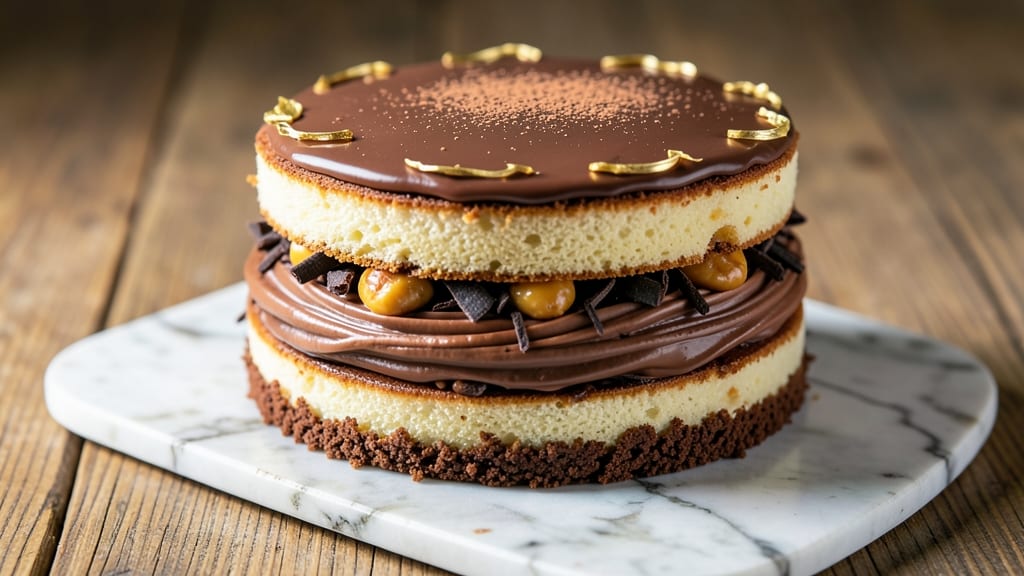
This Belgian chocolate truffle cake delivers layers of decadence with a hidden ganache surprise that'll impress even the most discerning dessert lovers. 💫 The secret lies in rich Belgian chocolate pralines baked into each layer, paired with a velvety dark chocolate ganache that melts into unexpected pockets of indulgence.
I perfected this recipe after years of experimenting with European pastry techniques, ensuring every bite balances crispy, tender, and creamy textures.
The foundation begins with a moist, buttery sponge cake infused with Belgian chocolate praline chunks, baked to golden perfection. Between each layer, we sandwich a luscious dark chocolate ganache that stays firm enough to hold its shape but melts luxuriously at room temperature.
This technique creates those signature "surprise" pockets that make this cake truly unforgettable—each slice reveals a hidden layer of molten chocolate.
What you'll end up with is a triple-layered masterpiece that's elegant enough for special occasions but simple enough for weeknight indulgence. The exterior stays crisp while the interior remains tender, with every forkful delivering perfect harmony between the cake's structure and the ganache's richness.
The Belgian chocolate pralines add a satisfying crunch that contrasts beautifully with the creamy filling.
Serve this cake at room temperature with a dusting of cocoa powder or a dollop of whipped cream for the full Belgian experience. The recipe includes tips for achieving that signature "surprise" texture and variations for adding alcohol-infused ganache options.
Let's create this showstopper dessert that'll have everyone asking for seconds.
Ingredients for belgian chocolate truffle cake
European-quality chocolate and pralines create this decadent triple-layered masterpiece with hidden ganache surprises.
| Ingredient | Amount | Notes |
|---|---|---|
| All-Purpose Flour 🌾 | 3 cups | Sifted for light texture |
| Unsalted Butter 🧈 | 1 ½ cups | European-style, 82% fat preferred |
| Granulated Sugar 🍚 | 2 cups | Superfine for smoother batter |
| Dark Chocolate Belgian Pralines 🍫 | 1 ½ cups | High-quality, 70% cocoa minimum |
| Large Eggs 🥚 | 6 whole | Room temperature for even mixing |
| Vanilla Extract 🌿 | 2 tsp | Pure Madagascar preferred |
| Baking Powder 🧂 | 1 tbsp | Aluminum-free for stability |
| Salt 🧂 | ½ tsp | Fine sea salt preferred |
| Dark Chocolate Bars 🍫 | 12 oz | 70% cocoa, chopped finely |
| Heavy Cream 🥛 | 1 ½ cups | 36% fat for rich ganache |
| Unsweetened Cocoa Powder 🍫 | ½ cup | Dutch-processed for smoothness |
| Powdered Sugar 🍚 | 1 cup | For dusting between layers |
| Cocoa Powder 🍫 | 2 tbsp | For dusting top layer |
| Whipped Cream 🥛 | 1 cup | Stabilized for serving |
The Belgian chocolate pralines are non-negotiable here—Neuhaus or Leonidas are the gold standard, but any high-quality 70% cocoa praline works. Chop them into 1/2-inch chunks for even distribution in the batter. For the butter, Plugrá or French European-style brands deliver the best flavor and texture. The dark chocolate bars should be 70% cocoa minimum—Valrhona or Callebaut are professional favorites. Store pralines and chocolate bars in airtight containers with silica packets to prevent moisture absorption, which can compromise their texture and flavor.
No Belgian pralines? High-quality chocolate truffles or even chopped dark chocolate bars work in a pinch, though the texture won't be identical. The heavy cream must be 36% fat minimum—lower fat percentages will yield a grainy ganache. For the cocoa powder, Dutch-processed is essential for that smooth, velvety finish. If you're short on time, pre-made ganache from Ghirardelli can substitute, though homemade always tastes superior. The whipped cream should be stabilized with a touch of cream of tartar to prevent deflation when dusted with cocoa.
This cake requires precise temperature control—room temperature ingredients are critical for even baking. Store the assembled cake in an airtight container in the fridge for up to 5 days, though it's best enjoyed within 2-3 days for optimal texture. For longer storage, wrap each layer individually in plastic wrap and freeze for up to 3 months. Bring to room temperature before serving to allow the ganache to soften properly. The praline chunks can be prepped 2 days ahead and stored in the freezer to maintain their crispness.
Why You'll Love This Recipe
- No-Fuss Layers: This cake comes together with just five ingredients—no fancy techniques, no stress. You’ll mix, fold in those rich Belgian pralines, and bake. That’s it. The pralines melt into the batter like magic, giving you that luxurious texture without the fuss.
- Decadent in Every Bite: The contrast is chef’s kiss—crisp edges from the butter-sugar crust, a tender crumb, and pockets of gooey dark chocolate praline. It’s not just sweet; it’s indulgent, like a dessert that sneaks in a little sophistication without trying too hard.
- Office Picnic Star: Between us, this cake is my go-to for work gatherings. It’s sturdy enough to slice neatly, portable, and—here’s the kicker—people will ask for seconds. Swap the pralines for white chocolate if you’re feeling extra, but honestly, the dark chocolate version always disappears first.
- Budget Luxury: You’d pay $80 for a slice at a café, but this recipe costs me less than $10 for a whole cake. That butter and sugar base stretches further than you’d think, and the pralines? A small bag goes a long way. Leftovers? They last days, wrapped in parchment, tucked in the fridge like a secret stash.
Step-by-step instructions for Belgian chocolate truffle cake
Mastering this decadent dessert requires precision—each layer must bake perfectly before adding the ganache surprise.
👨🍳 Step 1: Prepare the Cake Batter for Three Layers
Preheat your oven to 350°F and grease three 8-inch round cake pans with unsalted butter, then line the bottoms with parchment paper. In a stand mixer fitted with the paddle attachment, cream together the 1.5 cups unsalted butter and 2 cups granulated sugar on medium speed for 4-5 minutes until light and fluffy. This step is critical—the butter should nearly triple in volume and become pale, creating air pockets for a tender crumb.
Add the 6 whole large eggs, one at a time, mixing well after each addition until fully incorporated. In a separate bowl, whisk together the 3 cups all-purpose flour, 1 tbsp baking powder, 0.5 tsp salt, and 0.5 cup unsweetened cocoa powder. With the mixer on low speed, gradually add the dry ingredients to the butter mixture, alternating with 1.5 cups dark chocolate Belgian pralines, beginning and ending with the dry ingredients. Mix just until combined—overmixing develops gluten, which can make the cake dense.
🍳 Step 2: Bake the Layers to Perfect Doneness
Divide the batter evenly among the prepared cake pans, filling each about ⅔ full. Bake for 25-30 minutes, or until a toothpick inserted into the center comes out clean and the edges pull away slightly from the pan. The layers should be moist but not gummy—this ensures they hold up to the ganache filling without becoming soggy. Let the cakes cool in the pans for 10 minutes, then transfer to a wire rack to cool completely.
While the cakes cool, prepare the ganache by chopping the 12 oz dark chocolate bars into small pieces and setting them aside. In a small saucepan, heat the 1.5 cups heavy cream over medium heat until it just begins to simmer. Pour the hot cream over the chopped chocolate and let it sit for 5 minutes to soften. Stir gently until the chocolate melts completely, creating a glossy, thick ganache. Let it cool slightly to room temperature before using—this prevents the cakes from becoming overly warm and losing their structure.
🥘 Step 3: Assemble the Triple-Layered Cake
Once the cakes are completely cool, level the tops if necessary using a serrated knife. Place the first cake layer on a serving plate or cake stand. Spread a thin layer of the cooled ganache over the top, then dust evenly with 1 cup powdered sugar to create a barrier between the layers. Repeat with the second and third layers, ensuring each is evenly coated with ganache and powdered sugar. This technique prevents the ganache from leaking out during slicing.
Chill the assembled cake in the refrigerator for at least 2 hours, or until the ganache is fully set. This step is non-negotiable—it allows the ganache to firm up while keeping the cake moist. Before serving, dust the top and sides of the cake generously with the remaining 2 tbsp cocoa powder using a fine-mesh sieve. This adds a professional finish and enhances the chocolate flavor.
🍽️ Step 4: Serve with Whipped Cream and Final Touches
Slice the cake into 12 equal portions using a sharp, hot knife—this ensures clean cuts and prevents crumbs. Serve each slice topped with a dollop of 1 cup stabilized whipped cream, a sprinkle of cocoa powder, and a few extra dark chocolate Belgian pralines for garnish. The contrast of the cool, creamy whipped cream with the rich, fudgy ganache layers creates the ultimate indulgence. Store any leftovers in an airtight container in the refrigerator for up to 3 days, though I doubt it will last that long!
Pro Tips For Making Belgian Chocolate Truffle Cake
- Whisk Eggs Like Butter: Beat the eggs and sugar together until the mixture is thick, pale, and ribbons form when you lift the whisk—this takes about 5 minutes. I used to stop too soon, and the cake turned dense. The extra effort guarantees a light, airy crumb that actually feels worth the wait.
- Chop Pralines Coarse: Roughly chop the Belgian pralines into uneven chunks, some as big as a pea, others smaller—this creates pockets of gooey chocolate in every bite. Smooth, fine pieces melt too fast and pool at the bottom. (Yes, it looks messy, but that’s the point.)
- Don’t Overmix the Batter: Fold in the flour with a spatula just until combined—stop when a few streaks remain. Overmixing develops the gluten and turns your cake into a tough, sad sponge. Treat the batter like a nervous cat: gentle, minimal handling.
- Bake Until Springy: Check doneness by pressing the center: it should bounce back slowly, not jiggle like jelly. My first batch came out gummy because I trusted the recipe’s time too much. A toothpick test works, but the spring test is foolproof—no one wants a cake that wobbles.
Troubleshooting this dish
Cake Layers Too Dense
If your cake layers turn out dense instead of light and tender, overmixing the batter is likely the culprit. Mix the dry ingredients just until combined—stop as soon as the flour disappears. Also, ensure your butter is at room temperature (68°F) before creaming.
I’ve found that using European-style butter (82% fat) like Plugrá creates better air pockets than standard American butter. Let the cakes cool completely before assembling to prevent sogginess from residual heat. 💡
Ganache Too Thin or Grainy
A grainy ganache usually means the chocolate wasn’t chopped finely enough or the cream wasn’t hot enough. Chop your 70% cocoa chocolate bars into ¼-inch pieces or melt them first in a double boiler.
Heat the heavy cream to just under a simmer (195°F) before pouring over the chocolate. If your ganache is too thin, chill it for 10-15 minutes to thicken. For extra stability, whisk in 1 tsp corn syrup before cooling. 🌡️
Ganache Leaking Between Layers
This happens when the ganache isn’t fully set before slicing. Always chill the assembled cake for at least 2 hours—I recommend 4 hours for best results. Before adding ganache, dust each layer with powdered sugar to create a barrier.
If you’re in a rush, spread a thin layer of chilled whipped cream between layers instead—it’s more stable than ganache. For extra insurance, freeze the assembled cake for 30 minutes before serving. ❄️
Pralines Sinking or Burning
Pralines can sink if they’re too large or if the batter isn’t mixed thoroughly. Chop them into ½-inch chunks and fold them in gently at the end of mixing. To prevent burning, bake the cakes at 350°F and avoid opening the oven door during the first 20 minutes.
If the tops brown too quickly, tent the pans with aluminum foil. For extra crispness, toast the pralines in a 350°F oven for 5 minutes before adding them to the batter. 🔥
Cake Cracks or Dome Shape
Overbaking or uneven heat distribution causes cracks or doming. Bake until a toothpick comes out clean but not wet—overbaking dries the cake and causes structural issues. Rotate the pans halfway through baking for even heat.
If your oven runs hot, reduce the temperature to 340°F. For a flatter cake, press down gently on the batter before baking with a spatula. 🍰
Nutrition facts
Frequently asked questions
Can I make this cake without Belgian pralines?
While authentic Belgian pralines add that signature crunch, you can substitute with high-quality dark chocolate truffles or even chopped dark chocolate chunks (70% cocoa or higher). For best results, toast the chocolate briefly at 350°F for 5 minutes to enhance flavor and prevent sinking. The texture won't be identical, but the chocolate richness remains.
Why does the ganache need to chill before assembling?
The ganache must chill to room temperature before layering to prevent melting the cake layers. A warm ganache will turn the cake soggy and cause the structure to collapse. Chilling for 2 hours ensures the ganache sets firmly while keeping the cake moist. For extra stability, spread a thin layer of powdered sugar between layers as a barrier.
How do I store leftovers without drying out the cake?
Wrap the entire cake tightly in plastic wrap, then place it in an airtight container. Store in the refrigerator for up to 5 days—the ganache will firm up but remain creamy when sliced. For longer storage, freeze individual layers (wrapped separately) for up to 3 months. Thaw at room temperature before serving. Avoid storing at room temperature for more than 2 days to prevent spoilage.
Can I add alcohol to the ganache for extra flavor?
Yes! For a sophisticated twist, infuse the ganache with 1 tbsp brandy, rum, or Grand Marnier per 12 oz chocolate. Add the alcohol to the warm cream before pouring over the chocolate. The alcohol will evaporate slightly during cooling, leaving behind a subtle, aromatic depth. Use high-proof spirits (80 proof or higher) for best results.
What’s the secret to clean cake slices?
Use a hot, sharp knife and wipe it clean after each slice. Dip the knife in hot water and wipe dry between cuts to prevent crumbs. For extra precision, chill the cake for 10 minutes before slicing—this firms up the ganache slightly for cleaner cuts. Serve immediately to maintain the "surprise" texture.