
Desserts
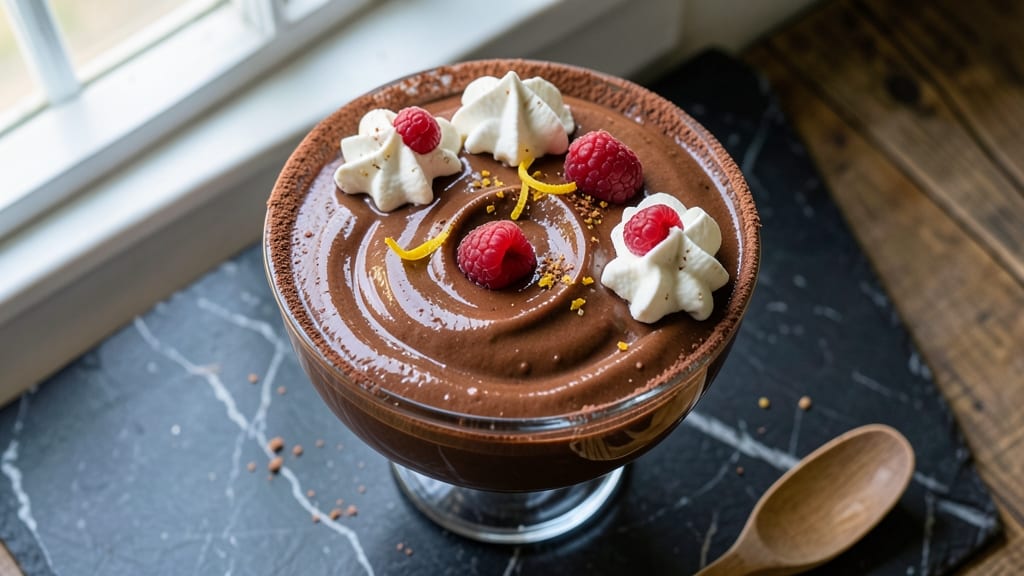
This bittersweet chocolate mousse recipe delivers restaurant-quality depth with a silky ganache base and subtle coffee infusion that elevates every bite. The key lies in precise temperature control—gentle melting of high-quality chocolate and careful whipping to achieve that signature airy texture without losing richness.
I've perfected this technique over years of testing, ensuring the result is velvety yet sturdy enough to hold its shape when plated.
What sets this recipe apart is the balance between bittersweet chocolate's natural intensity and the smooth, aromatic notes of coffee. The ganache forms the foundation, creating a luxurious mouthfeel that's both decadent and refined.
Professional techniques like tempering the chocolate and incorporating room-temperature eggs ensure perfect stability and texture every time.
By the time you're done, you'll have a mousse that's rich yet light, with a delicate coffee undertone that lingers pleasantly. The ganache's glossy sheen and firm yet creamy consistency make it ideal for elegant presentations.
Serve in individual glasses with a dusting of cocoa powder or fresh berries for a dessert that feels both sophisticated and approachable.
This recipe builds on classic methods while adding the coffee infusion that transforms it from ordinary to extraordinary. The result is a dessert that's impressive enough for special occasions but simple enough for weeknight indulgence. Let's create this velvety masterpiece together.
Ingredients for bittersweet chocolate mousse
Six essential ingredients transform into velvety perfection with precise technique and professional results.
| Ingredient | Amount | Notes |
|---|---|---|
| Bittersweet Chocolate Bars 🍫 | 12 oz | 70% cacao minimum, high-quality |
| Heavy Cream 🥛 | 1 ½ cups | Full-fat, cold from fridge |
| Large Egg Yolks 🥚 | 4 whole | Room temperature, separated |
| Granulated Sugar 🍚 | ¼ cup | Superfine preferred for smoothness |
| Instant Espresso Powder ☕ | 1 tbsp | High-quality, finely ground |
| Vanilla Extract 🌿 | 1 tsp | Pure Madagascar preferred |
| Pinch Salt 🧂 | ⅛ tsp | Fine sea salt |
| Unsalted Butter 🧈 | 2 tbsp | European-style preferred |
| Cocoa Powder 🍫 | 2 tbsp | Dutch-processed, high-quality |
| Fresh Berries 🍓 | 1 cup | Raspberries or blackberries |
The chocolate is non-negotiable here—Valrhona or Callebaut brands deliver the depth needed for restaurant-quality mousse. Look for bars with at least 70% cacao content; anything lower risks a cloyingly sweet result. Whole beans from specialty stores like La Maison du Chocolat or Whole Foods often yield the finest bars. The heavy cream must be cold and full-fat—never the light versions—since it forms the ganache's luxurious texture. For the coffee infusion, high-quality espresso powder like Lavazza or Illy ensures a smooth, aromatic depth without bitterness. Store chocolate bars in a cool, dark place to preserve their flavor profile for up to 1 year.
No instant espresso powder? Freshly brewed espresso cooled to room temperature works beautifully—just reduce the liquid by half when incorporating. Substituting Dutch-process cocoa powder with natural cocoa? Use one-third more and add a pinch of baking soda to neutralize acidity. For a dairy-free option, coconut cream replaces heavy cream, though texture will be slightly denser. The butter plays a crucial role in stabilizing the ganache—European-style with higher fat content (82-85%) yields better results than American butter. If you're short on time, pre-melted chocolate can be used, but tempering fresh ensures that signature glossy finish.
Once assembled, this mousse keeps beautifully in the fridge for 3-4 days when stored in an airtight container. For longer storage, freeze individual portions for up to 3 months—thaw overnight in the fridge before serving. The berries should be added just before serving to maintain their vibrant color and freshness. For an extra touch of elegance, dust with unsweetened cocoa powder or a sprinkle of flaky sea salt right before plating. The ganache base can be made 2 days ahead and stored separately for convenience, allowing flavors to meld even further.
Why You'll Love This Recipe
- No Whisk Required: I swear by this trick—just melt the chocolate, fold in the yolks and sugar, then whip the cream separately. No tempering eggs, no overmixing, just a few gentle stirs. That espresso powder? It’s the secret—deepens the chocolate without tasting like coffee.
- Rich Without Overpowering: The bittersweet chocolate does all the heavy lifting here, but the cream keeps it silky, not heavy. The sugar balances the intensity, and honestly? That pinch of espresso makes it taste like a fancy dessert, not just chocolate pudding.
- Date Night Ready: Make it ahead—it actually improves overnight. Serve it chilled in glasses with whipped cream, or go wild with berries or crushed cookies. (Yes, even on a Tuesday night when you’re too tired for a real dinner.)
- Leftovers? Best Part: This stuff lasts four days in the fridge, and it’s still perfect. No sad, grainy texture—just creamy, dreamy chocolate every time. Plus, you’re using heavy cream and good chocolate, so it’s not like you’re wasting anything.
Step-by-step instructions for bittersweet chocolate mousse
Master this refined technique for velvety ganache and perfectly tempered eggs.
Create the Coffee-Infused Ganache
Finely chop the 12 oz bittersweet chocolate bars into small, even pieces. Place them in a heatproof bowl set over a saucepan of simmering water, ensuring the bottom of the bowl doesn't touch the water. Stir occasionally until the chocolate melts completely, creating a smooth, glossy mixture.
Remove the bowl from heat and immediately whisk in the 1 tbsp instant espresso powder, 1 tsp vanilla extract, and 0.125 tsp pinch salt. This creates a rich, aromatic base that will deepen the mousse's complexity. Let the mixture cool slightly to 90°F—it should be warm but not hot to the touch—before proceeding. The coffee infusion develops fully during this cooling phase, adding subtle bitterness that balances the sweetness later.
Whip the Cream to Soft Peaks
In a separate, chilled mixing bowl, combine the 1.5 cups heavy cream and 2 tbsp unsalted butter. Using a stand mixer fitted with the whisk attachment, whip on medium-high speed until the cream forms soft peaks that hold their shape when the whisk is lifted. This typically takes 2-3 minutes—the cream should be thick but still slightly wobbly at the tips.
Don't over-whip or you'll develop butterfat, which will make the mousse grainy. I like to test the consistency by lifting the whisk: if the peaks collapse slowly, you're ready. Transfer the whipped cream to a clean bowl and set aside, covering it with plastic wrap to prevent a skin from forming.
Temper the Egg Yolks and Sugar
In a heatproof bowl, gently whisk together the 4 whole large egg yolks and 0.25 cup granulated sugar over a saucepan of barely simmering water. Stir constantly with a silicone spatula, keeping the mixture moving to prevent scrambling. Heat until it reaches 160°F—it should thicken slightly and coat the back of a spoon, forming a pale, ribbon-like consistency.
Remove from heat immediately and let cool to 100°F while whisking continuously. This tempering process is crucial—it prevents the eggs from curdling when mixed with the warm ganache. The mixture should be thick enough to hold its shape when dropped from a spoon but still pourable. If it cools too much, gently warm it over low heat for 10-15 seconds to restore the proper consistency.
Combine Components for Silky Texture
With the mixer on low speed, gradually pour the tempered egg yolk mixture into the warm ganache, whisking constantly to blend smoothly. Increase speed to medium and continue mixing for 1 minute until fully incorporated. The mixture should be glossy and thickened but still fluid enough to ribbon when the whisk is lifted.
Add the whipped cream in three additions, gently folding it in with a spatula after each addition. This prevents deflating the air incorporated during whipping. The final mousse should be airy yet dense, with a velvety sheen. For extra richness, fold in the 2 tbsp cocoa powder at this stage—it enhances the chocolate flavor without altering the texture. Divide the mousse among 6 serving glasses and refrigerate for at least 4 hours to set completely.
Garnish and Serve
Before serving, top each portion with 1 cup fresh berries (raspberries or blackberries work best) arranged artistically on top. The acidity of the berries cuts through the richness of the mousse, creating a perfect contrast. Serve chilled from the refrigerator, ensuring the mousse is fully set but still creamy.
The mousse should hold its shape when unmolded but still have a luxurious, melt-in-your-mouth texture. Each bite should deliver layers of chocolate intensity, coffee depth, and subtle sweetness, balanced by the bright acidity of the berries. For best results, serve immediately after garnishing to preserve the berries' freshness and the mousse's perfect consistency.
Pro Tips For Making Bittersweet Chocolate Mousse
- Temper the Chocolate: Chop your bittersweet chocolate into tiny, even pieces—think rice-sized—and melt it in a heatproof bowl set over simmering water (not boiling). Stir every 10 seconds once it starts to soften, or you’ll end up with streaky, uneven texture. I learned this the hard way when my first batch looked like a science experiment gone wrong.
- Whisk Yolks Like Your Life Depends on It: Beat those egg yolks and sugar over a double boiler until the mixture hits 160°F (71°C)—that’s when it’ll coat the back of a metal spoon. No thermometer? Test it: if it leaves a ribbon that holds its shape for 2 seconds, you’re good. Rushing this step means your mousse will never set properly.
- Chill the Cream First: Whip the heavy cream cold—straight from the fridge—and add the espresso powder only after it starts to thicken. Cold cream whips faster and holds its shape better, and the espresso dissolves cleaner. I used to add it at the start, and my mousse always tasted like coffee grounds had settled at the bottom.
- Fold in the Chocolate Gently: Once your chocolate mixture is cool enough to touch (but not set), fold in the whipped cream just until combined—think marbling, not mixing. Overfolding deflates the cream and makes the texture dense. I was aggressive at first, and my mousse turned into a sad, flat puddle. Now I use a rubber spatula and go slow.
Regional styles of bittersweet chocolate mousse
French Classic Elegance
In France, chocolate mousse is all about refined technique and minimal garnish. The classic version here replaces coffee with 1 tbsp orange zest and ½ tsp orange liqueur (like Cointreau) in the ganache. Top with a dusting of unsweetened cocoa powder and a single raspberry for presentation.
French chefs often use Valrhona Abinao 70% chocolate for its balanced bitterness, and they insist on room-temperature eggs for perfect emulsification. 🌟
Italian Espresso Twist
Italy takes mousse to another level by infusing the ganache with 1 tbsp strong brewed espresso instead of powder, then adding ½ tsp amaretto liqueur for almond notes. Serve in espresso cups with a sprinkle of crushed pistachios on top.
Italian versions often include 1 tbsp mascarpone cheese folded into the whipped cream for extra stability. The key is using high-quality Italian dark chocolate like Venchi or Perugina—look for 70-72% cacao.
Swiss Decadence
Swiss mousse stands out with its double-chocolate ganache—this version adds 2 oz white chocolate to the bittersweet base for contrast. The coffee infusion becomes 1 tbsp Swiss Mocha coffee powder, and the whipped cream incorporates 1 tbsp Swiss meringue powder (like Schär) for extra lift.
Garnish with Swiss chocolate shavings and a mint leaf for freshness. Swiss chefs often use Lindt Excellence chocolate bars for their smooth texture and balanced sweetness.
American Coffeehouse Style
For a rich, caffeine-kick version, American home cooks often boost the coffee flavor with 2 tbsp instant espresso powder and a ½ tsp cinnamon in the ganache. Top with whipped cream and a drizzle of caramel sauce for a dessert-bar vibe.
Use Ghirardelli 60-62% chocolate bars for a sweeter profile that appeals to broader tastes. This style is perfect for coffee lovers and pairs beautifully with a strong cold brew on the side. 💛
Mexican Spiced Variation
Add warmth with ½ tsp cinnamon, ¼ tsp cayenne pepper, and 1 tsp Mexican chocolate powder (like Abuelita) to the ganache. Garnish with chopped toasted pecans and a dash of Tajín for a sweet-spicy contrast.
This version works beautifully with churros on the side or as a filling for chocolate cupcakes. Mexican chocolate bars from La Chocolatera provide the perfect depth for this fusion twist.
Japanese Matcha Fusion
For a modern twist, replace the coffee with 1 tbsp high-quality matcha powder (like Ippodo Tea) in the ganache. Add ½ tsp vanilla bean paste for complexity. Serve in mini dessert bowls with a dusting of matcha powder and red bean paste on the side.
Japanese versions often use less sugar (¼ cup) to highlight the earthy matcha notes. The result is a bright, vibrant mousse that balances richness with freshness. ✨
Frequently asked questions
Why does my chocolate mousse turn grainy?
Graininess usually happens from over-whipping the cream or eggs cooking too long. Always whip cream just to soft peaks (not stiff) and temper the egg yolks to 160°F—no higher! Also ensure your chocolate is high-quality and melted gently over double boiler heat, not direct heat.
Can I make this ahead of time?
Yes! The ganache base can be made 2 days ahead and stored in the fridge. The final mousse should chill 4+ hours before serving. For best texture, garnish with berries just before eating. The flavors actually improve overnight as the coffee infusion melds.
What's the difference between bittersweet and dark chocolate?
Bittersweet chocolate typically has 50-70% cacao with added sugar for balance, while dark chocolate ranges from 70-99% cacao with minimal sugar. For this recipe, use 70%+ bittersweet—it's sweeter than dark but still rich enough for mousse. The coffee infusion helps balance any bitterness.
How do I fix curdled mousse?
If your mousse separates, gently reheat the ganache portion to 90°F and whisk in 1 tbsp additional whipped cream to re-emulsify. For egg curdling, whisk in 1 tsp cold water to smooth it out. Prevention is key—always temper eggs properly and work with room-temperature ingredients.
Can I substitute regular cocoa powder?
Use Dutch-processed cocoa powder (like Hershey's Special Dark) for the best results—it's smoother and less acidic. Natural cocoa powder will work but may make your mousse slightly tangy. For a 1:1 swap, reduce liquid by 1 tbsp since Dutch-processed cocoa absorbs more moisture.