
Desserts
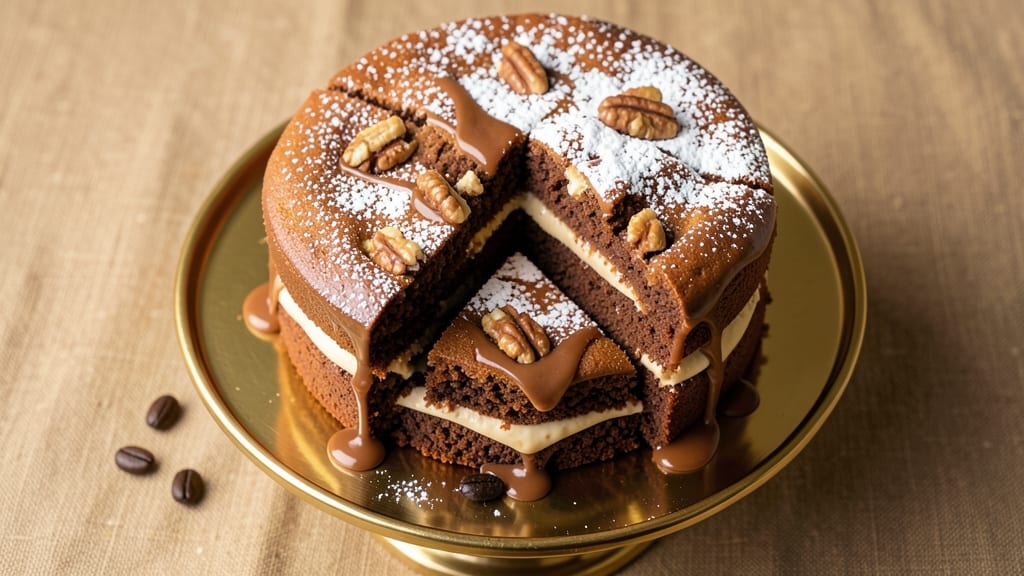
This café latte German chocolate cake recipe delivers the perfect balance of rich cocoa, crumbly pecan topping, and velvety frosting—every layer designed for maximum moisture and texture.
The secret lies in a precise blend of buttermilk and brown sugar that keeps the cake tender for days, while the toasted pecan crumble adds a satisfying crunch. I’ve perfected this version to avoid that common dryness many German chocolate cakes suffer from, ensuring each slice stays irresistibly moist.
The recipe starts with a classic cake base—flour, cocoa powder, and eggs—but the magic happens in the slow-baked layers and the homemade frosting. A 350°F oven temperature and careful mixing prevent cracks while developing deep chocolate flavor.
The pecan topping, baked right on the cake, becomes a crispy contrast to the soft layers below, making every bite a textural delight.
What sets this cake apart is the moisture-preserving technique: wrapping the baked layers in plastic and chilling overnight locks in freshness, while the frosting—made with butter and powdered sugar—adds a smooth finish. The result? A cake that’s rich, decadent, and foolproof, perfect for celebrations or a cozy dessert night.
Whether you’re baking for a crowd or treating yourself, this recipe scales easily and delivers restaurant-quality results. Let’s get started—your taste buds will thank you.
Ingredients for cafe latte german chocolate cake
Rich cocoa, toasted pecans, and espresso-infused layers—this cake delivers restaurant-quality moisture and crunch.
| Ingredient | Amount | Notes |
|---|---|---|
| All-Purpose Flour 🌾 | 3 cups | Sifted for light texture |
| Granulated Sugar 🍚 | 2 cups | White, for balanced sweetness |
| Packed Brown Sugar 🍚 | 1 ½ cups | Light brown preferred |
| Unsalted Butter 🧈 | 1 ½ cups | Room temperature, full-fat |
| Large Eggs 🥚 | 4 whole | Room temperature for even mixing |
| Buttermilk 🥛 | 1 ½ cups | Fresh, not powdered |
| Instant Espresso Powder ☕ | 2 tbsp | High-quality, pure espresso |
| Unsweetened Cocoa Powder 🍫 | ¾ cup | Natural, not Dutch-processed |
| Baking Powder 🧂 | 2 tsp | Double-acting preferred |
| Salt 🧂 | ½ tsp | Fine sea salt |
| Vanilla Extract 🌿 | 2 tsp | Pure, high-quality |
| Pecans 🥜 | 2 cups | Chopped, toasted for crunch |
| Light Corn Syrup 🍯 | ½ cup | For pecan topping |
| Powdered Sugar 🍚 | 1 cup | For frosting |
| Heavy Whipping Cream 🥛 | 1 cup | Cold, full-fat |
The cocoa powder and espresso powder are non-negotiable for that deep, complex flavor. Valrhona or Guittard brands deliver the best quality—no bitter aftertaste. For the pecans, Kirkland Signature or Trader Joe's offer the best value, but any good-quality pecans will work if toasted properly. The buttermilk should be fresh (not powdered) to ensure proper moisture retention—check the expiration date if using store-bought. Room-temperature butter and eggs are critical for even mixing and a tender crumb.
No instant espresso powder? Strong brewed coffee at half the amount works in a pinch, but the flavor won't be as concentrated. Substitute Dutch-processed cocoa powder for natural, but expect a slightly different texture. For the frosting, whipped cream at room temperature gives the best consistency—don't skip the chilling step. If you're avoiding dairy, coconut cream whipped cold is a decent alternative, though the texture will differ. The corn syrup in the pecan topping can be swapped for maple syrup if preferred, but it won't caramelize as beautifully.
This cake keeps beautifully—wrap the baked layers in plastic and refrigerate overnight for maximum moisture retention. The frosting should be made fresh the day of serving, but the cake layers can be prepped 2 days ahead. For storage, keep the fully assembled cake in an airtight container at room temperature for 3 days or refrigerate for 1 week. The pecan topping stays crispy for 5 days if stored separately in an airtight container.
Why You'll Love This Recipe
- One-Bowl Wonder: I swear, this cake comes together in a single bowl—no mixer, no fuss. Just fold in the melted butter, eggs, and that rich brown sugar until it’s smooth, then pour. The flour and sugar do all the heavy lifting while you sip your latte.
- Espresso-Kissed Magic: That café latte syrup swirled into the batter? It’s like a warm hug for your taste buds—smooth, slightly bitter chocolate with a velvety coffee note that lingers. Honestly, the first bite makes me want to bake it again immediately.
- Party or Pajamas: Serve it at a dinner party with a dusting of cocoa powder, or grab a slice straight from the fridge for a lazy Sunday. The dense, fudgy layers hold up perfectly—no one will guess it’s made with pantry staples.
- Budget Baking: Butter, eggs, and flour? Check. This cake costs less than half of fancy boxed mixes but tastes like a bakery’s secret. Plus, it keeps for days, so you’re not scrambling to use it all before it dries out.
Step-by-step instructions for German chocolate cafe latte cake
Here's the method for a rich, moist cake with espresso depth and triple-layered texture.
Prepare the Espresso Cake Batter
Preheat your oven to 350°F and grease three 9-inch round cake pans with nonstick spray, then line the bottoms with parchment paper. In a medium bowl, whisk together the 3 cups all-purpose flour, 2 tsp baking powder, and 0.5 tsp salt. Set aside.
In a large mixing bowl, cream the 1.5 cups unsalted butter and 2 cups granulated sugar together on medium speed until light and fluffy—about 3-4 minutes. Add the 4 whole large eggs, one at a time, mixing well after each addition. Stir in the 2 tbsp instant espresso powder and 2 tsp vanilla extract until fully combined.
Gradually add the dry ingredients to the wet mixture, alternating with the 1.5 cups buttermilk, beginning and ending with the flour mixture. Mix on low speed just until combined—do not overmix. Fold in the 0.75 cup unsweetened cocoa powder until evenly distributed. Divide the batter evenly among the prepared pans.
Bake the Layers and Prepare Pecan Topping
Bake the cake layers for 25-30 minutes or until a toothpick inserted into the center comes out clean. Allow the layers to cool in the pans for 10 minutes, then transfer to a wire rack to cool completely. While the cake layers bake, prepare the pecan topping by combining 2 cups chopped pecans, 0.5 cup light corn syrup, and 1.5 tbsp unsalted butter in a small saucepan.
Cook over medium heat, stirring frequently, for 5-7 minutes until the mixture is bubbly and the pecans are lightly toasted. Spread the warm pecan mixture evenly over a piece of parchment paper and let it cool completely before using as a topping.
Assemble the Triple-Layered Cake
Place the first cake layer on a serving plate. Spread a thin layer of heavy whipping cream, whipped to soft peaks, over the top. Repeat with the remaining two layers, ensuring each layer is evenly covered with cream. This step is crucial for maintaining moisture and creating that signature cafe latte cake texture.
Once all layers are assembled, cover the entire cake with the cooled pecan topping, pressing gently to adhere. Dust the top and sides of the cake with 1 cup powdered sugar using a fine-mesh sieve for an elegant finish. Chill the cake in the refrigerator for at least 2 hours before serving to allow the flavors to meld and the cake to set.
Serve with Espresso Drizzle (Optional)
For an extra touch of authenticity, prepare an espresso drizzle by heating 2 tbsp heavy cream and 1 tbsp powdered sugar in a small saucepan over low heat. Once warm, whisk in 1 tsp instant espresso powder until fully dissolved. Drizzle this mixture over the top of the cake just before serving.
The cake should be moist, rich, and deeply flavorful with a perfect balance of chocolate and espresso notes. Each slice should reveal layers of tender cake, creamy filling, and crunchy pecan topping. Serve with a side of freshly brewed espresso or a dollop of whipped cream for the ultimate indulgence.
Pro Tips For Making Cafe Latte German Chocolate Cake
- Mix Butter and Sugars First: I learned this the hard way—skipping this step means your cake will turn out dense instead of light. Cream the butter, granulated sugar, and brown sugar together until the mixture is pale and fluffy (about 3-5 minutes with a stand mixer). The air incorporated here is what makes the texture tender, especially since German chocolate cake relies on a rich, moist crumb.
- Use Room-Temperature Eggs: Cold eggs will curdle when mixed into warm butter, and that’s a texture disaster. Take your eggs out of the fridge 30 minutes before mixing—just enough time for them to reach about 65°F (18°C). Warm them slightly in a bowl of warm water if you’re in a rush, but don’t overdo it or they’ll scramble.
- Don’t Overmix the Batter: Once you add the flour, resist the urge to mix until it’s perfectly smooth. Overmixing develops gluten, which makes the cake tough. Stir just until the dry ingredients disappear—about 10-12 strokes with a spatula. The batter will look slightly lumpy, and that’s exactly how it should be.
- Bake Until a Toothpick Comes Out Mostly Clean: German chocolate cake is dense, so don’t wait for a completely dry toothpick like you would with a pound cake. Pull it out when it has a few moist crumbs clinging to it—usually around 30-35 minutes at 350°F (175°C). Overbaking dries out the cake, and you’ll end up with a sad, rubbery texture.
Flavor customization for cafe latte german chocolate cake
Espresso Intensity
Adjust the espresso flavor by modifying the instant espresso powder—use 1 tbsp for a subtle hint or 3 tbsp for a bold, coffee-forward taste. For an extra boost, replace 1 tbsp of the cocoa powder with 1 tbsp of finely ground coffee beans (sifted) to deepen the aroma.
I’ve found Lavazza or Starbucks espresso powder adds the richest notes without bitterness. 💛
Chocolate Variations
Swap the unsweetened cocoa powder for Dutch-processed cocoa (like Droste) to mellow the acidity and enhance chocolate depth. For a white chocolate twist, reduce the cocoa to 0.5 cup and add 0.5 cup white chocolate chips, melted and cooled, to the batter.
Dark chocolate lovers can fold in ½ cup melted dark chocolate (70% cocoa) for a fudgier texture.
Pecan Alternatives
Replace pecans with walnuts for a nuttier crunch or hazelnuts for a European café vibe. For a sweeter topping, add ¼ cup mini marshmallows to the pecan mixture before baking. If you’re avoiding nuts, use 1 cup crushed graham crackers or toasted coconut flakes for texture.
The corn syrup in the topping can also be swapped for maple syrup or honey for a different caramelization.
Moisture Boosters
For extra moisture, replace ½ cup of the buttermilk with ½ cup plain Greek yogurt or sour cream. Add 1 tbsp of instant coffee granules directly to the dry ingredients for a moister crumb.
I’ve also had great results with 1 tbsp of coffee liqueur (like Kahlúa) in the batter—just reduce the buttermilk by 1 tbsp to balance the liquid. 💡
Frosting Customizations
Upgrade the frosting by whipping ½ cup of cream cheese into the heavy whipping cream for a tangier finish. For a nutty twist, fold in 2 tbsp of finely chopped toasted pecans or 1 tbsp of peanut butter into the frosting.
A chocolate ganache (melt ½ cup dark chocolate with ½ cup heavy cream) adds decadence—just chill it until thickened before spreading.
Seasonal Twists
In summer, add 1 tsp of orange zest and 1 tbsp of orange liqueur to the batter for a citrusy contrast. For fall, fold ½ cup of pumpkin puree into the batter and top with a cinnamon-sugar pecan crumble.
Winter versions benefit from ½ tsp of cinnamon and a gingersnap crumble instead of pecans. Each seasonal tweak keeps the cake fresh year-round! ✨
Nutrition facts
Frequently asked questions
Why does this recipe use espresso powder instead of coffee?
Espresso powder delivers a more concentrated coffee flavor without adding extra liquid to the batter. 2 tablespoons of instant espresso powder equals about 1 cup of brewed coffee, but it dissolves completely and keeps the cake's moisture intact. The powder also prevents the cake from becoming too wet or dense, which can happen with coffee grounds or brewed coffee.
Can I make this cake in a single layer instead of three?
For a single-layer version, use a 9x13-inch pan and bake for 35-40 minutes at 350°F. Reduce the batter by 1 cup (use 2 cups flour instead of 3 cups) and omit the cream layers. The pecan topping still works perfectly—just spread it evenly over the top before baking. This version is great for quick desserts or smaller gatherings.
What’s the best way to store leftovers?
Wrap the fully assembled cake in plastic wrap and refrigerate for up to 5 days. For longer storage, freeze the cake (without frosting) for 3 months. Thaw overnight in the fridge before adding fresh frosting. The pecan topping stays crispy if stored separately in an airtight container at room temperature for 4-5 days. Always bring the cake to room temperature before serving for the best texture.
Why did my cake turn out dry?
Dry cake usually happens from overbaking, overmixing, or skipping the chilling step. Bake only until a toothpick comes out clean (25-30 minutes max). Mix the batter just until combined—overmixing develops gluten, making the cake tough. Always chill the cake overnight before frosting to lock in moisture. If your cake is already dry, try brushing warm layers with simple syrup (½ cup sugar + ¼ cup water) before assembling.
Can I substitute buttermilk in this recipe?
Yes! Mix 1.5 tablespoons vinegar or lemon juice with 1.5 cups milk and let it sit for 5 minutes to curdle. For a dairy-free option, use 1.5 cups coconut milk or unsweetened almond milk with 1.5 tablespoons cream of tartar (let it sit for 10 minutes). The acidity in buttermilk helps activate the baking powder for a lighter texture, so these substitutes work well.