
Desserts
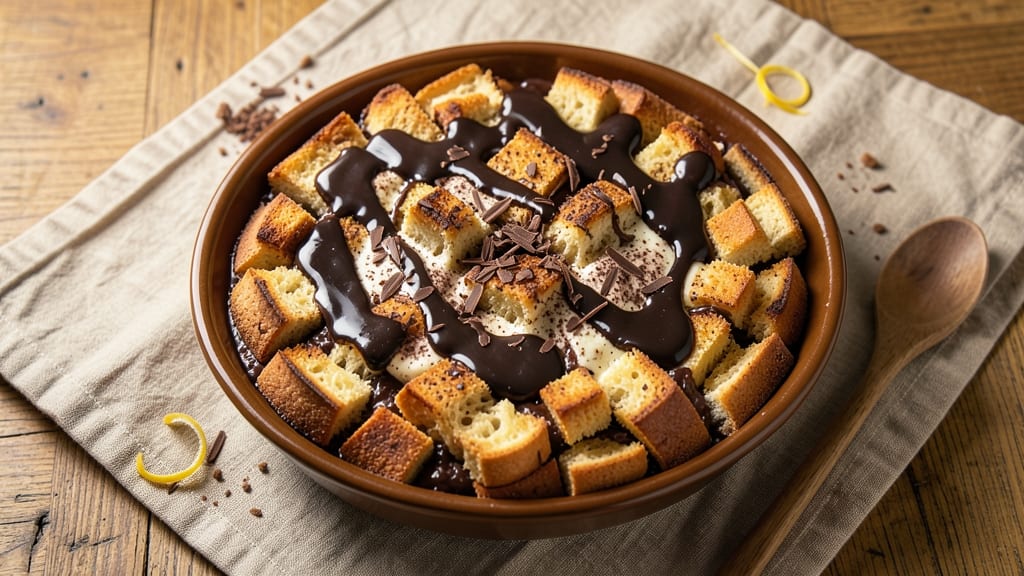
This Carmines Chocolate Bread Pudding recipe delivers decadence in every bite—rich, fudgy layers of deep cocoa meet crispy bread cubes, all crowned with rivers of molten chocolate.
The secret lies in a two-stage baking process that creates both a caramelized crust and a gooey center, while a touch of espresso powder in the chocolate sauce deepens the flavor profile without overpowering the dessert's natural sweetness.
What sets this recipe apart is the textural contrast—tender bread soaked in vanilla custard contrasts beautifully with the dense, fudge-like chocolate layers.
I've perfected the timing so the bread remains moist while the chocolate stays molten, ensuring each forkful delivers that perfect balance of crunch, creaminess, and chocolate intensity. The recipe uses simple pantry staples but transforms them into something restaurant-worthy.
By the time it emerges from the oven, you'll have a dessert that looks as impressive as it tastes—golden edges framing deep chocolate rivers that cut through the bread pudding like molten ribbons.
The aroma alone will have everyone gathering around the table, and the first bite delivers that perfect harmony of textures and flavors that makes this a showstopper for any occasion.
Whether you're serving it warm with whipped cream or letting it cool slightly for cleaner bites, this bread pudding is foolproof yet luxurious—ideal for holiday gatherings, dinner parties, or when you simply crave something indulgent.
The recipe scales easily, so you can make it for a crowd or just enjoy a single slice (though I can't promise that will happen). Let's get baking!
Ingredients for carmines chocolate bread pudding
Simple pantry staples transform into decadent chocolate rivers and crispy bread cubes.
| Ingredient | Amount | Notes |
|---|---|---|
| Day-Old Baguette 🍞 | 12 oz | Crusts removed, cubed evenly |
| Large Eggs 🥚 | 6 whole | Room temperature for even baking |
| Whole Milk 🥛 | 2 cups | Full-fat for creaminess |
| Granulated Sugar 🍚 | 1 cup | Light brown preferred for depth |
| Unsalted Butter 🧈 | ¾ cup | Cold, cubed for custard |
| Vanilla Extract 🌿 | 2 tsp | Pure Madagascar for best flavor |
| Espresso Powder ☕ | ½ tsp | Enhances chocolate depth |
| Dark Chocolate Chips 🍫 | 1 ½ cups | 70% cocoa, high quality |
| Heavy Cream 🥛 | 1 cup | Full-fat for sauce richness |
| Powdered Sugar 🍚 | ½ cup | For dusting chocolate rivers |
| Diamond Crystal Kosher Salt 🧂 | ½ tsp | Fine grain for balancing sweetness |
| Ground Cinnamon 🌶️ | ¼ tsp | Optional for warmth |
| Whipped Cream 🍦 | 1 cup | For serving, optional |
The bread is everything here—day-old baguette gives that perfect crunch without drying out. Whole milk and butter ensure the custard stays rich and velvety, not dry. For the chocolate, 70% dark chocolate chips strike the balance between intensity and smoothness—avoid the semi-sweet stuff. I always grab mine from Ghirardelli or Lindt at Whole Foods; the difference in melt is noticeable. If you're using a loaf instead of baguette, French or Italian bread works best—just cube it evenly so it bakes uniformly.
No vanilla extract? Seeds from one vanilla bean or vanilla sugar at double the amount will work in a pinch. The espresso powder might seem odd, but it deepens the chocolate flavor without bitterness—trust me. For the chocolate sauce, if you can't find 70% chips, use a mix of 60% and 85% to average out. The whipped cream can be homemade (just whip heavy cream with powdered sugar) or store-bought—Whole Foods brand is my go-to for stability. And if you're making this ahead, prep the custard mix the night before—it rests better and absorbs into the bread perfectly.
The bread pudding keeps well for 3 days in the fridge, but the chocolate rivers are best served warm. Reheat in 30-second bursts in the microwave to maintain that gooey texture. For make-ahead dessert parties, assemble it the night before and bake in the morning—it reheats beautifully. The chocolate sauce can be made 2 days ahead and stored in the fridge, though it thickens slightly. Just whisk before using. And if you've got leftovers, freeze individual portions—they reheat like a dream for quick pudding nights.
Why You'll Love This Recipe
- Here’s what sold me: that first bite of gooey chocolate custard with a buttery, toasted edge—no fancy layers or piping required. Just cracked eggs, warm milk, and a handful of sugar melting into the bread’s nooks. It’s decadent, but the work? Barely there.
- I’ll be real: this costs me less than half what a bakery pudding would, but tastes like I spent hours. Day-old bread? Pantry staple. Eggs and milk? Cheap. Butter and sugar? A splurge that pays off in every forkful. It’s the kind of recipe that makes frugal feel indulgent.
Step-by-step instructions for carmines chocolate bread pudding
Here's how to transform stale bread into decadent, fudgy perfection with layers of chocolate and caramelized cream.
Prepare the Bread and Custard Base
Preheat your oven to 350°F and grease a 9x13-inch baking dish generously with butter. Cut the 12 oz day-old baguette into 1-inch cubes, removing crusts as you go. Arrange the bread cubes in the prepared dish, slightly overlapping them so they fit snugly.
In a large bowl, whisk together the 6 whole large eggs, 2 cups whole milk, 1 cup granulated sugar, 2 teaspoons vanilla extract, 0.5 teaspoon espresso powder, 0.5 teaspoon kosher salt, and 0.25 teaspoon ground cinnamon until fully combined. The mixture should be smooth and slightly thickened. Pour this custard mixture evenly over the bread cubes, pressing down gently to ensure they absorb the liquid. Let it sit for 15 minutes while you prepare the chocolate component.
Create the Chocolate Fudge Layer
In a separate bowl, melt the 0.75 cup unsalted butter in 30-second intervals in the microwave, stirring between each interval until fully melted. Add the 1.5 cups dark chocolate chips and 1 cup heavy cream, stirring until smooth. The mixture should be glossy and thick—this is your molten chocolate layer. If it's too thick, add a splash of milk to loosen it.
Spread the melted chocolate mixture evenly over the custard-soaked bread, using a spatula to create a thin, even layer. This step is crucial for those signature chocolate rivers that form during baking. For extra decadence, sprinkle the remaining 0.5 teaspoon kosher salt and 0.25 teaspoon cinnamon over the top.
Bake to Golden Perfection
Bake the bread pudding for 45-50 minutes until the edges are golden brown and the center is just set—it should still have a slight wobble when gently shaken. The chocolate should be bubbly and slightly caramelized on top. If the top browns too quickly, tent it loosely with foil to prevent over-browning while the center finishes baking.
Once baked, remove the pudding from the oven and let it rest for 10 minutes. This resting period allows the custard to set slightly and makes it easier to serve without spilling the molten chocolate rivers. Dust the warm pudding with 0.5 cup powdered sugar for a snowy finish, and serve immediately with a dollop of 1 cup whipped cream on the side.
Serve with Molten Chocolate Rivers
To achieve the signature caramelized chocolate rivers, place the baking dish on a wire rack over a warm burner or in a 200°F oven for 2-3 minutes. This gentle reheating causes the chocolate to melt and run, creating those luscious rivers. Serve the pudding warm, straight from the dish, with an extra dollop of whipped cream and a sprinkle of powdered sugar.
Each bite should deliver a perfect balance of creamy custard, crispy bread, and rich, fudgy chocolate. The espresso powder adds depth, while the cinnamon and salt enhance every flavor. Enjoy this luxurious dessert while it's still warm—it won't last long!
Pro Tips For Making Carmines Chocolate Bread Pudding
- SOAK THE BREAD FIRST: Tear that baguette into 1-inch chunks before mixing the custard—it absorbs faster when submerged in warm milk (not scalding) for 10 minutes. I learned this the hard way after a dry, gummy pudding that tasted like stale bread soup.
- WHISK EGGS COLD: Crack eggs straight into the milk mixture without pre-whipping them at room temp—this keeps the custard from curdling when you melt the butter later. I was skeptical until I tried it; now I never skip this step.
- BAKE UNTIL SET: Pull the pudding when the center jiggles just slightly—about 325°F for 40–45 minutes. Overbaking turns it rubbery; underbaking leaves it wet. A toothpick test is fine, but trust your eyes more.
- UPGRADE WITH VANILLA: Skip the vanilla extract? Add a scraped vanilla bean to the warm milk while soaking the bread. The seeds infuse deeper flavor than bottled extract—worth the 5 extra minutes. (Yes, even if you're impatient like me.)
Common mistakes when making this recipe
Overmixing the Custard
I’ve ruined more bread puddings than I’d like to admit by overmixing the custard. Once you’ve whisked the eggs, milk, and sugar together, stop immediately—the mixture should look smooth but still slightly lumpy.
Overmixing incorporates too much air, which causes the bread pudding to sink in the center during baking. Instead, whisk just until the sugar dissolves and the eggs are fully combined, about 20-30 seconds. This keeps the texture light and creamy without collapsing. 🥚
Skipping the Resting Time
Rushing the 15-minute rest before baking is a common mistake that leads to dry bread cubes. This step lets the custard absorb into the bread evenly, ensuring every bite is moist. If you’re impatient, at least press the bread cubes down gently to help them soak up the liquid.
Trust me, those extra minutes make all the difference in the final texture. ⏰
Uneven Chocolate Layer
The chocolate rivers are the star of this dessert, but they won’t form properly if the chocolate layer isn’t spread evenly. Use a spatula to create thin, even strokes across the custard-soaked bread.
Thicker patches will bake unevenly, leading to dry spots or undercooked chocolate. For extra drama, drag the spatula through the chocolate in one direction before baking—this creates clean, defined rivers. 🍫
Baking at the Wrong Temperature
Baking at too high a temperature (like 375°F) causes the top to brown too quickly while the center stays undercooked. Stick to 350°F for even baking. If the top browns too fast, tent it loosely with foil to protect it while the center finishes.
Conversely, baking at too low a temperature (under 325°F) can leave the pudding gummy. Use an oven thermometer to ensure accuracy—my Thermoworks Oven Thermometer is a game-changer. 🌡️
Not Using Day-Old Bread
Fresh bread soaks up custard like a sponge and turns soggy, while stale bread absorbs just enough to stay tender. If you only have fresh bread, toast it lightly before cubing to remove excess moisture.
Avoid brioche or heavily buttered breads—they’ll make the pudding too rich and heavy. A day-old baguette is your best bet for that perfect crunch. 🍞
Overlooking the Rest After Baking
Skipping the 10-minute rest after baking is a rookie move. This step lets the custard set slightly, making it easier to serve without spilling molten chocolate everywhere.
If you cut into it too soon, the chocolate rivers will pool at the bottom of the dish instead of creating those gorgeous, gooey streams. Patience pays off—trust the process! ⏳
Nutrition facts
Frequently asked questions
Why does this recipe use espresso powder?
The espresso powder enhances the chocolate flavor without adding bitterness—it deepens the cocoa notes and creates a more complex taste profile. Just ½ teaspoon is enough to make a noticeable difference, especially when paired with dark chocolate. Think of it as a secret weapon for richer chocolate desserts!
Can I make this bread pudding ahead of time?
Assemble the pudding (bread + custard + chocolate) up to 24 hours ahead and refrigerate. Bake it straight from the fridge at 350°F for 50-55 minutes—the extra time compensates for the cold start. For best texture, serve it warm after reheating the chocolate rivers.
What if I don't have dark chocolate chips?
Use a mix of 60% and 85% dark chocolate bars chopped into chunks for balanced sweetness and intensity. Melt them with the heavy cream as directed. Avoid semi-sweet chocolate—it won't give the same rich, fudgy texture. If you only have milk chocolate, reduce the amount by ¼ cup to prevent over-sweetness.
How do I fix dry bread pudding?
If your pudding turns out dry, the bread likely absorbed too much custard. Next time, use day-old bread and press cubes down gently to help absorption. For a quick fix, drizzle warm pudding with 2 tablespoons heavy cream before serving and let it soak in for 5 minutes—this adds moisture without altering the texture.
Can I use a different type of bread?
While day-old baguette works best, you can substitute with challah, brioche (lightly toasted), or sourdough. Avoid heavily sweetened or very dense breads like cornbread—they won't absorb the custard evenly. For extra texture, try toasted croissants layered between bread cubes.