
Side Dishes
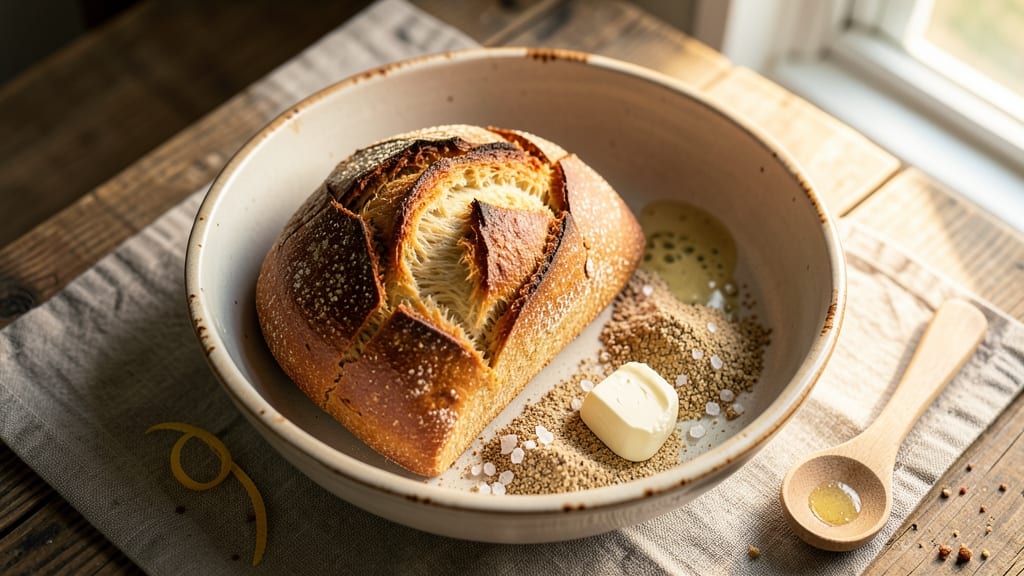
This all natural bread recipe delivers a crispy artisan crust and tender crumb without a single preservative in sight. The secret lies in a simple blend of whole grains, natural yeast, and time-honored techniques that create that perfect oven-spring.
I've been perfecting this recipe for years, and it never fails to impress—whether you're a home baker or just starting out.
The beauty of this method is its simplicity: just five core ingredients come together to form a dough that develops incredible flavor during the slow rise. No complicated techniques or specialty equipment required—just patience and a warm kitchen.
The result is a loaf with a golden, crackling crust and an open, airy crumb that's far superior to anything you'll find in a store.
What makes this recipe truly special is how it transforms basic pantry staples into something extraordinary. The dough develops deep, nutty flavors as it ferments, while the baking process creates that perfect balance of crispy exterior and soft interior.
Every slice will be perfectly proportioned, with a satisfying chew and just the right amount of crust.
Ready to bake bread that tastes like it came from an artisanal bakery? This recipe is your gateway to homemade loaves that are healthier, fresher, and infinitely more satisfying than anything store-bought. Let's get started with a loaf that's as good for you as it is delicious.
Ingredients for all natural bread
Five simple ingredients transform into a loaf with golden crust and tender crumb.
| Ingredient | Amount | Notes |
|---|---|---|
| All-Purpose Flour 🌾 | 5 cups | Organic preferred for best flavor |
| Whole Wheat Flour 🌾 | 1 cup | Adds nutty depth and texture |
| Active Dry Yeast 🍞 | 2 ¼ tsp | Fresh yeast works too (1 packet) |
| Granulated Sugar 🍬 | 1 tbsp | Feeds yeast for better rise |
| Salt 🧂 | 1 ½ tsp | Diamond Crystal preferred |
| Unsalted Butter 🧈 | ½ cup | Cold, cubed for flavor |
| Warm Water 💧 | 1 ½ cups | 105-110°F for yeast activation |
| Cornmeal 🌽 | ¼ cup | For dusting baking sheet |
| Extra-Virgin Olive Oil 🫒 | 1 tbsp | For dough enrichment |
The flours are where the magic happens. Bob's Red Mill organic flour is my go-to for that perfect balance of texture and flavor—King Arthur works too if you prefer a lighter loaf. Whole wheat adds heartiness but can make the dough denser, so I keep it to just one cup. The yeast? Fresh is best—it activates faster and gives better rise, but active dry works in a pinch. Just make sure it's not expired; old yeast won't wake up. For the butter, Plugrá is my favorite—it's cultured and adds incredible flavor, but any good unsalted butter will do. Keep it cold when mixing to avoid killing the yeast.
No whole wheat flour? White whole wheat is a great substitute—it's lighter but still adds nutrition. Short on yeast? Instant yeast at half the amount works perfectly. The sugar can be swapped for honey (reduce by 1 tsp) if you prefer, but it's not essential—just helps the yeast get going. For the olive oil, any extra-virgin will work, but avoid the cheap stuff—you can taste the difference. The cornmeal is just for dusting; if you're out, a sprinkle of flour works too. Pro tip: let your water sit out for 10 minutes before measuring—yeast loves it around 105°F.
This dough is all about patience. Once mixed, let it rise in a warm spot for 1.5-2 hours—it should double in size. Shape it gently to avoid deflating the bubbles. For storage, keep the baked loaf wrapped in a clean kitchen towel in a paper bag at room temp for 2-3 days. Freeze slices for up to 3 months—toast straight from frozen for crispy results. The crust stays crispy for days if you store it properly, so don't worry about making too much. I always bake two loaves—one for now, one for later.
Why You'll Love This Recipe
- No-Fuss Mixing: I swear by the 5-minute knead—just a bowl, a wooden spoon, and a splash of warm water. The whole wheat gives it structure without the fuss of long proofing times.
- Warm, Earthy Crunch: That first bite? The whole wheat adds a satisfying bite, while the all-purpose keeps it soft—like a hug from your grandma’s kitchen. The yeast does its magic slowly, so every slice has depth.
- Breakfast to Picnic: Toast it for breakfast, pack slices for sandwiches, or serve with soup—it’s my go-to for any meal. Honestly, I’ve even used it as a crust for casseroles when I’m lazy.
- Budget Bread Magic: A single batch costs pennies and lasts a week if I’m smart. Freeze half the dough for when I forget to bake—no wasted ingredients, just endless fresh bread.
Step-by-step instructions for artisan bread with natural ingredients
Here's how to craft a rustic, golden crust using only wholesome ingredients—no shortcuts, just pure baking magic.
Activate the Yeast for Maximum Rise
In a small bowl, whisk together the 1.5 cups warm water (between 105-110°F) with the 1 tbsp granulated sugar until dissolved. Sprinkle the 2.25 tsp active dry yeast over the surface and let sit for 5-10 minutes until frothy. You'll see tiny bubbles forming—this means your yeast is alive and ready to work!
If no bubbles appear after 10 minutes, your yeast might be dead. Start fresh with a new packet—this is the foundation of your bread's rise. Once bubbly, proceed immediately to avoid overproofing.
Mix the Dough with Wet and Dry Ingredients
In a large mixing bowl, combine the 5 cups all-purpose flour, 1 cup whole wheat flour, and 1.5 tsp salt. Make a well in the center and pour in the yeast mixture, 1 tbsp extra-virgin olive oil, and the 0.5 cup cold unsalted butter (leave it cubed for better flavor distribution).
Using a wooden spoon or dough whisk, gradually incorporate the wet ingredients into the dry. Once combined, turn the dough onto a lightly floured surface and knead for 8-10 minutes until smooth and elastic. The dough should feel slightly tacky but not sticky—add a little more flour if needed. This kneading develops gluten, giving your bread that perfect chewy texture.
Let the Dough Rise for Fluffy Perfection
Lightly grease a large bowl with olive oil, place the dough inside, and cover with a damp kitchen towel. Let it rise in a warm spot (like near the oven with the light on) for 1-1.5 hours, or until doubled in size. You'll know it's ready when you poke it gently and the indentation slowly springs back.
If your kitchen is cold, extend the rise time to 2 hours—patience here ensures a lighter loaf. Avoid over-rising, which can cause a dense texture. Once doubled, shape the dough into a round boule by tucking the edges underneath and sealing the seam.
Shape and Proof the Dough for Crispy Crust
Generously dust a baking sheet with 0.25 cup cornmeal (this prevents sticking and adds a subtle crunch). Place the shaped dough seam-side down on the sheet and let it proof for another 30-45 minutes until puffy. Preheat your oven to 425°F during this time—you want it screaming hot when the bread goes in.
For extra flavor, score the top of the dough with a sharp knife in a crosshatch pattern before baking. This allows steam to escape, creating that beautiful oven spring and crispy crust. The score should be about ½ inch deep—don't cut too deep or you'll tear the dough.
Bake to Golden, Crusty Greatness
Slide the baking sheet into the 425°F oven and bake for 25-30 minutes, until the bread is deep golden brown and sounds hollow when tapped on the bottom. The internal temperature should reach 190-200°F—use an instant-read thermometer for accuracy.
For that perfect artisan crust, I like to spray the oven walls with water right before baking. This creates steam, which helps develop the crust. Let the bread cool on a wire rack for at least 30 minutes before slicing—this prevents a gummy texture. The aroma alone will make your kitchen smell like a French bakery!
Pro Tips For Making All Natural Bread
- Mix the Yeast Last: Whole wheat flour’s extra nutrients can kill yeast if mixed too early. Stir the yeast, sugar, and warm water separately first—let it foam for 5 minutes—then fold it into the dry ingredients. This guarantees your yeast works, not fights.
- Weigh Your Flours: Scooping whole wheat flour from the bag packs it down, giving you less dough than the recipe calls for. Use a kitchen scale for both flours—all-purpose and whole wheat—to avoid dense, heavy bread. Trust me, your loaf will thank you.
- Don’t Over-Knead: This combo of flours gets tough fast. Knead by hand or mixer just until the dough pulls cleanly away from the bowl (about 8-10 minutes). Overworking it turns your bread into a chewy brick—no one wants that.
- Use a Dutch Oven: Skip the steam basket if you have one. A hot Dutch oven traps moisture and builds a crisp crust without extra fuss. Just place the shaped dough in, cover, and bake—no fancy equipment needed. It’s the closest you’ll get to bakery-style bread at home.
Regional styles of this recipe
Italian Rustic Panino
Inspired by Italian bakeries, this variation uses semolina flour instead of whole wheat for a crispier crust. Replace the 1 cup whole wheat flour with 1 cup semolina, and add 1 tsp dried rosemary to the dough.
Shape into a long batard instead of a boule, then bake at 400°F for 20-25 minutes. The result? A crusty loaf perfect for sandwiches with prosciutto and mozzarella. 🌟
French Baguette Twist
For a baguette-style loaf, stretch the dough into a 12-inch log before proofing. Use all-purpose flour only (skip the whole wheat) and reduce the yeast to 1.5 tsp. Score the top with three diagonal slashes before baking at 450°F for 15-20 minutes.
Brush the baked loaf with melted butter for extra shine. This version is ideal for dipping in olive oil or serving with herb butter. ✨
German Pumpernickel Style
Swap out the all-purpose flour for 100% whole rye flour and add 2 tbsp molasses to the dough. Let it rise for 3-4 hours (longer fermentation develops deeper flavor) and bake at 350°F for 50-60 minutes.
The result is a dense, hearty loaf with a molasses-sweet aroma. Perfect for cheese plates or thick toast with smoked salmon. 💛
Southern Cornbread Loaf
Replace the whole wheat flour with 1 cup cornmeal and add 1 cup buttermilk to the wet ingredients. Reduce the yeast to 1 tsp and bake in a cast-iron skillet at 375°F for 35-40 minutes.
The crust will be crispy, and the crumb will be tender with a subtle corn sweetness. Serve warm with honey butter or as a side to fried chicken. 🌽
Mediterranean Herb Loaf
Add 1 tbsp dried oregano and 1 tbsp dried thyme to the dough, and finish with a sprinkle of flaky sea salt before baking. Shape into a free-form loaf and bake at 400°F for 25 minutes.
The herbs infuse the bread with a fragrant, earthy flavor perfect for pairing with grilled lamb or feta cheese. 🌿
Sourdough Adaptation
For a sourdough version, replace the yeast with 1 cup active sourdough starter (fed and bubbly). Reduce the water to 1 cup and let the dough ferment for 8-12 hours at room temperature.
Bake at 425°F for 30-35 minutes for a tangy, airy loaf with a chewy interior. The long fermentation develops complex flavors—ideal for avocado toast or tomato soup. 🍞
Nutrition facts
Frequently asked questions
Can I substitute whole wheat flour with something else?
Yes! For a lighter texture, try white whole wheat flour—it has the same nutrition but a milder taste. If you want extra crispiness, replace it with semolina flour (like in Italian panini). Just remember: whole grains add fiber and flavor, so don't skip them completely unless you're making a baguette-style loaf.
Why did my dough not rise properly?
Most likely, your yeast was too old or the water wasn't warm enough (105-110°F). Always check the expiration date on yeast and test it by sprinkling in warm water with sugar—it should bubble within 5-10 minutes. Cold kitchens? Extend rise time to 2 hours and keep the bowl in a warm oven with the light on.
How do I store this bread to keep it fresh longer?
Wrap the cooled loaf in a clean kitchen towel and place it in a paper bag at room temperature for 2-3 days. For longer storage, freeze slices (up to 3 months) and toast straight from frozen. The towel traps moisture better than plastic, keeping the crust crispy while the interior stays soft.
Can I make this recipe without butter?
Replace the 0.5 cup butter with 1 tbsp olive oil for a lighter version. For extra richness, use 1 tbsp melted coconut oil or 2 tbsp Greek yogurt. Just note that butter adds incredible flavor—it's worth keeping if you can.
What makes this bread "all natural"?
This recipe avoids artificial preservatives, synthetic additives, and refined sugars. The ingredients—whole grains, natural yeast, olive oil, and minimal salt—are unprocessed and nutrient-rich. Even the sugar is just a tiny amount to feed the yeast, not to sweeten. The long fermentation process develops deep flavor naturally, without shortcuts.