
Side Dishes
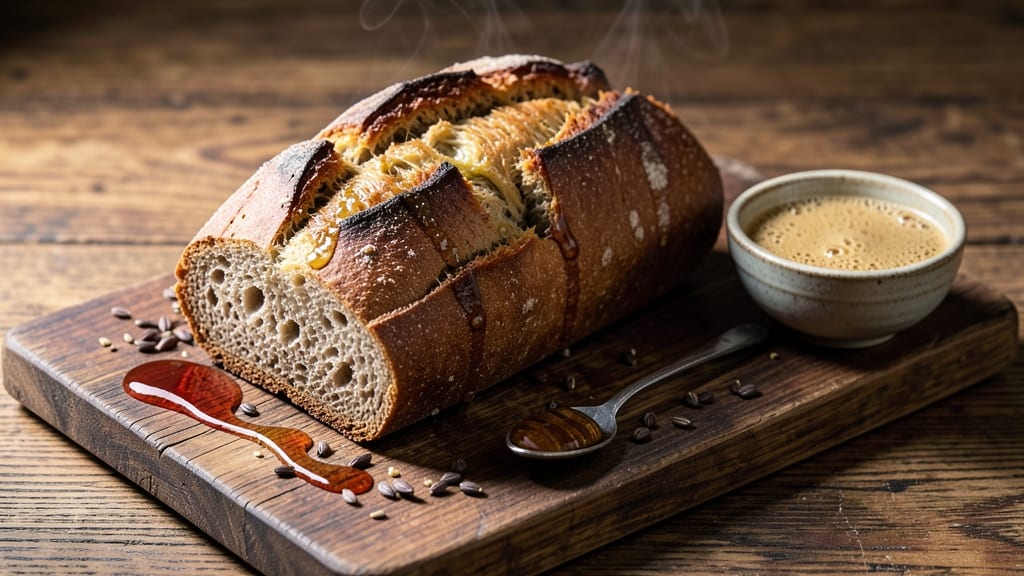
This all rye sourdough bread recipe delivers the perfect balance of dense crumb and tangy depth, with a crust that crackles like autumn leaves. 🌾 The secret lies in using 100% rye flour and a well-fed starter—no wheat flour shortcuts here.
I developed this recipe after years of experimenting with traditional rye sourdough techniques, and it never fails to impress with its rich, slightly sour flavor and satisfying chew.
What sets this recipe apart is the attention to fermentation—long bulk fermentation and a slow proof develop that signature rye tang while creating an open, airy crumb. The Dutch oven method ensures a crispy, golden-brown crust without drying out the interior.
Hydration is key, so we'll use a higher water ratio than typical breads, but don't worry: the dough handles beautifully with proper technique.
By the time you pull this loaf from the oven, you'll have a rustic beauty with a deep caramelized crust and a crumb so tender it practically melts in your mouth. The flavor is complex—earthy, slightly sweet, with that unmistakable sourdough tang that makes every slice unforgettable.
This is the kind of bread that elevates any meal, from simple butter slatherings to hearty open-faced sandwiches.
For those who love customization, you can add seeds or herbs before baking, or experiment with crust color by adjusting oven temperatures. The recipe includes step-by-step guidance for maintaining your starter, shaping the dough, and baking at home—no fancy equipment required. Let's get started on your first perfect loaf.
Ingredients for all rye sourdough bread
Nine essential ingredients transform into a loaf with autumnal tang and satisfying chew—no shortcuts, just pure rye tradition.
| Ingredient | Amount | Notes |
|---|---|---|
| Active Rye Sourdough Starter 🍞 | ½ cup | Well-fed, bubbly, 100% hydration |
| Dark Rye Flour 🌾 | 4 cups | 100% coverage, no wheat flour |
| Water 💧 | 3 ½ cups | Lukewarm, filtered preferred |
| Kosher Salt 🧂 | 1 ½ tsp | Diamond Crystal preferred |
| Honey 🍯 | 1 tbsp | Raw, for fermentation boost |
| Olive Oil 🫒 | 1 tbsp | Extra-virgin, for dough handling |
| Cornmeal 🌽 | ¼ cup | For Dutch oven dusting |
| Sesame Seeds 🌱 | 1 tbsp | Optional, for crust topping |
| Ice Water ❄️ | ½ cup | For final dough shaping |
The rye flour is non-negotiable here—King Arthur or Bob's Red Mill dark rye delivers that deep, earthy flavor. If your starter isn't active, feed it 1:1:1 (flour:water:starter) 4-6 hours before mixing. The honey isn't just for sweetness; it feeds the yeast during fermentation, giving that signature tang. Local honey works best, but any raw variety will do. For the Dutch oven prep, preheat it with the bread inside for 30 minutes—this creates that iconic caramelized crust without drying the loaf.
No dark rye flour? Substitute with pumpernickel flour, but expect a slightly milder flavor. Running short on starter? Instant yeast at 0.25 tsp can kickstart fermentation, though it won't replicate the authentic sourdough tang. The olive oil isn't just for lubricating the dough—it adds richness. Avocado oil works too, but olive's fruity notes complement the rye beautifully. For the crust, everything bagel seasoning makes a fantastic alternative to sesame seeds if you're feeling adventurous.
This dough is a beast—ferment 12-16 hours at room temp, then chill overnight for best results. The longer it ferments, the more complex the flavor. Store your starter in a glass jar with a loose lid in the fridge; it'll keep for weeks if fed weekly. The baked loaf? Wrap in a cotton towel and store at room temp for 2 days—it'll keep better than sliced bread. Freeze slices for up to 3 months by wrapping individually in parchment.
Why You'll Love This Recipe
- Minimal Mixing Magic: I swear by this recipe—just stir, rest, and bake. The rye starter does all the heavy lifting, so you’re basically watching dough transform without the fuss of kneading or complicated steps. Honestly, my lazy Sundays just got a whole lot easier.
- Honey-Rich Depth: That touch of honey? It’s the secret weapon. The dark rye gives you this deep, earthy bite, while the honey softens it just enough to make every bite irresistible. Spread it with butter or toast it—either way, it’s dangerously good.
- Weeknight Workhorse: This bread is my go-to for sandwiches, toast, or even French toast. The dense texture holds up to anything, and it keeps well in the fridge for days. Between us, I’ve fed a houseful of hungry teens with just one loaf.
- Budget-Friendly Staple: Rye flour is affordable, and a little starter goes a long way. You’re not just making bread—you’re stocking your pantry with something that tastes like a bakery but costs a fraction. My wallet thanks me every time.
Step-by-step instructions for all rye sourdough bread
Here's how to craft a loaf with deep tang and satisfying chew—no shortcuts, just perfect technique.
👨🍳 Step 1: Mix the Starter and Hydrate the Dough
In a large mixing bowl, combine the 0.5 cup Active Rye Sourdough Starter with 3.5 cups lukewarm water and 1 tbsp honey. Stir gently to dissolve the honey completely—this boosts fermentation by feeding the wild yeast. Let this mixture sit for 10 minutes while you prepare the remaining ingredients.
Add the 4 cups Dark Rye Flour and 1.5 tsp Kosher Salt to the bowl. Using a wooden spoon or dough whisk, stir vigorously for 5 minutes until the dough becomes shaggy but cohesive. The high hydration from the rye flour means this won't be a traditional stiff dough—it'll be more like a thick batter. This is normal and essential for that open crumb structure.
🍳 Step 2: Knead and Rest for Autolyse
Transfer the dough to a lightly oiled surface and knead for 8-10 minutes until it develops some elasticity and pulls away from the surface. I press and fold the dough repeatedly, rotating the bowl to ensure even gluten development. The dough should be tacky but manageable—if it's too sticky, wet your hands slightly to prevent sticking.
Return the dough to the bowl, cover tightly with plastic wrap, and let it rest at room temperature for 1 hour. This autolyse step allows the flour to fully hydrate and the gluten to relax, making the dough easier to handle later. The dough will look deceptively slack now, but this is crucial for that open crumb we're after.
🥘 Step 3: Bulk Fermentation with Strategic Folds
After the initial rest, perform a series of stretch-and-folds every 30 minutes for 2 hours total. To do this, wet your hands, grab one side of the dough, stretch it upward, and fold it over itself. Rotate the bowl and repeat on all four sides. This builds structure gradually without overworking the dough. The dough should rise noticeably but remain underproofed—it's okay if it doesn't double in size.
After the final fold, cover the bowl again and let the dough ferment at room temperature for an additional 1-2 hours, until it's about 50-75% risen. You'll know it's ready when you poke the dough gently and it springs back slowly (about 1 second). This indicates proper fermentation without overproofing, which would make the bread dense.
🔥 Step 4: Shape and Final Proof in the Fridge
Lightly dust a clean surface with 0.25 cup Cornmeal and turn out the dough. Gently shape it into a round boule by pulling the edges toward the center and tucking them under. The dough will be sticky—wet your hands as needed to prevent sticking. Place the shaped boule seam-side up in a lightly greased bowl, cover, and refrigerate for 12-18 hours.
This cold proof slows fermentation and allows flavors to develop fully. The dough will rise gradually in the fridge, and the cold temperature tightens the gluten for that perfect oven spring. When ready to bake, remove the dough from the fridge and let it come to room temperature for 1 hour before baking.
🔪 Step 5: Score and Bake for Maximum Crust Development
Preheat your Dutch oven with lid in a 475°F oven for 45 minutes. While it heats, transfer the dough to a piece of parchment paper. Using a sharp razor blade or lame, score the dough in a decorative pattern—this controls expansion and creates that beautiful crust. Brush the dough lightly with 1 tbsp Olive Oil and sprinkle 1 tbsp Sesame Seeds on top for extra flavor and texture.
Carefully transfer the dough (with parchment) to the hot Dutch oven. Place the lid on and bake for 20 minutes. Remove the lid and bake for another 20-25 minutes until the bread is deep golden brown and sounds hollow when tapped on the bottom. Let it cool on a wire rack for at least 1 hour before slicing—this prevents a gummy interior.
Pro Tips For Making All Rye Sourdough Bread
- STRETCH AND FOLD: Dark rye flour is stubborn—don’t just mix it. After adding water, slam the dough down hard on the counter and fold it over itself 3-4 times. This breaks up the dense particles so the starter can actually wake up and work. (Yes, it’s messy, but your crumb will thank you.)
- WEIGH THE HONEY: That little spoonful of honey isn’t just for sweetness—it’s the glue that keeps the structure from collapsing. Use a scale for 2% of your total flour weight (about 10g for a 500g loaf). Eyeballing it leads to either a gummy mess or a dense brick.
- DON’T SKIP THE COLD PROOF: After shaping, stash your dough in the fridge overnight—no exceptions. The cold slows fermentation, deepens the sour flavor, and lets the gluten relax so it doesn’t spring back and crack open during baking. (I learned this after my first loaf split like a bad joke.)
- SCORE DEEP AND HOT: Use a razor blade, not a lame serrated knife, and cut ½-inch into the dough before baking. Preheat your Dutch oven to 475°F—any lower, and the crust will steam instead of crisp. The first 15 minutes are when the magic happens, so don’t peek.
Serving suggestions for this dish
Classic Butter Slather
There's nothing quite like spreading European-style cultured butter (like Plugrá or Kerrygold) on warm rye sourdough. The rich, tangy butter melts into the dense crumb, creating a luxurious texture that highlights the bread's natural sweetness.
For extra decadence, sprinkle with flaky sea salt—I love Maldon—right after slicing. The contrast of salty and sweet is pure magic. 🧈
Open-Faced Sandwiches
This bread shines as the base for hearty open-faced sandwiches. Toast a thick slice, then layer with smoked salmon, herbed cream cheese, and dill pickles for a Scandinavian-inspired classic.
Or go for a German-style sandwich with corned beef, Swiss cheese, and sauerkraut—the tangy rye cuts through the richness beautifully. Serve with a crisp lager beer to balance the flavors.
Cheese Pairings
The dense, slightly sweet crumb of this rye bread makes it an ideal partner for bold cheeses. Try pairing with aged Gouda or smoked cheddar—the caramelized crust adds a perfect crunch.
For something more exotic, serve with blue cheese (like Gorgonzola Dolce) and honey—the rye's earthiness stands up to the funky flavors. I also love spreading ricotta mixed with lemon zest on toasted slices for a lighter option.
Breakfast Toast
Elevate your morning routine with this bread as breakfast toast. Top with mashed avocado, everything bagel seasoning, and a drizzle of chili crisp for a savory kick.
Or go sweet with almond butter, sliced banana, and a sprinkle of cinnamon—the rye's depth adds complexity to the sweetness. For a heartier breakfast, add a fried egg on top and sprinkle with crumbled bacon.
Soup Companion
Serve warm slices alongside hearty soups like lentil, minestrone, or beef barley—the bread's chewy texture soaks up broth beautifully. For a lighter option, pair with butternut squash soup and top with crispy proscuitto and pecorino cheese.
The rye's density holds up well to brothy dishes, making it more satisfying than lighter breads. 🥄
Dessert Twist
Don't overlook this bread for dessert! Toast slices and drizzle with dark chocolate ganache and fresh raspberries for a sophisticated treat. Or make brown butter by cooking 2 tbsp butter in a pan until nutty, then brush it on warm slices and sprinkle with crushed hazelnuts.
The rye's earthy notes complement the sweetness beautifully, creating a dessert that feels indulgent yet balanced.
Nutrition facts
Frequently asked questions
Why does my all-rye sourdough dough feel so sticky?
Rye flour absorbs 50-70% more water than wheat flour, creating a much stickier dough. This high hydration is essential for that open, airy crumb. Use wet hands when handling, and don't panic—it's normal! The dough should be tacky but manageable, not glue-like. If it's too wet, add 1 tbsp extra flour during kneading.
Can I use this recipe without a Dutch oven?
Yes, but expect a less crispy crust. Preheat a baking sheet at 475°F for 30 minutes, then bake with a metal bowl inverted over the loaf for the first 20 minutes to trap steam. After removing the bowl, bake until golden. For best results, try a cast-iron skillet as a substitute.
How do I know when my rye sourdough starter is ready?
Your starter should be bubbly, doubled in size within 4-6 hours after feeding, and have a slightly domed top. It should also smell pleasantly tangy, not harsh or alcoholic. If it's flat or smells bad, feed it 1:1:1 (flour:water:starter) and wait another 4 hours before using.
Why does my all-rye loaf turn out dense instead of open?
Overproofing is the most common cause. The dough should be 50-75% risen with a slow spring-back when poked (about 1 second). If it's fully risen or collapses when touched, it's overproofed. Also ensure your starter is active—weak fermentation leads to dense bread. Try reducing bulk fermentation time by 1 hour next time.
Can I add seeds or nuts to this recipe?
Add 1-2 tbsp seeds (sesame, flax, or pumpkin) or ½ cup chopped nuts (walnuts, pecans) to the dough after mixing. For seeds, sprinkle them on top before baking. For nuts, fold them in during the final 30 minutes of bulk fermentation. Just reduce water by 1 tbsp if adding dry ingredients to maintain dough consistency.