
Side Dishes
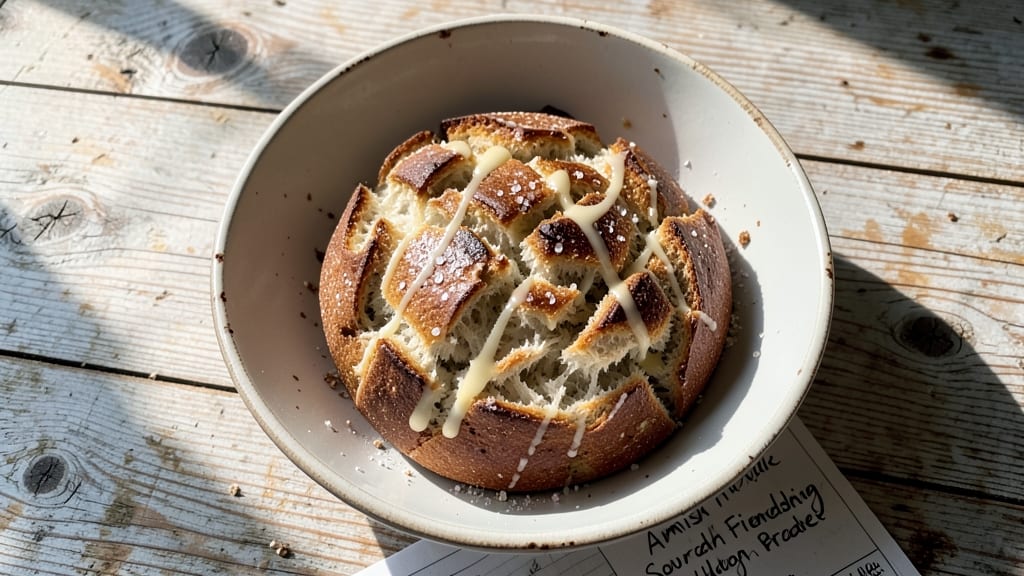
This Amish friendship sourdough bread recipe delivers the perfect balance of rustic crust and pull-apart cheese layers that make every bite unforgettable. The tradition of sharing this bread with friends and neighbors reflects the Amish community's emphasis on hospitality and togetherness—each loaf is a testament to patience and care.
What sets this recipe apart is the slow fermentation process, which develops deep flavor and a tender crumb, while the cheese layers create a satisfying texture that's impossible to resist.
The process begins with maintaining a healthy sourdough starter, a key element that gives this bread its signature tang and complexity. From there, the dough undergoes careful kneading and folding to build strength, followed by a long proofing period that allows the gluten to relax and the flavors to meld.
Baking at a precise temperature ensures a golden crust that contrasts beautifully with the soft, chewy interior and melty cheese layers.
What you'll achieve is a loaf that's as visually stunning as it is delicious—its rustic crust and pull-apart cheese pockets make it perfect for sharing at gatherings or enjoying as a comforting side dish.
The aroma alone will fill your kitchen with warmth, while the first bite delivers a harmonious blend of sourdough tang, rich cheese, and buttery richness. This is bread that brings people together, both in the making and the sharing.
The beauty of this recipe lies in its simplicity and tradition—no fancy equipment is needed, just time, patience, and a love for baking. Whether you're new to sourdough or a seasoned baker, the step-by-step instructions will guide you through every phase, from starter maintenance to shaping and baking.
The result is a loaf that's not just food, but a symbol of community and craftsmanship.
Ingredients for amish friendship sourdough bread
Twelve ingredients that transform into a loaf of community-building tradition.
| Ingredient | Amount | Notes |
|---|---|---|
| Active Sourdough Starter 🍞 | ½ cup | Unfed, bubbly, and active |
| All-Purpose Flour 🌾 | 5 cups | Bread flour preferred for better structure |
| Whole Wheat Flour 🌾 | 1 cup | For added rustic texture |
| Granulated Sugar 🍚 | ¼ cup | Feeds the starter and caramelizes crust |
| Salt 🧂 | 1 ½ tsp | Diamond Crystal preferred |
| Unsalted Butter 🧈 | ½ cup | Cold, cubed for cheese layers |
| Sharp Cheddar Cheese 🧀 | 1 ½ cups | Shredded, aged 6+ months |
| Gruyère Cheese 🧀 | 1 cup | Shredded, nutty flavor |
| Milk 🥛 | ½ cup | Warmed for dough hydration |
| Honey 🍯 | 1 tbsp | For crust shine and sweetness |
| Cornmeal 🌽 | ¼ cup | For dusting baking sheet |
| Coarse Sea Salt 🧂 | 1 tsp | For final crust sprinkle |
| Water 💧 | 1 ½ cups | Room temperature preferred |
The sourdough starter is non-negotiable here—it's the soul of this bread. Feed it daily for 5 days before using so it's vibrant and active, with plenty of bubbles and a tangy aroma. King Arthur or Bob's Red Mill flours work best for the base, but any high-protein flour will do. For the cheeses, Wisconsin cheddar and Gruyère from specialty shops give the best flavor, but don't stress if you can only find pre-shredded—just pack it tightly. The butter should be cold enough to hold its shape when cubed, or it'll melt into the dough too early. If your kitchen runs hot, chill the butter cubes for 20 minutes before adding.
No sourdough starter? Use 1 cup plain yogurt plus 1 tsp vinegar as a substitute, but the flavor won't be authentic. Whole wheat flour can be swapped for all-purpose if you prefer a lighter crumb, though the texture will be slightly denser. Running short on Gruyère? Parmesan or Gouda work in a pinch, but the flavor profile changes dramatically. Pre-shredded cheese has anti-caking agents that can make the dough gummy—if using, squeeze out excess starch with a paper towel. The honey can be swapped for maple syrup, though it'll darken the crust slightly. For a vegan version, replace butter with coconut oil and use vegan cheese, but the texture will differ significantly.
This dough needs time—at least 12 hours for optimal flavor development. Store it wrapped in the fridge between folds, and let it come to room temp before shaping. The shaped loaf keeps beautifully for 3 days at room temperature wrapped in a towel, or 1 week in the fridge. For longer storage, freeze the shaped loaf (unbaked) for up to 3 months. To reheat, wrap in foil and warm at 300°F for 10 minutes. The cheese layers stay gooey when reheated, making it perfect for quick sandwiches or toast. I always bake two loaves—one for sharing, one for enjoying over the next few days.
Why You'll Love This Recipe
- No-Knead Magic: The whole wheat and all-purpose blend gives it a sturdy yet tender crumb—no stand mixer required. Honestly, I just mix, let it rise, and bake while I sip coffee. That’s it.
- Sweet & Tangy Crust: The touch of sugar caramelizes just enough to give the crust a subtle sweetness, while the sourdough starter keeps it tangy and complex. It’s the kind of bread that makes you take an extra bite without thinking.
- Weeknight Workhorse: Slice it for toast in the morning, pack it for lunch, or serve it warm with butter at dinner. Between us, I’ve fed a houseful of guests with just one loaf—it’s that generous.
- Budget-Friendly Staple: Whole wheat flour adds nutrition without breaking the bank, and a small starter goes a long way. I’ve made this for years, and it’s always the first thing to disappear from the pantry.
Step-by-step instructions for Amish friendship sourdough bread
Here's how to create that signature pull-apart texture with a golden crust—every slice will be cheesy perfection.
Mix the Dough and Incorporate Cheese Layers
In a large mixing bowl, combine the 0.5 cup active sourdough starter, 1.5 cups water, 0.25 cup granulated sugar, and 1.5 tsp salt. Whisk until the sugar dissolves completely. Add the 5 cups all-purpose flour and 1 cup whole wheat flour, mixing with a wooden spoon until a shaggy dough forms. Here's the thing—this dough will be sticky, but that's exactly what we want for that tender crumb.
Transfer half the dough to a separate bowl and set aside. To the remaining dough in the mixing bowl, add the 0.5 cup cold unsalted butter and knead gently with your hands until fully incorporated. The butter should be cold enough to resist melting but soft enough to work with. Now comes the magic: sprinkle half of the 1.5 cups sharp cheddar cheese and 1 cup gruyère cheese evenly over the dough, then fold it in like a letter.
Create the Signature Cheese Layers
Take the reserved dough from the second bowl and place it on top of the cheesy dough in the mixing bowl. Fold the edges inward to create a rough rectangle, then flip it onto a lightly floured surface. This is where the real work begins—pat the dough into a 12x16-inch rectangle about ½-inch thick. Here's the trick: sprinkle the remaining 1 cup sharp cheddar cheese and ½ cup gruyère cheese evenly over the top half of the dough, then fold the bottom half up over the cheese like a book.
Gently press down to seal the edges, then fold the dough in half like a letter again. This creates those signature pocket layers that make each bite pull-apart perfection. The dough will be quite sticky, so wet your hands slightly to prevent sticking as you handle it. Let it rest for 10 minutes while you prepare your baking sheet.
Shape and Proof the Dough
After the rest, transfer the dough to a lightly floured surface and shape it into a 9x13-inch rectangle, about 1-inch thick. The edges should be slightly thicker than the center for that classic Amish look. Brush the top generously with the 0.5 cup warmed milk mixed with 1 tbsp honey, then sprinkle evenly with 1 tsp coarse sea salt. This will create that beautiful caramelized crust and add just the right amount of sweetness to balance the cheesy richness.
Cover the dough loosely with a clean kitchen towel and let it proof at room temperature for 1 to 1½ hours, or until it has risen by about 50%. You'll know it's ready when the dough feels springy to the touch and has puffed noticeably. The proofing time can vary based on your kitchen's humidity—if it's very warm, it might rise faster. This is when the dough develops its signature open texture, so don't rush it.
Bake to Golden Perfection
Preheat your oven to 375°F and line a 9x13-inch baking sheet with parchment paper. Lightly dust the bottom of the shaped dough with 0.25 cup cornmeal to prevent sticking. Transfer the dough to the prepared baking sheet and bake for 35 to 40 minutes, until the top is deep golden brown and the internal temperature reaches 190°F at the center.
Here's where the magic happens: the bread should be pulling away from the sides of the pan and have a beautiful caramelized crust. If the top isn't browning quickly enough, tent the pan with aluminum foil for the last 10 minutes of baking. The cheese should be fully melted and creating those irresistible pockets. Let the bread cool in the pan for 10 minutes before transferring to a wire rack—this prevents it from collapsing as it sets.
Serve Warm for Maximum Enjoyment
While still warm, cut the bread into 1-inch squares using a sharp knife or pizza cutter. The warm cheese will be gooey and stretchy, making each bite a cheesy delight. Serve immediately with your favorite dipping sauce—whether it's garlic butter, marinara, or even just extra honey. The bread will continue to soften slightly as it cools, so enjoy it while it's at its peak texture.
This bread keeps well at room temperature for 2 to 3 days, though I promise you won't have any leftovers. For best results, reheat slices in a 350°F oven for 5 to 7 minutes to restore that warm, gooey cheese magic.
Pro Tips For Making Amish Friendship Sourdough Bread
- Test Your Starter First: Skip straight to mixing if your starter’s not ready—it’ll throw off the whole dough. Float a spoonful in water: if it rises, it’s active. If not, feed it again (equal parts flour/water) and wait another 4-6 hours. Trust me, you’ll regret rushing this.
- Weigh Your Whole Wheat: Whole wheat flour packs differently than all-purpose—don’t eyeball it. Use a scale for the 1 cup called for, or you’ll end up with a dense, gummy loaf. I learned this after two batches that collapsed like overproofed pancakes.
- Shape Tightly, Then Rest: Roll the dough into a log and pinch the seams shut like you’re sealing a jar—no gaps. Let it rest 20 minutes before baking, even if it looks messy. This step guarantees a clean break when sliced, not a crumbly disaster.
- Steam the First 10 Minutes: Place a metal bowl of boiling water in your oven before baking, then remove it when the bread goes in. The steam builds that signature Amish crust—no Dutch oven needed. I was skeptical until I tried it, and now I never bake it dry.
Troubleshooting your amish friendship sourdough bread
Starter Too Weak?
If your sourdough starter isn't bubbly or smells flat, it needs revival. Feed it daily for 5 days with equal parts flour and water (by weight) before using. I use King Arthur bread flour because it's high-protein and helps strengthen the starter faster.
If you're short on time, try a 24-hour feeding with extra sugar—2 tbsp sugar per 1 cup flour—to kickstart activity. 💪
Dough Too Sticky?
This bread is intentionally sticky, but if it's impossible to handle, add 1-2 tbsp extra flour only when shaping—not before. Wet your hands slightly to prevent sticking while folding the cheese layers.
I find whole wheat flour helps with texture, but if the dough feels too gummy, swap ½ cup for all-purpose flour. Never over-flour or the crust will toughen.
Cheese Not Melting?
Cold cheese won't melt properly. Ensure your sharp cheddar and Gruyère are at room temperature before folding into the dough. If your kitchen is cold, place cheese cubes near the oven (turned off) for 10 minutes to warm gently.
For extra gooeyness, add ¼ cup cream cheese to the layers—it melts beautifully and adds richness. 🧀
Proofing Too Fast?
Humid kitchens make dough rise quickly. If your dough puffs in under 1 hour, move it to the fridge for 30-60 minutes to slow fermentation. Cold temps preserve flavor and prevent overproofing.
I cover the dough with a damp towel to maintain moisture while chilling. For warm climates, proof in the fridge overnight for deeper flavor development.
Crust Too Pale?
Bake at 375°F until the crust is deep golden brown, not just pale yellow. If it's not browning, brush the top with 1 tbsp melted butter after 20 minutes in the oven.
For extra color, sprinkle ½ tsp coarse sea salt on top before baking. A broiler blast for the last 2 minutes adds dramatic caramelization—but watch closely to avoid burning. ✨
Leftover Dough?
Don't waste unused dough! Shape it into small rolls with extra cheese, or freeze for up to 3 months. To revive frozen dough, let it thaw in the fridge overnight, then proof and bake as directed.
I often make cheese pull-apart muffins with leftover dough—just press into greased muffin tins and bake at 350°F for 15-18 minutes. Perfect for quick snacks! 🔥
Nutrition facts
Frequently asked questions
Why is this bread called "friendship" bread?
The name reflects the Amish tradition of sharing freshly baked bread with neighbors and friends as a gesture of community and hospitality. Each loaf is meant to be enjoyed together, symbolizing the bonds formed through shared meals and labor. The pull-apart cheese layers make it especially perfect for gatherings, where everyone can tear off their own piece!
Can I make this bread without a sourdough starter?
While you can substitute with 1 cup plain yogurt plus 1 tsp vinegar, the flavor won't be authentic. For the true Amish sourdough experience, maintain a starter by feeding it daily with equal parts flour and water for 5 days before using. The tangy depth comes from the natural fermentation—it's what makes this bread special!
How do I get the perfect pull-apart cheese texture?
Room-temperature cheese is key! Cold cheese won't melt properly. Fold the shredded cheddar and Gruyère into the dough in layers, then bake at 375°F until the center reaches 190°F. For extra gooeyness, add ¼ cup cream cheese to the layers. The bread should pull apart easily when warm—if it's too firm, it may need a few more minutes in the oven.
What's the best way to store leftovers?
Wrap cooled slices in a clean kitchen towel and store at room temperature for 2-3 days. For longer storage, freeze the entire loaf (unbaked) for up to 3 months. To reheat, wrap slices in foil and warm at 350°F for 5-7 minutes until the cheese becomes gooey again. The crust stays crispy when reheated this way!
Can I make this gluten-free?
Not easily—traditional sourdough requires gluten development for structure. For a gluten-free version, use a 1:1 gluten-free flour blend with xanthan gum, but expect a denser texture. The pull-apart cheese layers may not be as dramatic, and the crust won't be as crisp. If you attempt it, proof the dough longer (2-3 hours) for better rise.