
Side Dishes
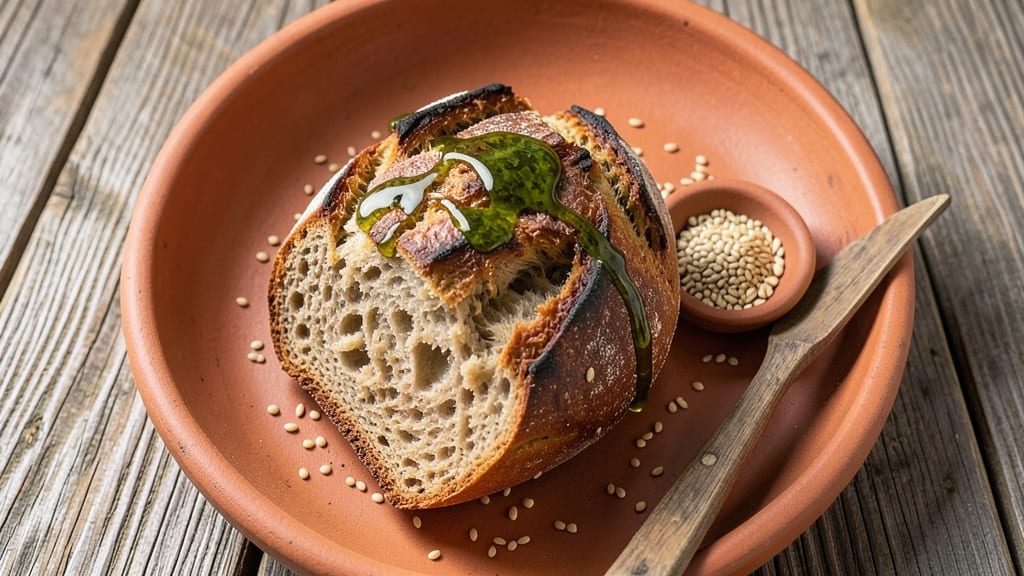
This ancient Greek barley bread recipe brings the flavors of antiquity to your kitchen table, with a crusty exterior and tender crumb that ancient Greeks would recognize. Barley flour, the staple grain of the Mediterranean, delivers a nutty depth and rustic texture that modern wheat bread simply can't match. The beauty of this recipe lies in its simplicity—just four core ingredients, no fancy techniques, and a baking process that respects tradition while working for today's home cooks.
The method draws directly from historical accounts, where barley bread was baked in simple clay ovens or over open flames. We replicate that ancient approach with a straightforward no-knead technique that develops incredible flavor as it bakes.
The result is a loaf with a satisfyingly crisp crust and a moist, open crumb that's perfect for soaking up olive oil or pairing with hearty stews. Every bite carries the essence of ancient Greece, yet comes together in your modern kitchen.
What makes this bread truly special is how it transforms simple ingredients into something extraordinary. The barley flour provides natural sweetness and a satisfying chew, while the olive oil adds Mediterranean brightness.
Baked until golden and fragrant, this bread becomes the perfect companion to any meal—whether you're serving it alongside grilled meats, using it to scoop up hummus, or simply enjoying it with a drizzle of extra virgin olive oil. The aroma alone will transport you to ancient Athens.
This recipe preserves the authenticity of ancient Greek baking while adapting it for modern kitchens. The dough requires minimal handling, and the baking process is straightforward, ensuring you can achieve professional-quality results without specialized equipment.
Whether you're recreating an ancient meal or simply seeking a healthier, more flavorful bread option, this barley bread delivers both history and satisfaction in every bite.
Ingredients for ancient greek barley bread
Four ingredients transform into ancient Greek bread with nutty depth and crispy crust.
| Ingredient | Amount | Notes |
|---|---|---|
| Barley Flour 🌾 | 3 cups | Medium or pearl barley flour preferred |
| Extra-Virgin Olive Oil 🫒 | ½ cup | High-quality, fruity variety |
| Warm Water 💧 | 1 ¼ cups | 105-110°F ideal temperature |
| Instant Yeast 🍞 | 1 tsp | Active dry works too |
| Sea Salt 🧂 | 1 ½ tsp | Diamond Crystal preferred |
| Sesame Seeds 🌰 | 2 tbsps | Toasted for extra crunch |
| Coarse Cornmeal 🌽 | 2 tbsps | For dusting baking sheet |
The barley flour is the soul of this recipe—look for medium or pearl barley flour at specialty stores or online (like Bob's Red Mill or King Arthur Flour), as it delivers that authentic ancient texture. If you can only find whole grain barley flour, it'll work but the crumb will be denser. The olive oil should be extra-virgin, with fruity notes—California or Italian varieties from Trader Joe's or Whole Foods are perfect. Warm the water to 105-110°F (like bathwater) before mixing, or the yeast won't activate properly. The yeast is the magic ingredient here—it's what creates that open, airy crumb the ancient Greeks loved.
No barley flour? Substitute half with whole wheat flour for a slightly different texture, but the flavor won't be quite the same. Running short on sesame seeds? Poppy seeds or crushed coriander work beautifully for topping. The cornmeal is non-negotiable for that crispy bottom crust—don't skip it! If you can't find coarse cornmeal, semolina or polenta grits are good swaps. For the olive oil, if you've only got regular olive oil, it'll still work but the flavor won't be as vibrant. The salt is crucial—Diamond Crystal kosher salt
This dough is forgiving—it doesn't need to rise overnight like sourdough, but give it at least 1 hour to develop flavor. Store any leftovers wrapped tightly at room temperature for 2-3 days, or freeze for up to 3 months. For reheating, wrap in foil and warm in a 350°F oven for 10 minutes—it'll taste fresh-baked every time. The bread freezes beautifully too—just thaw at room temperature before serving. I always make a double batch because it disappears faster than you'd think!
Why You'll Love This Recipe
- Four-Ingredient Magic: I swear by this—just barley flour, olive oil, water, and yeast. That’s it. No fancy pantry trips, no measuring cups cluttering your counter. The dough comes together faster than you can heat the oven, and honestly? It’s the kind I make when I’ve forgotten to grocery shop.
- Earthy Olive Oil Crust: The moment it hits your plate, you’ll taste why the Greeks ate this for centuries. That golden crust? Pure extra-virgin olive oil magic—crisp but buttery, with a nutty depth from the barley. Drizzle more oil on top before baking, and you’ll understand why I keep a loaf in the freezer at all times.
- Weeknight Workhorse: This bread doesn’t just feed you—it feeds your schedule. Toss a slice in a lunchbox, tear it over a Greek salad, or use it to sop up every last drop of olive oil from your plate. (Yes, even on a Tuesday night.) It’s the kind of bread that makes you feel like you’ve cooked a meal, even when you haven’t.
- Budget-Friendly Staple: Barley flour is cheaper than all-purpose, and you’ll use half as much for a loaf this size. That jar of olive oil you’ve been eyeing? Now’s the time to splurge—just a little goes a long way. Between us, this is the bread that keeps my pantry stocked and my wallet happy. Three loaves later, and I’m still saving money.
Step-by-step instructions for ancient Greek barley bread
This bread channels ancient Greek techniques with modern precision for a rustic yet refined loaf.
Activate the Yeast and Create the Dough
In a large mixing bowl, combine the 3 cups barley flour, 1 tsp instant yeast, and 1.5 tsp sea salt. Make a well in the center and pour in the 0.5 cup extra-virgin olive oil and 1.25 cups warm water (around 105-110°F). Use a wooden spoon to gently mix until the ingredients come together into a shaggy dough.
Here's the thing—barley flour absorbs moisture differently than wheat flour, so don't overmix. The dough will be sticky and slightly wet at first, but that's perfect. Let it rest for 5 minutes while you prepare the baking surface. This brief pause allows the flour to hydrate fully, creating a more cohesive dough later.
Knead and Develop the Gluten
Wet your hands slightly to prevent sticking, then knead the dough on a clean surface for 8-10 minutes. You're aiming for a smooth, elastic texture—barley dough is denser than wheat dough, so it won't be as springy. If it feels too sticky, add 1 tablespoon extra flour at a time, but try to minimize this.
I press down firmly and fold the dough over itself during kneading, which helps develop the gluten structure without overworking it. You'll know it's ready when the dough holds its shape when poked and feels slightly firm to the touch. This step is crucial for that ancient Greek bread texture—neither too dense nor too airy.
First Rise for Flavor Development
Lightly oil a large mixing bowl, place the dough inside, and cover it with a damp kitchen towel. Let it rise in a warm place for 1-2 hours, or until it has nearly doubled in size. The dough should feel puffy and slightly springy when pressed gently with one finger.
This first rise is where the magic happens—barley flour develops complex flavors during fermentation. I like to place the bowl near a slightly warm oven (with the light on) to maintain a consistent temperature. Don't rush this step; the longer it rises, the more flavorful your bread will be. If the dough doesn't rise much, it might need a warmer environment or more time.
Shape and Final Proof
Punch down the risen dough to release air, then divide it into 4 equal portions (about 8 ounces each). Shape each portion into a round loaf by pulling the edges toward the center and sealing the seam. Place them on a baking sheet dusted with 2 tablespoons coarse cornmeal—this prevents sticking and adds a lovely crunchy texture.
Cover the shaped loaves loosely with the kitchen towel and let them proof for another 30-45 minutes, until they've puffed up noticeably. The dough should feel firm to the touch but still slightly springy. Here's where precision matters: the loaves should expand by about 25-30% during this final proof. If they're ready to go in the oven too soon, they won't develop that beautiful open crumb structure.
Bake for Crusty Perfection
Preheat your oven to 375°F with a baking stone or inverted baking sheet inside. Once hot, carefully transfer the shaped loaves to the stone/sheet. Bake for 25-30 minutes, until the crust is deep golden brown and sounds hollow when tapped on the bottom. The internal temperature should reach 190°F at the center.
For that authentic ancient Greek touch, I like to sprinkle 2 tablespoons toasted sesame seeds on top during the last 5 minutes of baking. The seeds add a nutty crunch that contrasts beautifully with the soft interior. Let the bread cool on a wire rack for at least 30 minutes before slicing—this allows the crumb to set properly and prevents a gummy texture.
Pro Tips For Making Ancient Greek Barley Bread
- Mix the dough by hand: Barley flour is grittier than wheat—don’t skip the kneading. Work it for 8-10 minutes until it pulls away from the bowl like wet sand, not glue. (Yes, it’ll feel like overkill, but that’s how you get the chewy texture.)
- Use lukewarm water, not hot: Instant yeast hates heat. Fill a bowl with water just warm enough to touch (like bathwater), then dissolve the yeast and salt before adding the flour. Too hot and it’ll kill the yeast before the dough even starts rising.
- Don’t overproof the dough: Barley bread rises slower—watch it like a hawk. Once it’s doubled, bake it immediately. Left too long, the gluten relaxes and you’ll end up with a dense brick instead of a light, airy loaf. (I learned this after a very sad, flat loaf.)
- Add olive oil in stages: Drizzle half the oil into the dry flour first, then mix before adding the rest to the wet ingredients. This creates pockets for better rise and a lighter crumb. Skip this, and you’ll get a greasy, heavy loaf. (Trust me, it’s worth the extra minute.)
Serving suggestions for this ancient greek barley bread
Olive Oil Dipping Ritual
This bread practically begs for a drizzle of extra-virgin olive oil—the ancient Greeks would have used it as their primary fat. I like to mix 2 tablespoons olive oil with a pinch of sea salt and a squeeze of fresh lemon juice (about 1 teaspoon) for brightness.
Serve in small bowls so everyone can dip their bread like it's a sacred ritual. 🫒 The oil enhances the barley's nutty depth while adding Mediterranean freshness.
Mediterranean Meal Pairings
Serve alongside lentil stew or grilled lamb chops—both were staples in ancient Greek cuisine. The bread's hearty texture soaks up rich sauces beautifully. For a lighter option, pair with tzatziki or hummus (about ½ cup each) and sliced cucumbers for crunch.
The contrast of cool dips with warm bread mimics the balance of ancient Greek meals.
Breakfast Adaptations
Toast slices and top with mashed avocado (about ¼ cup), crumbled feta (2 tablespoons), and a sprinkle of red pepper flakes for a Greek-inspired brunch. The barley's earthiness pairs perfectly with creamy avocado.
For a sweet twist, spread with honey (1 tablespoon) and walnuts (2 tablespoons)—a nod to ancient Greek sweet bread traditions. 🍯
Cheese Board Companion
Use this bread as the base for an ancient Greek-inspired cheese board. Pair with aged halloumi (about ½ cup), feta (½ cup), and dried figs (4 pieces).
The bread's sturdy texture holds up to strong cheeses while complementing their salty, tangy flavors. Add olives (½ cup) and marinated artichokes for a complete antipasto experience.
Travel-Friendly Packing
This bread holds up beautifully for picnics or travel. Wrap individual loaves in parchment paper and secure with twine for an authentic Greek touch. Pack with olive oil packets and dried herbs (like oregano) in small containers.
The bread stays fresh for 2-3 days at room temperature, making it perfect for outdoor feasts or office lunches.
Nutrition facts
Frequently asked questions
Why does barley flour make this bread taste different from regular wheat bread?
Barley flour has a naturally nutty, slightly sweet flavor that wheat lacks, plus a denser texture that creates a satisfying chew. Ancient Greeks relied on barley because it grew well in their climate and stored longer—this bread captures that rustic, hearty character while delivering complex flavors you won't find in modern white bread. The olive oil also enhances these notes beautifully.
Can I make this bread without a baking stone?
Place your dough on a preheated baking sheet lined with parchment paper, then bake as directed. For extra crispiness, try this trick: After 10 minutes in the oven, carefully flip the loaves onto their sides for the remaining 15-20 minutes. This creates a more even crust without specialized equipment.
How can I tell if my dough is properly risen?
Gently press one finger into the dough—if it springs back slowly (not immediately), it's ready. The dough should also feel puffy and expanded by about 25-30% compared to its original size. For barley dough, it may not rise as dramatically as wheat dough, so focus on the texture and springiness rather than volume.
What's the best way to store leftovers?
Wrap cooled loaves tightly in plastic wrap or store in an airtight container at room temperature for 2-3 days. For longer storage, freeze for up to 3 months. To reheat, wrap in foil and warm at 350°F for 10 minutes—it'll taste fresh-baked every time! The crust stays crispy when reheated properly.
Can I substitute whole wheat flour if I can't find barley flour?
Yes, but expect a slightly different texture. Replace half the barley flour with whole wheat flour for a denser, nuttier bread. The flavor won't be identical, but it's a good backup. For best results, use whole wheat pastry flour which has less bran for a lighter crumb. The olive oil will still enhance the flavor beautifully.