
Side Dishes
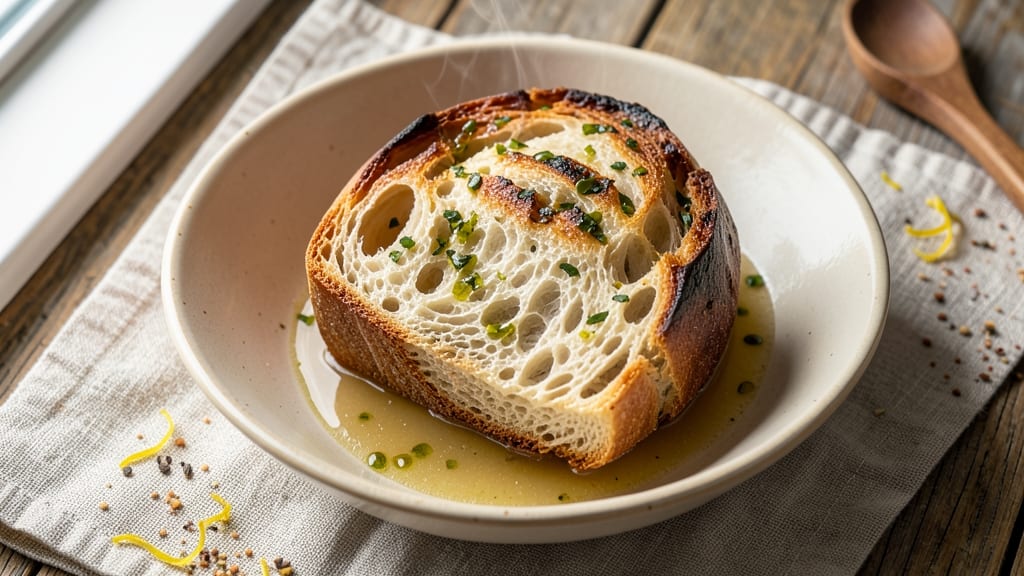
This Antimo Caputo 00 flour bread recipe delivers restaurant-quality crust with a crispy exterior and airy interior—all with minimal effort. The secret lies in this Italian flour’s high protein content, which creates an open crumb structure and signature chewiness.
I’ve perfected this no-knead method after years of baking, ensuring foolproof results even for beginners.
The process begins with a simple dough that ferments overnight, allowing natural gluten development without any kneading. A hot oven and steam technique then transform the dough into golden, crackling crust with a tender crumb inside. This method eliminates guesswork while delivering professional bakery results in your own kitchen.
What makes this recipe stand out is the balance of texture and flavor—crispy yet not brittle, chewy yet not dense. The flour’s fine texture creates a smooth, elastic dough that shapes beautifully and holds its form during baking.
Every slice reveals an open crumb structure that’s perfect for soaking up soups or pairing with meals.
For those who want to customize, you can add seeds or herbs to the dough before shaping, though the classic version requires no additional ingredients. The key to success lies in proper hydration and fermentation time, which we’ll cover in detail to ensure perfect results every time.
Ingredients for antimo caputo 00 flour bread
Four essential ingredients transform this Italian flour into restaurant-quality bread with minimal effort.
| Ingredient | Amount | Notes |
|---|---|---|
| Antimo Caputo 00 Flour 🌾 | 3 ½ cups | High protein for signature chewiness |
| Instant Yeast 🍞 | ¼ tsp | Active dry works too |
| Granulated Sugar 🍚 | ¼ tsp | Feeds yeast for fermentation |
| Kosher Salt 🧂 | 1 ½ tsp | Diamond Crystal preferred |
| Water 💧 | 1 ½ cups | Room temperature preferred |
| Extra-Virgin Olive Oil 🫒 | 1 tbsp | High quality for flavor |
| Cornmeal 🌽 | ¼ cup | For dusting work surface |
| Ice Cubes ❄️ | 1 cup | For steam during baking |
The Antimo Caputo 00 flour is non-negotiable here—its high protein content (12-13%) creates that signature artisan chew and open crumb structure. Amazon and King Arthur Flour carry it, but Italian specialty stores like Eataly often have it at better prices. Look for bags labeled '00'—the finer the grind, the smoother your dough will be. Freshness matters: if the flour smells stale, toast it gently in a dry pan before using. The yeast should be fresh (test by dissolving in warm water—it should foam within 5 minutes). For salt, Diamond Crystal measures differently than table salt—use the flat side of a teaspoon for accurate measurements.
No instant yeast? Active dry yeast works at the same amount, but let it proof for 5 minutes in warm water with sugar first. Running short on olive oil? Avocado oil is a neutral alternative, though it lacks the fruity notes. The water temperature is critical—too hot kills yeast, too cold slows fermentation. If your kitchen is cold, use lukewarm water (100-110°F). For the cornmeal, semolina works too if you want extra texture on your bread. And pro tip: if you're making multiple loaves, use parchment paper instead of cornmeal for easier transfer—it also adds a subtle crispness to the crust.
This dough ferments best at room temperature (70-75°F) for 12-16 hours. If your kitchen is warmer, reduce to 8-10 hours. For storage, shaped dough keeps 24 hours in the fridge before baking—just let it sit at room temp for 1 hour before baking. Baked loaves stay fresh 3 days at room temperature, wrapped in a clean kitchen towel (better than plastic for maintaining moisture). For longer storage, freeze sliced loaves for up to 3 months—wrap tightly in foil first. The ice cubes for steam? Metal bowl works too—just add boiling water to it during baking for continuous steam.
Why You'll Love This Recipe
- Five-Ingredient Magic: I swear by this—just flour, yeast, sugar, salt, and water. No fancy mix-ins, no stress. The 00 flour gives it that perfect tender crumb, and the instant yeast means no waiting for proofing. Honestly, it’s the kind of bread that makes me feel like a baker without the fuss.
- Crust So Good: That crispy, golden crust with a pillowy center? That’s the 00 flour working its charm. The sugar caramelizes just enough to give it a subtle sweetness, while the kosher salt keeps every bite balanced. I’ll be real: I’ve burned toast before, but this bread makes me want to eat it straight from the pan.
- Meal Prep Hero: This bread freezes like a dream—slice it, toss it in a bag, and it stays fresh for weeks. I make a double batch on Sundays, toast it as needed, and suddenly, breakfast, lunch, or a quick snack is covered. Between us, it’s my secret weapon for lazy mornings.
- Budget-Friendly Staple: A loaf costs me pennies to make, and it stretches across meals like nothing else. Use it for sandwiches, dipping in olive oil, or even as a side for soup. The 00 flour might seem pricier upfront, but it goes further than all-purpose, so you end up saving. Plus, leftovers? They disappear fast.
Step-by-step instructions for artisan crust with no-knead ease
This method delivers professional-quality bread with minimal effort—just mix, rest, and bake.
Combine Wet Ingredients and Yeast
In a large mixing bowl, whisk together the 1.5 cups water, 0.25 tsp instant yeast, 0.25 tsp granulated sugar, and 1.5 tsp kosher salt until fully dissolved. The sugar helps activate the yeast immediately, while the salt controls fermentation speed. Add the 1 tbsp extra-virgin olive oil and mix again until emulsified—you should see tiny oil droplets suspended in the liquid.
Let this mixture sit for 5 minutes at room temperature. You'll notice small bubbles forming on the surface—this confirms the yeast is active. If no bubbles appear after 10 minutes, your yeast may be inactive, and you'll need to start fresh with fresh yeast.
Incorporate the Flour and Develop Gluten
Gradually add the 3.5 cups Antimo Caputo 00 flour to the wet mixture while stirring with a wooden spoon. The high protein content in this flour creates a naturally elastic dough with minimal effort. Once all the flour is incorporated, the dough will be shaggy and sticky—this is normal for no-knead bread.
Wet your hands slightly and perform 10 gentle stretches of the dough, pulling from the bottom and folding over the top. This develops just enough gluten for structure without overworking the dough. The goal is to create surface tension rather than a smooth, elastic texture. If the dough feels too stiff, add 1 tablespoon water at a time until it reaches a thick batter consistency.
Rest and Develop Flavor
Cover the bowl with a damp kitchen towel or plastic wrap and let the dough rest at room temperature for 12-16 hours. This long fermentation develops complex flavors and allows the gluten to relax. I place my bowl in a slightly warm spot—near the oven with the light on works well—to encourage even fermentation.
After 8 hours, you'll see noticeable bubbles along the surface and sides of the bowl. If the dough hasn't doubled in size after 16 hours, it's ready to proceed—no-knead dough doesn't always follow traditional timing. The dough should be jiggly when gently shaken, indicating proper fermentation.
Shape and Prepare for Baking
Lightly dust a clean work surface with 0.25 cup cornmeal. Turn out the dough and gently shape it into a round loaf by folding the edges toward the center. The dough will be very sticky—use wet hands to prevent sticking. Place the shaped dough on a parchment-lined baking sheet and cover loosely with plastic wrap.
Let the dough rest for 1 hour at room temperature. This final rest allows the gluten to relax again, preventing the bread from doming too much in the oven. During this time, preheat your oven to 425°F with a Dutch oven inside for 30 minutes. The Dutch oven creates steam, essential for that crisp artisan crust.
Bake with Steam for Maximum Crust Development
Carefully remove the hot Dutch oven from the oven and transfer the dough (still on its parchment) into the pot. Place 1 cup ice cubes on top of the dough—this creates an instant steam bath that promotes oven spring and crust formation. Immediately return the Dutch oven to the oven.
Bake covered for 30 minutes, then remove the lid and bake uncovered for an additional 15-20 minutes until the bread reaches an internal temperature of 205-210°F and the crust is deep golden brown. Tap the bottom of the loaf—it should sound hollow when done. The bread will continue to rise slightly as it cools, so don't overbake.
Pro Tips For Making Antimo Caputo 00 Flour Bread
- Weigh Your Flour Precisely: Caputo 00 is finicky—don’t eyeball it. Use a kitchen scale for 500g (or your recipe’s weight) and scoop directly into the bowl. Spooning from a bag adds air, which makes your dough too slack and gummy. I learned this after three batches where my bread turned out dense and sad.
- Mix Water Last: Combine flour, yeast, sugar, and salt first, then add water after the dry ingredients have settled. This prevents overhydration and keeps the gluten structure tight. Yes, it feels counterintuitive, but your dough will handle shaping like a dream—no sticky messes or weak structure.
- Skip the Overproofing: Caputo 00 ferments fast. Stop when your dough has nearly doubled and springs back slowly when poked (not instantly). Overproofing turns your bread into a deflated pancake. If your kitchen’s warm, cut proofing time by 20-30%. Trust your eyes, not the clock.
- Use Room-Temp Water: Cold water kills yeast; hot water shocks it. Aim for 85°F (29°C)—warm to the touch but not steaming. I used to grab straight-from-the-tap water and wonder why my dough took forever to rise. A quick microwave check (30 seconds) fixes this in a pinch.
Storing and reheating your leftovers
Room-Temp Storage
Freshly baked bread stays fresh for 3 days at room temperature when stored properly. Wrap the loaf tightly in a clean kitchen towel (not plastic) to maintain moisture and prevent staling.
I place mine in a basket lined with parchment paper to allow airflow while keeping it protected from drying out. The towel absorbs excess moisture that would otherwise make the crust soggy. 🌾
Fridge Preservation
For longer storage, refrigerate wrapped bread in an airtight container where it lasts 5-7 days. The cold slows staling enzymes, but the texture becomes slightly denser. To revive, let it sit at room temperature for 30 minutes before serving.
I find the best method is to slice the loaf before freezing—this prevents a hard crust from forming during storage.
Freezer-Friendly
Freeze sliced bread for up to 3 months by wrapping tightly in plastic wrap followed by aluminum foil. Place slices in a freezer bag with all air removed to prevent freezer burn.
When ready to use, toast directly from frozen in a toaster oven at 375°F for 8-10 minutes—this restores crispness without drying out the interior.
Reheating Secrets
For stovetop reheating, wrap slices in foil and warm over medium-low heat for 3-4 minutes—this prevents burning while restoring freshness. The foil traps steam, keeping the interior moist.
For microwave reheating, wrap slices in a damp paper towel and heat on 50% power for 20-30 seconds—this prevents rubberiness. Always reheat just until warm through.
Reviving Stale Bread
If your bread develops a hard crust after storage, don't toss it! Place slices in a 350°F oven for 5-7 minutes with a spritz of water on top. The steam helps restore moisture and softness.
Alternatively, lightly toast slices in a dry pan over medium heat for 1-2 minutes per side—this crispifies the crust while keeping the interior tender. 💡
Nutrition facts
Frequently asked questions
Why does this recipe use Antimo Caputo 00 flour instead of regular all-purpose flour?
The high protein content (12-13%) in Antimo Caputo 00 flour creates that signature artisan chew and open crumb structure. Regular all-purpose flour (10-11% protein) produces a denser, less flavorful loaf. This finer grind also yields a smoother dough that shapes beautifully and develops a crispier crust when baked with steam.
Can I make this bread without a Dutch oven?
Yes! If you don't have a Dutch oven, use a heavy oven-safe pot with a lid or create steam by placing a metal bowl filled with boiling water on the lower oven rack. For best results, bake the loaf on a baking sheet lined with parchment paper and cover it with foil during the first 20 minutes to trap steam. The crust won't be quite as crispy but will still be delicious.
What if my dough doesn't rise after overnight fermentation?
If your dough hasn't visibly risen after 16 hours, it's likely underproofed. Check the yeast first—it may be inactive. For a quick fix, place the dough in a slightly warmer spot (like near the oven light) for another 2-4 hours. If it still doesn't rise, start fresh with fresh yeast. Cold temperatures slow fermentation, so adjust your kitchen environment if needed.
How do I know when the bread is fully baked?
Your bread is done when it reaches an internal temperature of 205-210°F and develops a deep golden brown crust. Tap the bottom of the loaf—it should sound hollow when done. The bread will continue rising slightly as it cools, so avoid overbaking. A toothpick inserted should come out clean or with just a few moist crumbs.
Can I add seeds or herbs to this dough?
For added flavor and texture, mix in 1-2 tablespoons of seeds (sesame, poppy, or flax) or chopped herbs (rosemary, thyme) during the final 10 gentle stretches of the dough. Just be sure to distribute them evenly so they don't clump. The dough's stickiness will help them incorporate naturally, but wet hands make handling easier.