
Side Dishes
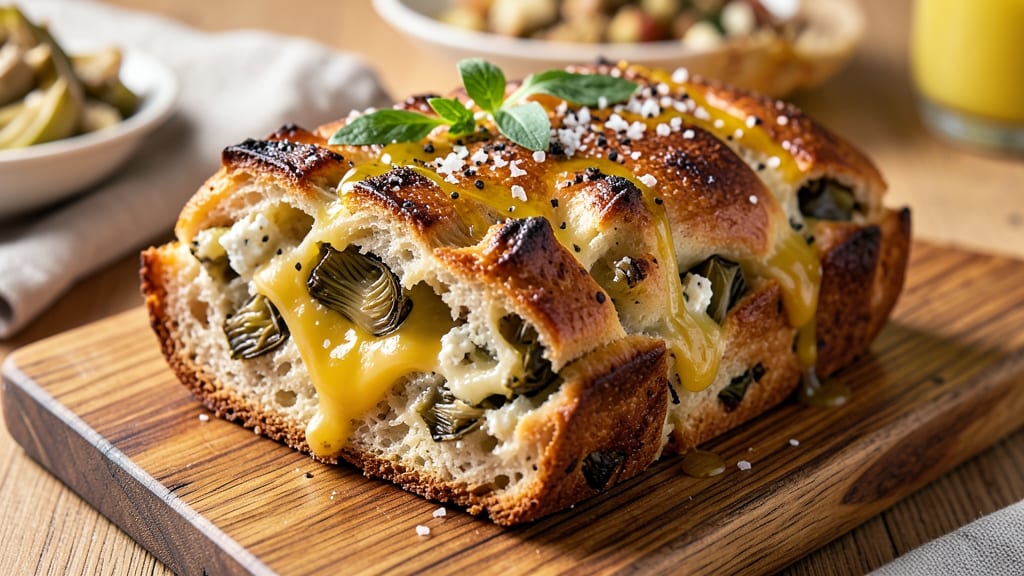
This artichoke cheese bread recipe delivers the perfect marriage of crispy, golden-brown crust and gooey, herb-infused cheese filling—every bite is a revelation. 🌟 The secret lies in a simple dough that transforms into a flaky, buttery shell, while marinated artichoke hearts and melted cheese create a savory center that’s impossible to resist.
I’ve perfected this recipe over years of testing, ensuring the crust stays crispy while the filling remains tender and flavorful.
The magic happens in the layers: a well-kneaded dough wraps around a mixture of marinated artichokes, sharp cheddar, and a touch of garlic for depth.
Baking at 375°F for 20–25 minutes guarantees a crispy crown that shatters slightly with each bite, while the cheese inside melts into a creamy, stretchy blanket. This dish is foolproof, yet feels like a restaurant-quality side—ideal for game day, holiday tables, or a cozy weeknight dinner.
What sets this recipe apart is the balance of textures and flavors: the crispy exterior contrasts beautifully with the soft, cheesy interior, while the artichokes add a briny, slightly tangy note. The dough is simple—just flour, yeast, butter, and a pinch of salt—but the filling elevates it to something extraordinary.
Whether you’re serving it as an appetizer or a side, it’s guaranteed to disappear quickly.
For extra flavor, infuse the dough with garlic or swap the cheddar for mozzarella and feta. The possibilities are endless, but the core technique remains the same: crispy dough, melty cheese, and artichokes that tie it all together. Let’s get baking!
Ingredients for artichoke cheese bread
Simple dough meets artichoke-herb cheese filling for a golden, crispy crown over melty center.
| Ingredient | Amount | Notes |
|---|---|---|
| All-Purpose Flour 🌾 | 4 cups | Sifted for light texture |
| Active Dry Yeast 🍞 | ¼ tsp | Ensure it's fresh |
| Granulated Sugar 🍚 | 1 tbsp | Activates yeast properly |
| Unsalted Butter 🧈 | ½ cup | Cold, cubed for flakiness |
| Large Egg 🥚 | 1 whole | Room temperature preferred |
| Whole Milk 🥛 | ¼ cup | Warmed to 110°F |
| Diamond Crystal Kosher Salt 🧂 | 1 ½ tsp | Adjust to taste |
| Marinated Artichoke Hearts 🌿 | 1 cup | Drained and chopped fine |
| Sharp White Cheddar Cheese 🧀 | 1 ½ cups | Shredded, not pre-shredded |
| Fresh Garlic Cloves 🧄 | 2 cloves | Minced for aromatic depth |
| Fresh Rosemary 🌿 | ½ tsp | Finely chopped, stems removed |
| Extra-Virgin Olive Oil 🫒 | 1 tbsp | For brushing dough |
| Coarse Sea Salt 🧂 | 1 tbsp | For sprinkling top |
| Black Pepper 🌶️ | ½ tsp | Freshly cracked |
The flour and butter form the foundation of this dough's flaky texture. King Arthur or Gold Medal flours yield the best results due to their high protein content, but any all-purpose will work. For the butter, Plugrá or Land O'Lakes brands are ideal—they maintain their shape when chilled, ensuring optimal flakiness. Fresh yeast is critical; if your packet is past its expiration, test it in warm milk to ensure it's active. The artichoke hearts should be marinated in olive oil, lemon juice, and garlic—Goya or La Tourangelle brands offer excellent quality, and their jars are typically pre-marinated. For the cheese, Cabot or Tillamook sharp cheddars provide the perfect balance of tang and richness.
No marinated artichokes? Fresh artichoke hearts can be quickly blanched and tossed in olive oil, lemon juice, and garlic, but they'll lack the depth of flavor. Substituting the cheddar for mozzarella and feta (as mentioned in the intro) is a fantastic variation—just ensure the mozzarella is low-moisture and shredded fresh to avoid excess moisture in the filling. For the rosemary, dried works in a pinch, but use one-third the amount and toast it lightly in a dry pan to intensify its flavor. The olive oil for brushing the dough should be extra-virgin and fruity—avoid the lighter, more processed varieties, as they lack the necessary depth of flavor.
The dough can be prepped up to 24 hours ahead and refrigerated, allowing the flavors to meld further. Once assembled, the bread should be baked immediately to maintain its crispy texture. Store leftovers in an airtight container at room temperature for 2 days or freeze for 3 months. For reheating, wrap the bread in foil and warm in a 350°F oven for 10-15 minutes to restore its crispiness without drying it out. The filling, if separated, can be reheated in the microwave for 30-45 seconds, covered to prevent drying.
Why You'll Love This Recipe
- Same recipe, two vibes: toss it together for a quick dinner or shape it into a loaf for game day. Honestly, I’ve even used the leftovers for croutons—zero waste, all flavor.
- No-Knead Magic: I swear by this dough—just mix, let it rise, and forget it. The yeast does all the work while I’m scrolling or watching TV, and no one ever guesses it’s this unfussy.
- Cheese Pull So Good: That stretchy, gooey artichoke-herb filling? It’s the star. The butter and egg bind it just right, so every bite has that perfect balance of crispy crust and melty, tangy pull.
- Weeknight & Party Star: Same recipe, two vibes: toss it together for a quick dinner or shape it into a loaf for game day. Honestly, I’ve even used the leftovers for croutons—zero waste, all flavor.
Step-by-step instructions for artichoke cheese bread
Master this technique for a golden crust and rich, herbed cheese center every time.
👨🍳 Step 1: Activate Yeast and Mix the Dough
In a small bowl, combine the 0.25 cup warm whole milk (110°F) with the 1 tbsp granulated sugar and 0.25 tsp active dry yeast. Let sit for 5-7 minutes until frothy—this confirms your yeast is active. If it doesn't bubble, start over with fresh yeast.
In a stand mixer fitted with the dough hook, combine the 4 cups all-purpose flour and 1.5 tsp diamond crystal kosher salt. Mix on low speed while gradually adding the 0.5 cup cold unsalted butter (cut into cubes) until crumbly. Add the yeast mixture and 1 whole large egg, mixing until a shaggy dough forms. Increase speed to medium and knead for 5-7 minutes until smooth and elastic.
🥘 Step 2: Incorporate Cheese and Artichoke Filling
While the dough kneads, prepare the filling by finely chopping the 1 cup marinated artichoke hearts (drained) and mincing the 2 cloves fresh garlic. In a separate bowl, mix the chopped artichokes, garlic, 1.5 cups sharp white cheddar cheese, 0.5 tsp fresh rosemary, and 0.5 tsp black pepper. Set aside.
Once the dough is smooth, remove it from the mixer and shape into a 12-inch circle on a floured surface. Roll out to ¼-inch thickness and spread the cheese-artichoke mixture evenly over ¾ of the circle, leaving a 2-inch border uncovered. Roll tightly into a log, tucking the ends under to seal.
🔥 Step 3: Shape and Proof the Dough
Place the sealed log seam-side down on a parchment-lined baking sheet. Using a sharp knife, score the top into 8 equal sections (like a crown). Brush the entire surface with 1 tbsp extra-virgin olive oil and sprinkle generously with 1 tbsp coarse sea salt. Cover loosely with a clean kitchen towel and let rise in a warm place for 1-1.5 hours or until nearly doubled in size.
Here's the thing—don't overproof. The dough should expand gently; if it rises too quickly, it'll lose its structure. I like to place my oven light on underneath the baking sheet during proofing to create a consistent warm environment.
🔥 Step 4: Bake to Crispy Perfection
Preheat your oven to 375°F. Bake the bread for 25-30 minutes until the crown is deep golden brown and the internal temperature reaches 190°F. The edges should pull away slightly from the pan, and you should hear a hollow sound when tapped on the bottom.
For that signature crispy crust, I recommend rotating the baking sheet halfway through baking. This ensures even browning and prevents the top from darkening too quickly. If the top browns too fast, tent loosely with foil after 15 minutes to prevent over-browning while the center finishes baking.
Pro Tips For Making Artichoke Cheese Bread
- Proof in the Fridge: Let that dough rise until it’s almost too big—when it’s spilling over the bowl, you’re close. Cold weather slows yeast, so if your kitchen’s chilly, give it an extra 30–45 minutes. I used to rush this and ended up with dense, chewy bread that tasted more like a brick than artichoke heaven.
- Butter Matters More: Don’t skimp on the butter—use it soft, not melted, and work it into the dough until it’s uniformly distributed. Cold butter pockets mean uneven melting later, and your bread will taste greasy instead of rich. My grandmother swore by this, and she was right: the flavor pays off.
- Skip the Overmixing: Once you add the egg and cheese, mix just until combined—lumpy is fine. Overworking the dough develops gluten, and your bread will turn out tough instead of tender. I learned this the hard way after kneading for 10 minutes straight and ending up with a chewy loaf that could’ve doubled as a doorstop.
- Bake Until Golden: Don’t pull it out at 190°F—wait until the crust is deep golden brown, around 205–210°F. The cheese filling needs time to set, and a pale crust means it’ll taste underdone. Sounds weird, but it works: a few extra minutes in the oven guarantee a gooey, melty center every time.
Essential equipment for this dish
Dough Hook Attachment
Your stand mixer’s dough hook attachment is non-negotiable for this recipe. I swear by the KitchenAid Classic Metal Dough Hook—it’s durable and grips dough perfectly without tearing.
If you don’t have a mixer, use a wooden spoon for hand-kneading, but be prepared for 5-7 minutes of elbow grease to achieve the same elasticity. 💪
Baking Sheet Essentials
Use a half-sheet baking pan (13x18 inches) for even heat distribution. I recommend All-Clad Stainless Steel or Nordic Ware Natural Aluminum—both conduct heat evenly and prevent sticking. Line it with parchment paper to avoid cleanup battles, but leave the edges uncovered for that crispy crown.
Pro tip: Chill the pan in the fridge for 10 minutes before baking to help the dough rise higher.
Sharp Knife for Scoring
A sharp chef’s knife (like the Wüsthof Ikon) is crucial for scoring the bread’s crown. Dull blades crush the dough, leading to uneven rises. Score ½-inch deep into 8 equal sections—this guides the expansion and creates those signature golden peaks.
If your knife isn’t sharp enough, use a pizza wheel for cleaner cuts. 🔪
Digital Thermometer
Invest in a Thermoworks Sous Vide Thermometer to monitor the dough’s internal temperature. The ideal bake temp is 190°F—any lower, and the center won’t be fully set.
For the oven, a baking stone (like Great Jones) helps mimic professional ovens, ensuring a crispy crust. Place it on the middle rack for even heat circulation.
Olive Oil Brush
Skip the spray bottle—use a silicone pastry brush (like OXO Good Grips) to apply the extra-virgin olive oil evenly. This ensures the crust gets that golden sheen without soggy spots.
Dip the brush in oil, then wipe off excess to avoid pooling. I like to brush the dough twice: once before proofing and again before baking for extra crispiness. 🫒
Cooling Rack
Never place your bread directly on a counter—heat residual will steam the crust, making it soft. Use a wire cooling rack (like OXO Good Grips) to allow airflow.
Let it cool for 10 minutes before slicing; this prevents the cheese from oozing out and keeps the texture intact. For extra crunch, place the rack over a baking sheet to catch any crumbs. ✨
Nutrition facts
Frequently asked questions
Can I make this artichoke cheese bread without yeast?
Yes! For a quick version, replace the yeast dough with a 12-inch flatbread or naan (like Mission brand). Spread the artichoke-cheese filling on half, roll tightly, brush with olive oil, and bake at 375°F for 15-18 minutes until golden. The texture will be denser but still delicious. For a flakier result, use phyllo dough layered with the filling and baked at 350°F for 20 minutes.
What’s the best cheese substitute if I don’t have cheddar?
Try these melty alternatives: mozzarella + feta (½ cup each) for tangy creaminess, or Gruyère for nutty depth. For a sharper flavor, use Parmesan + mozzarella (½ cup each). Avoid pre-shredded cheese—it contains anti-caking agents that prevent proper melting. Always shred fresh for the best texture!
Why did my bread turn out dense instead of crispy?
Three likely culprits: overproofed dough (let it rise just until doubled), underbaked center (use a thermometer to confirm 190°F internal temp), or excess moisture (drain artichokes thoroughly and avoid overmixing). For extra crispiness, brush the baked bread with melted butter after cooling.
Can I prep the filling ahead of time?
Mix the artichoke-cheese filling up to 24 hours ahead and store it in an airtight container. Keep it chilled until ready to use. For best flavor, let it sit at room temperature for 10 minutes before rolling into the dough. The herbs and garlic will mellow slightly but still pack a punch.
How do I reheat leftovers without losing crispiness?
Wrap slices in foil and warm in a 350°F oven for 5-7 minutes to restore crispness. For microwave reheating, cover with a damp paper towel and heat for 15-20 seconds—this prevents drying. Avoid the microwave for more than one serving, as it can make the crust soggy.