
Side Dishes
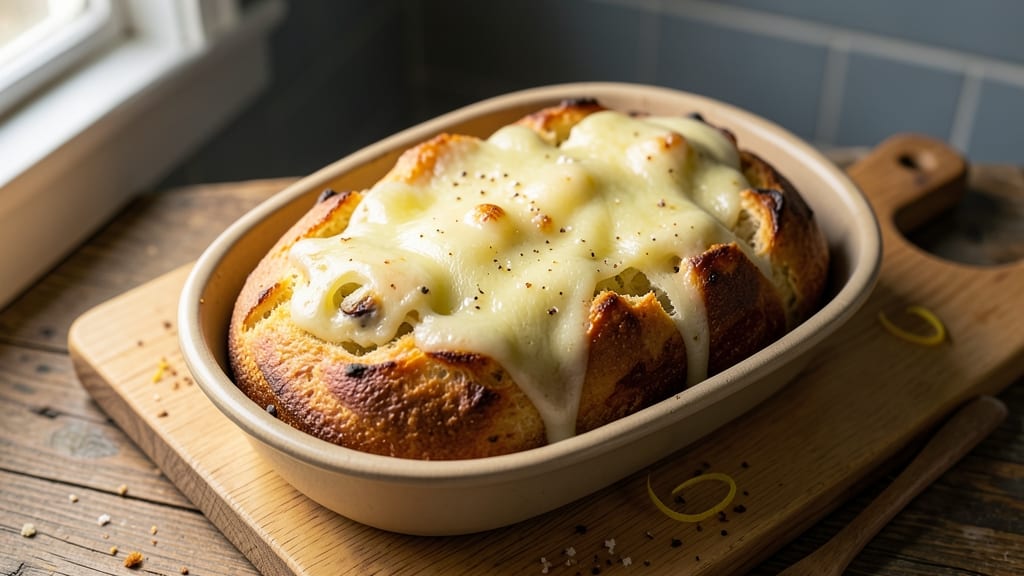
The Asiago cheese bread inspired by Panera delivers that perfect balance of soft, chewy texture and nutty, melty cheese in every pull-apart bite. This recipe captures the restaurant's signature—golden crust, tender crumb, and those irresistible cheese streaks that disappear before you can stop pulling.
The secret lies in the yeasted dough and precise cheese placement, ensuring each slice is packed with flavor without being overly greasy.
What sets this recipe apart is the foolproof method for achieving that signature pull-apart texture while keeping the bread light and airy. You'll work with a simple dough of flour, yeast, and butter, then fold in sharp Asiago cheese in a way that guarantees even distribution.
The bread bakes up with a crispy exterior and a soft, chewy interior, perfect for sharing—or not.
Once you pull it from the oven, the aroma of warm bread and melted cheese will have everyone gathered around. This recipe is designed to be restaurant-quality at home, with no shortcuts that compromise on taste or texture.
Whether you're serving it as a side to soups, a snack with butter, or a showstopper at your dinner table, it's a crowd-pleaser every time.
For best results, let the dough rise twice—this step is non-negotiable for that perfect crumb. The cheese should be cold when mixed in to prevent early melting, and baking at the right temperature ensures a golden crust without burning.
With just a few simple ingredients and a little patience, you'll have a loaf that rivals Panera's in minutes.
Ingredients for asiago cheese bread panera
Golden crust, chewy crumb, and nutty cheese streaks—this Panera-style bread needs just 11 simple ingredients.
| Ingredient | Amount | Notes |
|---|---|---|
| All-Purpose Flour 🌾 | 4 cups | Sifted for light texture |
| Instant Yeast 🍞 | ½ tsp | Active dry works too |
| Granulated Sugar 🍚 | 1 tbsp | Feeds the yeast |
| Unsalted Butter 🧈 | ½ cup | Cold, cubed for dough |
| Whole Milk 🥛 | ½ cup | Warm for yeast activation |
| Large Egg 🥚 | 1 whole | Room temperature |
| Asiago Cheese 🧀 | 1 ½ cups | Shredded, sharp variety |
| Diamond Crystal Kosher Salt 🧂 | 1 ½ tsp | Adjusts to taste |
| Garlic Powder 🧄 | ½ tsp | For subtle depth |
| Cornmeal 🌽 | ¼ cup | For dusting pan |
| Egg Wash 🥚 | 1 tbsp | 1 egg + 1 tbsp water |
The Asiago cheese is non-negotiable here—sharp, freshly grated makes all the difference. Whole Foods or specialty cheese shops carry the best, but the pre-shredded kind from Walmart or Kroger works in a pinch (just squeeze out excess moisture). For the flour, King Arthur or Gold Medal brands give the lightest texture. The butter should be cold when mixed in—room temp means greasy dough. Pro tip: Use a kitchen scale for the flour if you're new to baking—4 cups is 480g—to avoid dense bread.
No instant yeast? Active dry works at double the amount (1 tsp). Short on Asiago? Parmesan at half the quantity gives a milder flavor, but you'll miss that signature nutty bite. The milk needs to be warm—105°F is perfect for activating the yeast (stick your finger in to test). No cornmeal? Semolina or flour works too. For extra richness, fold in 1 tbsp sour cream with the cheese. And if you're feeling fancy, add 1/4 tsp onion powder to the dough for deeper flavor.
This dough needs 2 rises total—don't skip either. The first rise is 1 hour, the second is 30-45 minutes after shaping. Cover with a damp towel to prevent drying. The baked loaf keeps 3 days at room temp wrapped in foil, or 1 week in the fridge. For freezing, slice and freeze on a tray first—toast straight from frozen for best results. Leftovers? Toss in the toaster or air fryer for crispy perfection.
Why You'll Love This Recipe
- No-Knead Magic: I swear by this dough—just mix, let it rise once, and you’re done. No standing at the counter, no overworked arms, just a soft, pillowy base that’s ready when you are.
- Melty Perfection: That moment when the asiago stretches into golden strings? Pure joy. The sugar in the dough caramelizes just enough to balance the buttery richness, while the milk keeps it tender without being heavy.
- Breakfast or Snack: Honestly, I eat this warm for breakfast with jam or cold as a lunchbox staple. The same dough works for dinner rolls too—just shape it differently. My kids beg for it after school.
- Budget-Friendly Stretch: A single batch feeds my family for days. Freeze half the dough, and you’ve got quick meals for lazy mornings or unexpected guests. Plus, butter and milk stretch further than you’d think.
Step-by-step instructions for Asiago cheese bread with pull-apart perfection
This dough comes together faster than you'd expect—just follow the steps carefully for that signature Panera-style texture.
Activate the Yeast and Mix the Dough
In a stand mixer fitted with the dough hook attachment, combine the 4 cups all-purpose flour, 1 tbsp granulated sugar, 1.5 tsp Diamond Crystal kosher salt, and 0.5 tsp garlic powder. Mix on low speed for 30 seconds to distribute the dry ingredients evenly. In a separate bowl, whisk together the 0.5 cup warm whole milk (about 110°F—test by dipping your finger in, it should feel warm but not hot) and the 0.5 tsp instant yeast. Let it sit for 5 minutes until foamy—this means your yeast is alive and ready to work.
Add the yeast mixture to the dry ingredients, then mix on low speed for 1 minute until combined. The dough will look shaggy but that’s okay—it’s normal at this stage. Add the 0.5 cup cold unsalted butter, cubed, and mix on low speed for 2-3 minutes until the butter is fully incorporated and the dough starts to come together. Scrape down the sides of the bowl as needed to ensure everything gets mixed in evenly.
Knead the Dough Until Smooth and Elastic
Increase the mixer speed to medium and knead the dough for 5-7 minutes until it becomes smooth, elastic, and pulls away from the sides of the bowl. You’ll know it’s ready when it forms a windowpane—press your fingers into the dough and gently pull apart; if it stretches without tearing, you’re good to go. If the dough feels too sticky, add 1 tablespoon of flour at a time until it’s just slightly tacky but not wet.
Shape the dough into a ball, place it back in the bowl, cover with a damp towel, and let it rise at room temperature for 1 hour or until it has nearly doubled in size. This first rise develops the gluten structure, which is key for that signature pull-apart texture. Pro tip: If your kitchen is cold, place the bowl in a slightly warm spot—like near the oven with the light on—to speed up the process.
Incorporate the Cheese and Shape the Loaf
Once the dough has risen, punch it down to release the air. On a lightly floured surface, gently press the dough into a 12x6-inch rectangle about ½-inch thick. Sprinkle 1.5 cups shredded Asiago cheese evenly over the dough, leaving a ½-inch border around the edges. Fold the sides of the dough inward, then roll it up tightly from the long side to form a log. Seal the seam by pinching it firmly with your fingers.
Place the sealed loaf seam-side down in a 9x5-inch loaf pan that’s been lightly dusted with 0.25 cup cornmeal (this prevents sticking and adds a subtle crunch). Cover the pan with a damp towel and let the dough rise for another 30-45 minutes, or until it’s puffy and just about fills the pan. The cheese should be visible through the top—this is your cue that it’s ready for the oven.
Bake to Golden Perfection with Cheese Streaks
Preheat your oven to 375°F. Brush the risen loaf generously with the 1 tbsp egg wash (mix 1 egg + 1 tbsp water) for a golden, glossy finish. Bake for 25-30 minutes until the top is deep golden brown and the internal temperature reaches 190°F—this ensures the cheese is fully melted and the bread is cooked through. If the top browns too quickly, tent the loaf with foil to prevent over-browning while the center finishes cooking.
For that iconic Panera-style pull-apart texture, let the bread cool in the pan for 10 minutes before removing it. The residual heat will help set the cheese into those beautiful, gooey streaks. Slice it warm and watch those cheese strands stretch—this is where the magic happens. Serve immediately with a side of marinara for dipping, or enjoy it as-is while it’s still warm and gooey.
Pro Tips For Making Asiago Cheese Bread Panera
- Warm the Milk First: Pour whole milk into a microwave-safe mug and heat it for 30 seconds—just until it’s steaming. Cold milk kills yeast faster than you’d think, and this tiny step guarantees your dough rises twice as fast. (Yes, even if you’re impatient like me.)
- Cut Butter into Flour: Use a pastry cutter or your fingers to work cold unsalted butter into the flour until it resembles coarse crumbs, not smooth dough. This creates pockets for the cheese to melt into later, giving you that perfect Panera-style pull-apart texture.
- Don’t Overmix the Dough: Mix the dough just until it comes together—about 2 minutes by hand. Overworking it makes the bread dense and chewy. The gluten develops fast, and you’ll end up with a brick instead of a soft, airy loaf.
- Proof at Room Temp: Place the shaped dough in a greased pan and let it rise in a warm spot (like a turned-off oven with a light bulb inside) until it’s just puffing over the edges—about 1 to 1.5 hours. Cold spots slow the yeast, and you’ll end up with a sad, flat loaf if you rush it.
Regional styles of these flavors
Italian Panera Style
Panera’s original Asiago cheese bread draws inspiration from classic Italian panettone and ciabatta traditions, where yeasted dough meets rich, aged cheeses. The key difference? Panera’s version uses a rectangular loaf pan and incorporates sharp Asiago in layers rather than sprinkled on top.
In Italy, you’d often find Parmigiano-Reggiano folded into similar breads, but Asiago’s nutty, slightly sweet profile makes it the star here. 🧀
New England Twist
Many home bakers adapt this recipe by adding 1 tsp dried rosemary or thyme to the dough, inspired by New England’s love of herbed breads.
The region’s cooler climates also favor slightly denser doughs, so reduce milk by 2 tbsp and increase flour by 1 tbsp if your kitchen feels chilly. Some bakers even swap Asiago for white cheddar—a nod to Vermont’s dairy traditions.
Southern Comfort
In the South, this bread often becomes a dinner roll or garlic bread variation. Add 2 minced garlic cloves to the dough and fold in ¼ cup chopped parsley with the cheese.
Bake in a 9-inch cast-iron skillet for a crispier crust, and serve with honey butter or spicy Cajun aioli. The Southern touch? A sprinkle of crushed red pepper flakes on top before baking.
California Fusion
West Coast bakers love to experiment with avocado oil instead of butter, and sometimes fold in sun-dried tomatoes or goat cheese alongside Asiago. For a true California twist, brush the baked loaf with garlic-infused olive oil and top with toasted pine nuts.
Pair it with a balsamic glaze for dipping—this version shines at brunch or as a side for grilled meats.
Gluten-Free Adaptation
For a gluten-free version, replace flour with a 1:1 gluten-free blend (like Bob’s Red Mill) and add 1 tsp xanthan gum. Use ½ cup melted butter instead of cold cubes, and let the dough rest for 10 minutes after mixing to hydrate fully.
Bake at 350°F for 30-35 minutes—gluten-free dough needs lower heat to avoid burning. The texture won’t be pull-apart, but it’s still delicious with melted cheese streaks.
Quick Rise Hack
Short on time? Swap instant yeast for 1 packet (2¼ tsp) rapid-rise yeast and warm the milk to 115°F. Reduce the first rise to 30 minutes and the second to 20 minutes—just monitor closely.
For extra cheesiness, fold in ¼ cup shredded mozzarella with the Asiago. This version works best as a garlic bread served immediately after baking.
Nutrition facts
Frequently asked questions
Can I use pre-shredded Asiago cheese from the store?
Pre-shredded Asiago works fine, but squeeze out any excess moisture first—it contains anti-caking agents that can make your bread gummy. For the best texture, freshly grated Asiago gives the most authentic nutty flavor and melts more smoothly. If using pre-shredded, reduce the amount by 1 tbsp to account for moisture.
Why did my bread turn out dense instead of pull-apart?
Dense bread usually means the dough didn't rise enough or was overworked. Check these fixes: (1) Make sure your yeast is fresh (test it in warm water first), (2) Don't skip the second rise after shaping, and (3) Knead just until the dough passes the windowpane test—over-kneading develops too much gluten. Also, ensure your oven is properly calibrated with an oven thermometer.
How do I store leftover Asiago cheese bread?
Wrap cooled slices tightly in plastic wrap or foil to keep them fresh. At room temperature, it stays good for 3 days, or store in the fridge for 1 week. For longer storage, freeze slices on a tray first (prevents sticking), then transfer to a bag. Toast straight from frozen for best results—no need to thaw!
Can I make this bread without a loaf pan?
Yes! Shape the dough into a free-form loaf on a baking sheet lined with parchment paper. For extra crispiness, bake on a pizza stone or in a cast-iron skillet. Brush with extra egg wash for browning, and bake 5-10 minutes longer than pan time. The texture will be slightly denser but still delicious with those gooey cheese streaks.
What's the best way to reheat stale Asiago cheese bread?
For crispy bread: Wrap slices in foil and warm at 350°F for 5-8 minutes. For melty cheese: Toast in a toaster or air fryer at 375°F for 3-4 minutes. Pro tip: Spritz with water before reheating to restore moisture—works like magic for breads!