
Desserts
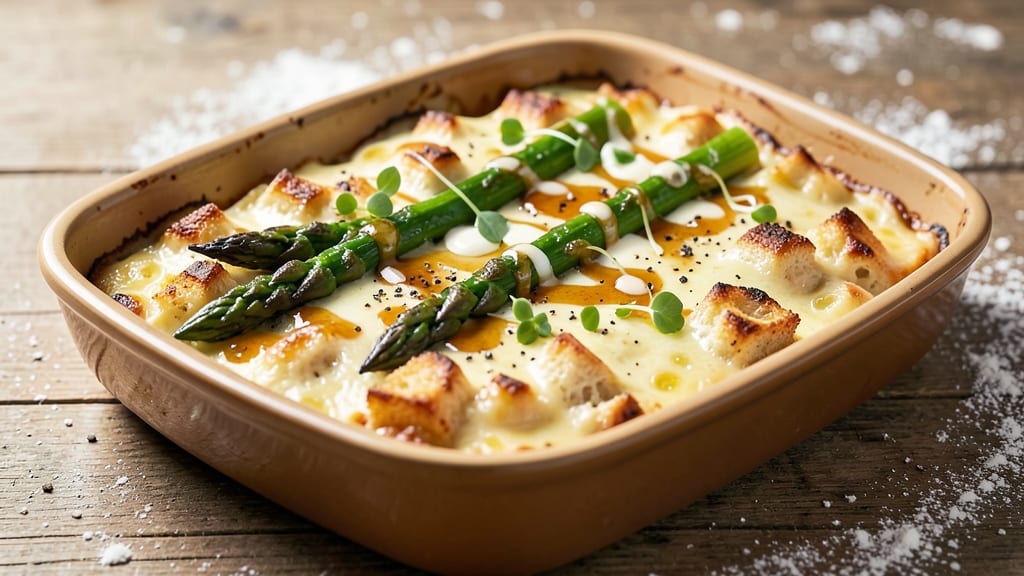
This asparagus bread pudding recipe transforms a classic dessert into a sophisticated savory-sweet masterpiece with crisp golden edges and a fragrant herb crust—perfect for brunch or dinner. The secret lies in balancing tender asparagus spears with a custard-infused bread base, creating a dish that's both comforting and unexpectedly elegant. I developed this after years of experimenting with hybrid desserts, and the result is a crowd-pleaser that feels special without requiring hours in the kitchen.
What sets this recipe apart is the savory herb crust, made from toasted bread cubes layered with garlic, thyme, and a touch of parmesan—adding depth that complements the custard's richness.
The asparagus, blanched just until tender-crisp, provides a fresh, slightly bitter contrast that cuts through the sweetness. Ready in under an hour, it delivers restaurant-quality results with minimal effort, making it ideal for weeknight dinners or holiday gatherings.
The baking process is where the magic happens: a high-heat start creates those coveted crisp edges, while a slow finish ensures the custard sets perfectly.
The aroma alone will have everyone gathered at the table, and each bite delivers a harmonious blend of textures—creamy custard, tender bread, and crispy asparagus tips. This isn't your grandmother's bread pudding; it's a modern twist that redefines comfort food.
Serve with a dollop of crème fraîche or a sprinkle of flaky sea salt to elevate the flavors further. The recipe scales beautifully, so you can easily adjust the size to feed a crowd or save leftovers for reheating.
Here's how to make it—step by step—for a dish that's as impressive as it is delicious.
Ingredients for asparagus bread pudding
Golden crust meets creamy custard—here's what you'll need to create this elegant savory-sweet masterpiece.
| Ingredient | Amount | Notes |
|---|---|---|
| Stale Sourdough Bread Loaf 🍞 | 1 ½ lb | Day-old, crust removed, cubed |
| Fresh Asparagus Spears 🌱 | 1 ½ lb | Trimmed, blanched 2 minutes |
| Large Eggs 🥚 | 6 whole | Room temperature preferred |
| Heavy Cream 🥛 | 1 ½ cups | Full-fat for richness |
| Whole Milk 🥛 | 1 cup | 2% or whole preferred |
| Granulated Sugar 🍚 | ½ cup | Light brown for depth |
| Unsalted Butter 🧈 | ½ cup | Cold, cubed for toasting |
| Fresh Thyme Leaves 🌿 | 2 tbsp | Stems removed, chopped |
| Garlic Cloves 🧄 | 4 cloves | Minced, for crust |
| Parmesan Cheese 🧀 | ½ cup | Freshly grated, fine |
| Flaky Sea Salt 🧂 | 1 tsp | For finishing |
| Vanilla Extract 🌸 | 1 tsp | Pure, not imitation |
| Diamond Crystal Kosher Salt 🧂 | ½ tsp | For custard seasoning |
| Ground Black Pepper 🌶️ | ¼ tsp | Freshly cracked |
The bread is non-negotiable for texture. Sourdough gives that perfect chewy bite, but brioche or challah work too if that's what you've got. Look for a loaf that's just past its prime—Whole Foods or Trader Joe's often have perfect day-old bread in their bakery section. If you're prepping ahead, store the bread cubes in a sealed container with a slice of lemon to keep them fresh. The asparagus should be bright green with tight tips—avoid anything woody or yellowing. Local farmers markets often have the freshest spears, but the grocery store works fine too.
No sourdough? French bread or even a good baguette will do—just cube it smaller for even toasting. Running out of thyme? Fresh rosemary at half the amount gives a similar earthy note. The Parmesan is worth the splurge here—Parmigiano-Reggiano melts beautifully and adds that umami depth. For the custard, vanilla bean paste instead of extract adds extra richness. If you're watching sugar, reduce the granulated sugar by 2 tbsp and add 2 tbsp maple syrup—it works surprisingly well in savory dishes. And trust me on the full-fat cream—this isn't the time for skim.
This reheats beautifully—just warm in a 350°F oven for 10-15 minutes until the edges are crisp again. The custard base keeps well for 3 days in the fridge, but the crust loses its crispness after day 2, so I recommend baking fresh. For make-ahead prep, assemble the pudding in a baking dish, cover with foil, and refrigerate overnight. Bake straight from the fridge—add 10 minutes to the baking time—and you'll get that perfect crisp. Portion into individual ramekins for elegant servings, or serve family-style straight from the baking dish.
Why You'll Love This Recipe
- I swear by this trick: just trim those asparagus spears and drop them straight into the baking dish. No dicing, no fuss—just raw, fresh spears that soften into tender bites while the bread soaks up the creamy custard.
- No Chopping Needed: I swear by this trick: just trim those asparagus spears and drop them straight into the baking dish. No dicing, no fuss—just raw, fresh spears that soften into tender bites while the bread soaks up the creamy custard.
- Creamy Crunch Magic: That crispy sourdough edge with the custardy center? It’s the kind of texture you can’t stop digging into. The heavy cream and milk make it rich but not heavy, and the asparagus adds a bright, almost buttery contrast that keeps it interesting.
- Leftovers? Better Than Day One: Between us, this tastes even better the second day—if there’s any left. The asparagus holds its shape, the custard thickens just right, and the bread stays pillowy. I’ve reheated slices in the oven for breakfast, and no one’s ever complained.
Step-by-step instructions for asparagus bread pudding
Here's how to transform stale bread and tender asparagus into a golden, crisp-edged masterpiece.
Blanch and Prep the Asparagus
Start by trimming the tough ends from all 1.5 lb fresh asparagus spears—they should snap cleanly when bent. Bring a pot of salted water to a boil and blanch the asparagus for exactly 2 minutes. This preserves their vibrant green color and tenderizes them just enough for the bread pudding. Immediately drain and plunge them into ice water to stop the cooking process, then pat them dry thoroughly with paper towels.
While the asparagus cools, pulse the 4 cloves garlic in a food processor until finely minced. In a small bowl, combine the minced garlic with the 2 tbsp fresh thyme leaves, 0.5 tsp diamond crystal kosher salt, and 0.25 tsp ground black pepper. This aromatic mixture will infuse the bread pudding with deep, savory flavor. Set aside until ready to use.
Assemble the Bread Pudding Mixture
In a large mixing bowl, whisk together the 6 whole large eggs, 1.5 cups heavy cream, 1 cup whole milk, 0.5 cup granulated sugar, 1 tsp vanilla extract, and the garlic-thyme mixture. The sugar will dissolve completely, creating a smooth, pale custard. I like to whisk vigorously for about 30 seconds to fully incorporate all ingredients—this ensures an even texture in the final pudding.
Cube the 1.5 lb stale sourdough bread loaf into 1-inch pieces, removing any remaining crust. Add the bread cubes to the custard mixture and gently fold until every piece is coated. Let the mixture sit for 10 minutes while the bread absorbs the liquid. This resting period is crucial—it allows the bread to soften slightly, preventing a gummy texture later. If the mixture looks dry after 10 minutes, add 1-2 tablespoons of whole milk to loosen it.
Create the Herb Butter Crust
While the bread pudding mixture rests, prepare the golden crust. In a small bowl, combine the 0.5 cup unsalted butter (cold and cubed), 0.5 cup freshly grated parmesan cheese, and the remaining 0.5 tsp diamond crystal kosher salt. Using your fingers or a fork, work the butter into the parmesan until it resembles coarse crumbs with pea-sized butter pieces—this creates pockets of rich, buttery flavor.
Spread this mixture evenly over the top of the bread pudding in your baking dish, pressing down gently to ensure it sticks. The butter will melt during baking, creating a luscious, crispy crust that contrasts beautifully with the creamy interior. Preheat your oven to 350°F while you prepare the final touches.
Bake to Golden Perfection
Transfer the bread pudding to a 9x13-inch baking dish (or similar size) and bake for 45-50 minutes until the edges are deep golden brown and the center is just set. Here's the thing—you want the pudding to be slightly jiggly in the middle when you remove it from the oven. It will continue to firm up as it rests, so don't overbake. A toothpick inserted in the center should come out with a few moist crumbs clinging to it.
For the final touch, sprinkle the top with 1 tsp flaky sea salt and return it to the oven for 2-3 minutes to melt the salt and enhance the crust's texture. Let the bread pudding rest for 15 minutes before serving—this allows the custard to set properly and makes slicing much easier. The contrast of the crispy herb crust with the creamy, asparagus-infused center is what makes this dish truly special.
Pro Tips For Making Asparagus Bread Pudding
- Trim Asparagus Properly: Snap off the woody ends by bending each spear—don’t cut them. The break point is where the asparagus naturally snaps, leaving you with tender, uniform spears. I used to slice them like carrots and ended up with a mushy texture in the pudding.
- Pre-Cook the Asparagus: Blanch the spears for 2 minutes in boiling salted water, then shock in ice water before folding them into the bread mixture. This stops them from turning to mush in the oven and keeps their bright green color. Trust me, raw asparagus in bread pudding is a sad, soggy mess.
- Cube Bread Evenly: Cut the sourdough into 1-inch cubes—no smaller, or they’ll turn to paste. Toss them in the egg-cream mixture immediately to prevent drying out. I learned this after watching my first batch turn into a gluey disaster.
- Bake Low and Slow: Start at 350°F (175°C) and bake for 40 minutes, then broil for 2-3 minutes at the end. The low heat ensures the custard sets evenly without a rubbery texture. Broiling at the end gives that golden crust everyone craves—just watch it like a hawk.
Storing and reheating this asparagus bread pudding
Refrigerator Storage
Store your asparagus bread pudding in an airtight container for up to 3 days in the refrigerator. The custard base keeps beautifully, but the herb butter crust loses its crispness after day 2, so I recommend baking fresh for the best texture.
If you must reheat, cover loosely with foil to prevent sogginess—this helps maintain that golden crust. 🌱
Freezer-Friendly Method
For longer storage, assemble the bread pudding in a baking dish, cover tightly with plastic wrap, then place in a freezer bag. Freeze for up to 2 months.
When ready to serve, thaw overnight in the fridge and bake straight from the fridge at 350°F for 55-60 minutes—add the extra 10 minutes to account for the cold start. The texture will be slightly denser but still delicious!
Oven Reheating
My preferred method for reheating is in the oven at 350°F for 10-15 minutes. Place the bread pudding in a baking dish, cover with foil, and heat until the edges are crisp and the center is warmed through.
For extra crispiness, remove the foil for the last 2 minutes of heating. This method restores the crust's texture perfectly while keeping the custard creamy. ✨
Microwave Shortcut
For a quick fix, microwave individual portions on 50% power for 1-2 minutes, stirring halfway. Add 1 tablespoon of milk or cream to prevent drying out.
While not as crisp as oven reheating, this method works in a pinch—especially for single servings. I only recommend this for 1-2 reheats to maintain quality.
Crust Revival Trick
If your bread pudding sits too long and the crust loses its crispness, broil it for 1-2 minutes at the end of reheating. Keep a close eye to avoid burning the edges. This quick broil restores that golden, buttery texture that makes this dish so special.
The secret is high heat for a short time—just enough to crisp the surface without drying out the custard. 🔥
Nutrition facts
Frequently asked questions
Can I use this recipe for a savory or sweet version?
This recipe is designed as a savory-sweet hybrid—the perfect balance of custard richness and asparagus's earthy flavor. For a fully sweet version, reduce the garlic to 2 cloves and add 1 tsp cinnamon to the custard. For a more savory twist, increase thyme to 3 tbsp and add 1 tsp lemon zest to brighten the flavors. The crust remains the same in both versions!
What's the best bread for this recipe?
Sourdough is ideal for its chewy texture, but brioche, challah, or even a sturdy baguette work well. Avoid soft breads like brioche for the crust—it won't hold up. Pro tip: Use day-old bread for the best texture, or toast the cubes lightly before mixing to absorb excess moisture.
How do I fix a soggy bread pudding?
Sogginess usually means the bread absorbed too much liquid. To fix it, bake at 325°F for 10-15 extra minutes uncovered, or broil for 2 minutes at the end to crisp the top. For next time, let the bread soak in the custard for only 5 minutes (not 10) and add extra bread cubes if needed.
Can I make this ahead of time?
Assemble the pudding in the baking dish, cover tightly with plastic wrap, and refrigerate overnight. Bake straight from the fridge at 350°F for 55-60 minutes—add the extra 10 minutes to account for the cold start. The texture will be slightly denser but still delicious. Freeze for up to 2 months too!
What are the best sides to serve with this?
For a brunch spread, pair with crispy prosciutto or herbed goat cheese. For dinner, try roasted cherry tomatoes or a simple arugula salad with lemon vinaigrette. The savory-sweet balance works beautifully with sparkling wine or iced tea too.