
Side Dishes
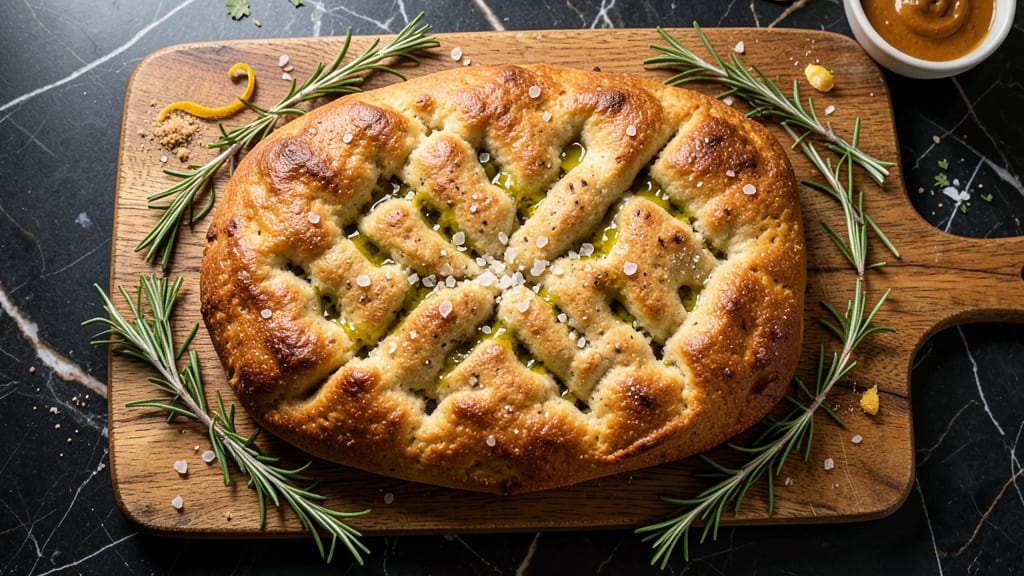
This almond flour focaccia bread recipe delivers a nutty, crispy crust without gluten—perfect for those seeking a grain-free alternative with restaurant-quality texture. The secret lies in almond flour's natural moisture retention and fat content, which creates a tender crumb while developing that signature crispy exterior.
Unlike traditional flour, almond flour requires precise hydration and a longer proofing time, but the results are worth every minute of patience.
The dough begins with a simple autolyse—just almond flour, water, and a touch of olive oil—to develop gluten-free structure before adding yeast and salt. This method ensures a lighter texture while preventing the dense crumb that often plagues gluten-free breads.
The shaping technique is equally critical: dimpling the dough before baking creates those coveted air pockets and crispy edges that define great focaccia.
By the time it emerges from the oven, you'll have a golden-brown loaf with a shatteringly crisp crust that gives way to a tender, nutty interior. The aroma alone—warm almonds mingling with olive oil—transforms any meal into something special.
This recipe delivers professional-quality results at home, proving that gluten-free baking can be just as impressive as traditional.
Optional additions like fresh rosemary or extra virgin olive oil drizzle elevate the flavor further, making this versatile enough for appetizers, sandwiches, or simply enjoying with soup. The key to success? Following the proofing times precisely and baking until internal temperature reaches 205°F. Let's create this gluten-free masterpiece.
Ingredients for almond flour focaccia bread
This gluten-free focaccia relies on almond flour's natural richness and precise hydration for restaurant-quality texture.
| Ingredient | Amount | Notes |
|---|---|---|
| Superfine Almond Flour 🌰 | 3 cups | Blanched, finely ground preferred |
| Extra-Virgin Olive Oil 🫒 | ¾ cup | Cold-pressed, fruity variety |
| Warm Water 💧 | ¾ cup | 105-110°F for optimal yeast activation |
| Active Dry Yeast 🍞 | ¾ tsp | Freshly opened for best results |
| Fine Sea Salt 🧂 | 1 ½ tsp | Diamond Crystal preferred |
| Psyllium Husk Powder 🌿 | 1 tbsp | Critical for gluten-free structure |
| Xanthan Gum 🍞 | ¼ tsp | Ensures proper elasticity |
| Fresh Rosemary 🌿 | ¼ cup | Finely chopped, stems removed |
| Garlic Cloves 🧄 | 3 cloves | Minced for aromatic infusion |
| Apple Cider Vinegar 🍎 | 1 tbsp | Enhances flavor and texture |
| Ground Flaxseed 🌾 | 1 tbsp | For egg replacement in autolyse |
The almond flour is non-negotiable—Bob's Red Mill Superfine or Anthony's Goods are industry standards for this recipe. Blanched almond flour yields a lighter texture, while skin-on varieties add depth but may darken the crust. For optimal results, store your almond flour in the freezer to preserve freshness—it oxidizes quickly. The psyllium husk and xanthan gum are essential for mimicking gluten's structure; NOW Foods carries reliable brands if your local grocery doesn't stock them. When measuring, spoon the almond flour into your cup rather than scooping directly from the bag to prevent compaction.
No fresh rosemary? Dried works at one-third the amount, but the flavor profile shifts dramatically. Substituting another herb like thyme or oregano is acceptable, though rosemary's piney notes are signature to focaccia. The garlic can be omitted entirely if you prefer a milder flavor, but roasted garlic powder at half the amount provides a subtle sweetness. For the vinegar, lemon juice works in a pinch, though apple cider adds a subtle tang that complements the almond flavor. The flaxseed egg replacement is critical—ensure it's ground fresh for maximum binding power, or use chia seeds at the same ratio.
Pre-measure all dry ingredients into a bowl with the yeast and salt to streamline mixing. The dough requires 2 hours of proofing at room temperature—don't rush this step, as gluten-free doughs need time to develop their structure. For storage, wrap the baked focaccia in parchment paper and store at room temperature for 2 days or freeze for 3 months. To revive, warm in a 350°F oven for 10 minutes. The crust crisps best when reheated—this bread actually improves upon reheating, making it perfect for meal prep.
Why You'll Love This Recipe
- No-Knead Magic: The dough comes together in minutes—just mix those five ingredients, let the yeast do its thing, and boom. No standing at the counter, no sticky hands, just a smooth, stretchy batter that’s ready for the oven in under an hour. Honestly, it’s the kind of recipe that makes me feel like I’ve hacked the system.
- Rich, Nutty Crunch: That almond flour? It’s not just flour—it’s a flavor bomb. The focaccia gets this incredible toasty crunch on the outside, but the inside stays tender, with a subtle sweetness from the almonds that pairs perfectly with the bright, peppery kick of extra-virgin olive oil. (Yes, even on a Tuesday night.)
- Meal Prep MVP: Slice it fresh, and it’s a showstopper for brunch. Toast it the next day, and it’s still crispy enough to hold up to eggs or avocado. Between us, I’ve also used it as a low-carb base for sandwiches—no soggy bread here. It’s the kind of bread that works harder than I do.
- Budget-Friendly Luxury: You’d think almond flour would break the bank, but a little goes a long way. This recipe stretches further than regular focaccia, and the olive oil adds richness without the guilt. Plus, it keeps well in the freezer—so you’re not scrambling to bake it last-minute. My secret weapon for when I want to feel fancy without the grocery bill.
Step-by-step instructions for almond flour focaccia bread
Master this gluten-free technique for a focaccia with a golden, nutty crust and airy interior.
Create the Autolyse for Proper Structure
In a large mixing bowl, combine the 3 cups superfine almond flour and 1 tablespoon ground flaxseed. Add the 0.75 cup warm water and mix until just combined—you should have a shaggy, sticky dough. The flaxseed acts as an egg substitute, binding the almond flour while the warm water activates the psyllium husk powder for structural integrity.
Let this mixture rest for 15 minutes. You'll notice the dough become slightly more cohesive as the psyllium absorbs moisture. This resting period, called autolyse, develops gluten-like proteins in gluten-free baking, ensuring a light, airy crumb rather than a dense one. Don't skip this step—it's what prevents your focaccia from turning into a brick.
Activate the Yeast and Develop the Dough
In a separate small bowl, whisk together the 0.75 tsp active dry yeast, 0.75 cup extra-virgin olive oil, and 1 tablespoon apple cider vinegar. The acidity from the vinegar helps activate the yeast more quickly while adding depth of flavor. Let this mixture sit for 5 minutes until it becomes slightly foamy—you should see small bubbles forming on the surface.
Add this yeast mixture to your almond flour dough along with the 1 tablespoon psyllium husk powder and 0.25 tsp xanthan gum. Mix gently with a wooden spoon until fully incorporated. The dough will be sticky and may not look like traditional focaccia dough, but that's normal. Cover the bowl with a damp towel and let it rest for 30 minutes at room temperature. You're looking for the dough to nearly double in volume—this indicates proper yeast activity and dough development.
Incorporate Aromatics and Shape the Dough
Finely chop the 0.25 cup fresh rosemary and mince the 3 cloves garlic. Add these to the dough along with the 1.5 tsp fine sea salt. Gently fold everything together using a spatula, being careful not to overmix. The herbs should be evenly distributed throughout the dough. Transfer the dough to a lightly oiled 9x13-inch baking pan, spreading it evenly with your hands—press down gently but firmly to create an even surface.
Create dimples throughout the dough using your fingers, pressing down about ½ inch deep. This creates the classic focaccia pattern while allowing room for the dough to expand during baking. The dimples should be evenly spaced, about 1 inch apart. Cover the pan with a damp towel and let it rise for 1 hour at room temperature. You'll know it's ready when the dough has puffed up noticeably and the dimples have deepened.
Bake for Maximum Crispiness
Preheat your oven to 375°F with a baking stone or inverted baking sheet on the middle rack. This creates steam during baking, which is crucial for achieving that crispy crust. Once preheated, carefully transfer your prepared focaccia pan to the oven. Bake for 25-30 minutes until the edges are deep golden brown and the top springs back when pressed gently with your finger.
The internal temperature should reach 205°F when measured with an instant-read thermometer. The focaccia is done when it has a crisp exterior with a slightly chewy interior—this contrast is what makes gluten-free focaccia so satisfying. If the top browns too quickly, tent loosely with foil after 20 minutes to prevent over-browning while allowing the center to cook through.
Cool and Serve for Optimal Texture
Remove the focaccia from the oven and let it cool in the pan for 10 minutes. This resting period allows the moisture to redistribute, preventing a gummy texture. After cooling, carefully transfer it to a wire rack. The focaccia should have a crackly, golden crust with a tender crumb underneath. Slice it while still warm for the best texture—each piece should hold its shape without falling apart.
Serve immediately with your favorite dipping oil (a mix of olive oil, garlic, and herbs works beautifully) or enjoy it at room temperature the next day. The crispiness intensifies as it cools slightly, making it perfect for sandwiches or as a side to soups and salads. Store leftovers wrapped in parchment paper at room temperature for up to 3 days, or freeze for up to 1 month.
Pro Tips For Making Almond Flour Focaccia Bread
- Mix Yeast Last: Stir the yeast into the warm water after you’ve combined the almond flour, olive oil, and salt—this keeps the dough from absorbing too much liquid too fast. I learned this the hard way when my first batch turned into a sticky, unmanageable mess.
- Use Room-Temp Oil: Cold olive oil slows down the yeast—warm it slightly (just until it’s no longer chilled) so the dough rises properly. Pour it over the almond flour first, then mix; this creates a more stable, spreadable texture.
- Skip the Overmixing: Once the yeast is dissolved, fold just until combined—almond flour dough is delicate. Overworking it makes the bread dense. A few gentle stretches and folds are all it needs.
- Bake on High Heat: Preheat your oven to 425°F (220°C) and bake uncovered for the first 10 minutes—this ensures a crispy, golden crust before the interior sets. I used to bake it too low, and the texture always came out too soft.
Serving suggestions for this recipe
Dipping Oil Essentials
Elevate your focaccia with a simple yet luxurious garlic-infused olive oil. Whisk together ½ cup extra-virgin olive oil, 1 minced garlic clove, ½ tsp flaky sea salt, and 1 tbsp lemon juice.
Let it sit for 10 minutes to infuse flavors—this brightens the nutty almond notes beautifully. For extra flair, add ½ tsp chopped fresh rosemary or red pepper flakes for heat. 🫒
Soup Pairings
This focaccia shines alongside hearty soups where it can soak up broth. Try pairing with creamy tomato basil soup or minestrone—the crispy crust contrasts perfectly with silky textures.
For a lighter option, serve with chilled gazpacho and use the focaccia to scoop up the chilled soup. The almond flavor adds a sophisticated touch to any bowl. ✨
Sandwich Applications
Use this focaccia as a sturdy base for vegan paninis or open-faced sandwiches. Toast slices lightly before assembling to maintain crispness. Try hummus and roasted vegetable combos or avocado and smoked paprika for a quick lunch. The gluten-free crust holds up beautifully to wet fillings without getting soggy. 🥪
Breakfast Versatility
Transform your focaccia into breakfast bread by topping warm slices with almond butter and banana slices or avocado and chili flakes. The nutty flavor pairs wonderfully with sweet or savory toppings. For a protein boost, spread with ricotta cheese and drizzle with honey and cinnamon. 🍌
Garnish Ideas
Finish your focaccia with fresh herbs like thyme or basil for a pop of color and brightness. A sprinkle of toasted pine nuts adds crunch, while flaky sea salt enhances the almond flavor. For a smoky touch, brush warm slices with olive oil and sprinkle smoked paprika before serving. 🌿
Storage Hacks
Keep your focaccia fresh by storing it in an airtight container with a paper towel to absorb moisture. Reheat slices in a 375°F oven for 5 minutes to restore crispiness. For meal prep, slice before storing and freeze individual portions—just thaw at room temperature for 30 minutes before serving. 💡
Nutrition facts
Frequently asked questions
Why does almond flour focaccia need psyllium husk?
Psyllium husk is essential for gluten-free structure—it mimics the elasticity of gluten by absorbing moisture and forming a network that holds the dough together. Without it, your focaccia would be dense and crumbly. This recipe uses 1 tablespoon to create that signature focaccia texture while keeping it light and airy. Think of it as the secret ingredient that prevents your bread from turning into a brick!
Can I make this focaccia without xanthan gum?
You can substitute ½ teaspoon of guar gum or 1 teaspoon of flaxseed meal, but xanthan gum is ideal for binding the almond flour. The dough will still work, though it may be slightly less elastic. If you're avoiding gums entirely, try adding 1 extra tablespoon of psyllium husk powder to compensate for the lost structure.
How do I prevent my focaccia from turning out too dense?
Density usually happens from overmixing or skipping the autolyse step. Mix just until combined and let the dough rest for the full 15 minutes before adding yeast. Also, ensure your almond flour is fresh—oxidized flour absorbs more moisture, making the dough heavy. Proofing time is critical too: 2 hours total (30 minutes after yeast activation + 1 hour in the pan) gives the dough time to develop properly.
Can I use this dough for focaccia rolls instead?
Divide the dough into 6 equal portions and shape into balls. Place them in a greased muffin tin, cover, and let rise for 45 minutes. Bake at 375°F for 15-18 minutes until golden. The rolls will have a slightly denser center but still maintain that crispy crust. Perfect for appetizers or breakfast sandwiches!