
Side Dishes
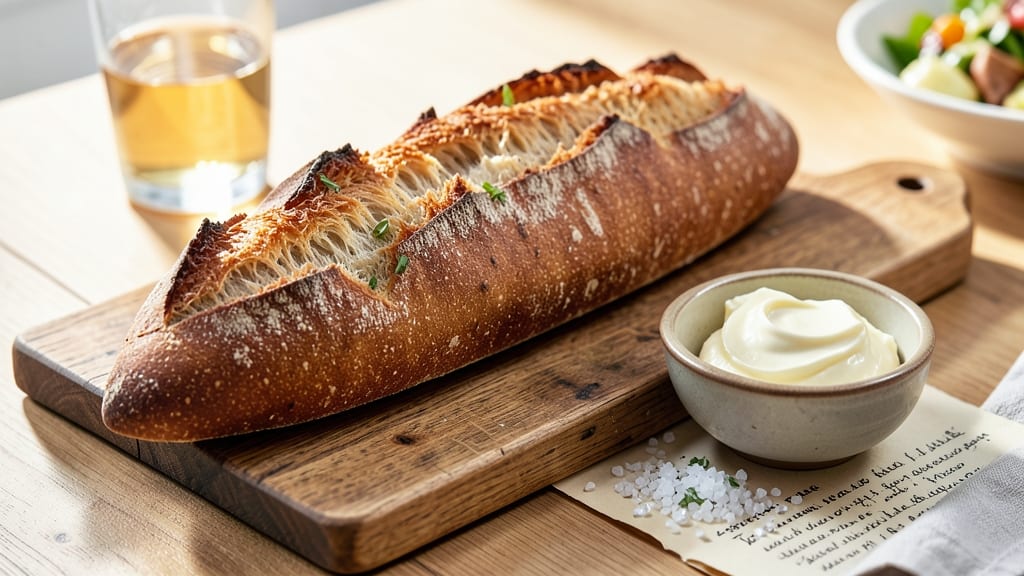
This amazing French bread recipe delivers bakery-quality results with a crispy golden crust and airy interior—no fancy equipment needed. ✨ I’ve perfected this method after years of trial and error, and it’s the closest you’ll get to a Parisian boulangerie at home.
The secret lies in proper kneading, precise proofing, and a hot oven for that signature crust.
What makes this recipe special is the simplicity combined with traditional techniques. You’ll work with just four basic ingredients—flour, yeast, water, and salt—but the process transforms them into something extraordinary.
The dough develops gluten naturally as you knead, creating that signature chewy texture, while scoring the loaf before baking ensures an even rise and that beautiful crust.
By the time you pull this bread from the oven, you’ll have a loaf with a crispy, buttery exterior and a soft, airy crumb inside—perfect for dipping in olive oil or serving alongside soups.
The aroma alone will have everyone gathering around the table. Ready to bake bread that tastes like it came from a French bakery?
This recipe works for beginners and experienced bakers alike, with tips for troubleshooting common issues like dense bread or uneven browning. Whether you’re making it for a special occasion or just craving fresh bread, this method delivers every time.
Ingredients for amazing french bread
Four simple ingredients transform into bakery-worthy French bread with crispy golden crust and airy interior.
| Ingredient | Amount | Notes |
|---|---|---|
| All-Purpose Flour 🌾 | 4 cups | High-protein preferred for chewy texture |
| Active Dry Yeast 🍞 | ¼ oz | Fresh yeast doubled in weight |
| Granulated Sugar 🍚 | 1 tbsp | Feeds yeast for activation |
| Warm Water 💧 | 1 ¼ cups | 110°F (43°C) for optimal yeast |
| Unsalted Butter 🧈 | ½ cup | Cold, cubed for dough enrichment |
| Diamond Crystal Kosher Salt 🧂 | 1 ½ tsp | Adjust to taste after kneading |
| Cornmeal 🌽 | ¼ cup | For dusting work surface |
| Egg Wash 🥚 | 1 whole | Beaten with 1 tbsp water |
| Coarse Sea Salt 🧂 | ½ tsp | For final bread scoring |
| Extra-Virgin Olive Oil 🫒 | 1 tbsp | For dough enrichment |
The flour is where the magic happens. King Arthur or Caputo Tipo 00 give that signature chewy texture, but high-protein all-purpose works in a pinch. Yeast is non-negotiable—Saf-Instant or Red Star are my go-tos, but fresh yeast works if you double the amount. For the butter, Plugrá or Land O'Lakes unsalted melt beautifully during kneading. Keep everything at room temperature for even dough development—cold butter creates pockets, warm butter speeds up gluten formation.
No yeast? Sourdough starter at 1/4 cup replaces it, but timing changes dramatically. Short on butter? Olive oil at half the amount keeps the dough tender. The sugar can be swapped for honey (reduce by 1 tsp), but it won't activate yeast as reliably. For scoring, a lamé or sharp razor is ideal, but a clean chef's knife works too. Pre-slice your loaf pan if you're nervous—it guides the scoring perfectly. And if your kitchen is humid, chill the dough 30 minutes before shaping to prevent sticking.
This dough keeps for 2 days wrapped in plastic in the fridge—pull it out 2 hours before baking. For longer storage, freeze shaped loaves before baking (thaw overnight in the fridge). The crust stays crisp for 3 days if stored in a bread bag. Pro tip: Toast slices directly from the freezer for maximum crunch. And save those crust scraps—they're perfect for croutons or breadcrumbs.
Why You'll Love This Recipe
- No-Knead Magic: I swear by this—just mix the flour, yeast, sugar, and warm water, let it rise while I watch TV, then shape it once. That butter brushed on top? Crispy perfection with zero effort.
- Buttery Crust Alert: The moment that golden crust cracks open? Pure satisfaction. That warm, buttery aroma from the butter and sugar caramelizing? It’s the kind of smell that makes your kitchen feel like a Parisian bakery.
- Weeknight Hero: Toss a loaf in the oven while dinner simmers, or freeze extras for toast later. Honestly, I’ve used it for sandwiches, garlic butter dipping, and even croutons—this bread works harder than my coffee.
- Pocketbook-Friendly Staple: Flour, yeast, sugar, butter—all pantry basics that stretch into multiple meals. I’ve made three loaves from one batch, and the leftovers? Still better than store-bought the next day.
Step-by-step instructions for artisan crust with buttery golden crisp
Here's how to craft restaurant-quality French bread with that signature crisp exterior and airy interior.
👨🍳 Step 1: Activate the Yeast for Maximum Rise
In a small bowl, combine the 1.25 cups warm water (tested at 110°F) with 1 tbsp granulated sugar and the 0.25 oz active dry yeast. Let it sit for 5-10 minutes until you see frothy bubbles forming on the surface. This confirms your yeast is alive and ready to work its magic.
If no bubbles appear after 10 minutes, your yeast might be dead—start fresh with new yeast. The sugar feeds the yeast, while the warm water creates the perfect environment for activation. I always use a kitchen thermometer to check water temperature—too hot kills yeast, too cold makes it sluggish.
👨🍳 Step 2: Mix and Knead the Dough
In a large mixing bowl, combine the 4 cups all-purpose flour and 1.5 tsp diamond crystal kosher salt. Make a well in the center and pour in the yeast mixture along with the 0.5 cup cold unsalted butter and 1 tbsp extra-virgin olive oil. Mix with a wooden spoon until everything comes together into shaggy strands.
Turn the dough onto a lightly floured surface and knead for 8-10 minutes until smooth and elastic. You'll know it's ready when it springs back slowly when poked. I press down gently—if it leaves a slight indentation that fills back in, you're good. The cold butter creates pockets that will give your bread that signature flaky texture.
⏰ Step 3: First Rise for Light, Airy Texture
Lightly oil a large bowl, place the dough inside, and cover with a damp towel. Let it rise in a warm place for 1-2 hours or until doubled in size. The dough should feel puffy and jiggly when gently pressed—this means the yeast has done its job creating air pockets.
I like to place my bowl on top of my turned-off oven with the light on for consistent warmth. Don't skip this step—proper rising time is what gives French bread its characteristic open crumb structure. If your kitchen is cold, extend the time to 2.5 hours but don't exceed that or your yeast will overwork.
🍳 Step 4: Shape and Second Rise for Crispy Crust
Punch down the risen dough and divide it into 4 equal pieces. Shape each into a 12-inch log by rolling it tightly from one end to the other. Place them on a baking sheet dusted with 0.25 cup cornmeal, cover, and let rise for another 30-45 minutes until puffy.
The cornmeal prevents sticking and adds a subtle flavor. For that classic French bread shape, I roll the dough from the center outward, keeping the seams tight. The second rise is crucial—it develops the final structure before baking. If your dough rises too quickly, it might collapse during baking, ruining that perfect crust.
🔥 Step 5: Bake to Golden Perfection
Preheat your oven to 425°F with a baking stone or inverted baking sheet inside. Brush the dough with the egg wash (1 whole egg beaten with 1 tbsp water) and sprinkle with 0.5 tsp coarse sea salt. Bake for 20-25 minutes until deep golden brown with a hollow sound when tapped on the bottom.
For that signature crisp crust, I score the tops with a sharp razor blade just before baking—this prevents excessive expansion and creates those beautiful decorative slashes. The bread is done when it's golden brown all over and sounds hollow when tapped. Let it cool on a wire rack for 10 minutes before serving—this prevents a gummy interior.
Pro Tips For Making Amazing French Bread
- STRETCH AND FOLD: Use a bench scraper to fold the dough—this builds strength faster than your hands. I learned this the hard way after watching my dough collapse like a sad soufflé.
- SALT THE WATER: Add the salt to the warm water before mixing, not after. It dissolves completely and seasons the dough evenly—no weird salty pockets.
- DON’T RUSH THE FIRST RISE: Let the dough double and then double again—about 1.5 to 2 hours. Skimping here means dense, chewy bread that’ll taste like a sad baguette.
- COOL THE BUTTER: Take the butter straight from the fridge and grate it cold into the dough. Warm butter melts too fast, turning your crust into a greasy mess instead of a crispy dream.
Serving suggestions for this dish
Classic Olive Oil Dip
Freshly baked French bread practically begs for a simple olive oil dip. I whisk together ½ cup extra-virgin olive oil, 1 tsp Dijon mustard, 1 tsp honey, ½ tsp flaky sea salt, and a pinch of red pepper flakes.
Serve warm bread in a bread basket with small bowls of this dip—it's the perfect balance of tangy, sweet, and savory. 🫒
Buttery Compound Butter
For a luxurious touch, make herb-infused compound butter by mixing ½ cup softened butter with 1 tbsp chopped fresh parsley, 1 tsp minced garlic, ½ tsp lemon zest, and ½ tsp salt.
Roll into a log, chill for 30 minutes, then slice and serve alongside warm bread. The butter melts beautifully, coating every bite with rich, aromatic flavor.
Cheese Board Pairings
Create a French-inspired cheese board with brie, comté, and chèvre for a sophisticated spread. Add fig jam, walnuts, and crusty grapes to complement the bread's crisp texture. The contrast between the soft cheeses and the bread's crunch makes every bite delightful. 🧀
Soup Accompaniment
This bread shines when served with classic French soups like potage parmentier (leek and potato) or consommé. Tear the bread into chunks and place them directly in bowls before ladling hot soup over them.
The bread soaks up the broth perfectly while adding hearty texture. For extra flair, sprinkle with fresh thyme before serving.
Breakfast Sandwiches
Transform your bread into breakfast sandwiches by slicing it in half and toasting lightly. Fill with scrambled eggs, crispy bacon, avocado slices, and a smear of garlic herb butter.
The crispy crust holds up beautifully while the soft interior melts around the fillings. Serve with a side of tomato soup for a complete meal. 🍳
Wine Pairings
For an elevated experience, pair your French bread with a crisp Sauvignon Blanc from Loire Valley or a light Rosé de Provence. The acidity in these wines cuts through the bread's richness, cleansing your palate between bites.
Avoid heavy reds—they'll overpower the delicate flavors. A chilled French lager like Kronenbourg works beautifully too. 🍷
Nutrition facts
Frequently asked questions
Can I make this French bread without butter?
Replace the 0.5 cup butter with 1.5 tbsp olive oil for a lighter version. The dough will still develop flavor, though the crust won't be quite as rich. For extra richness without butter, try 1.5 tbsp melted coconut oil—it adds a subtle sweetness that pairs beautifully with the crust.
Why did my bread turn out dense instead of airy?
Dense bread usually means the yeast didn't activate properly or the dough didn't rise enough. First, double-check your yeast—it should bubble vigorously in the warm water. Also, ensure your kitchen is warm enough (ideally 75°F) for rising. If your dough rises too slowly, try placing it near a warm oven with the light on. Finally, knead for the full 8-10 minutes to develop gluten properly.
How do I store French bread to keep it crispy?
For short-term storage (3 days), wrap the bread in a bread bag or foil at room temperature. To revive crispiness, place slices on a baking sheet and warm at 350°F for 5-7 minutes. For longer storage, freeze the bread (unwrapped) for 1-2 months. Thaw at room temperature and reheat as above. Toasting from frozen also works perfectly!
Can I use whole wheat flour instead of all-purpose?
Yes, but replace only 1 cup of all-purpose flour with whole wheat for a heartier version. Whole wheat absorbs more moisture, so add 1-2 tbsp extra water to the dough. Expect a denser crumb and slightly nuttier flavor. For best results, use bread flour or a 50/50 blend of all-purpose and whole wheat. The crust will still crisp beautifully!
What's the best way to score the bread before baking?
Use a sharp razor blade or lamé tool for clean, professional-looking cuts. Dip the blade in water first to prevent sticking. Score in a diagonal crisscross pattern about ½ inch deep, spacing cuts 1-1.5 inches apart. This prevents over-expansion and creates those signature decorative slashes. A clean knife works in a pinch, but it won't cut as neatly.