
Desserts
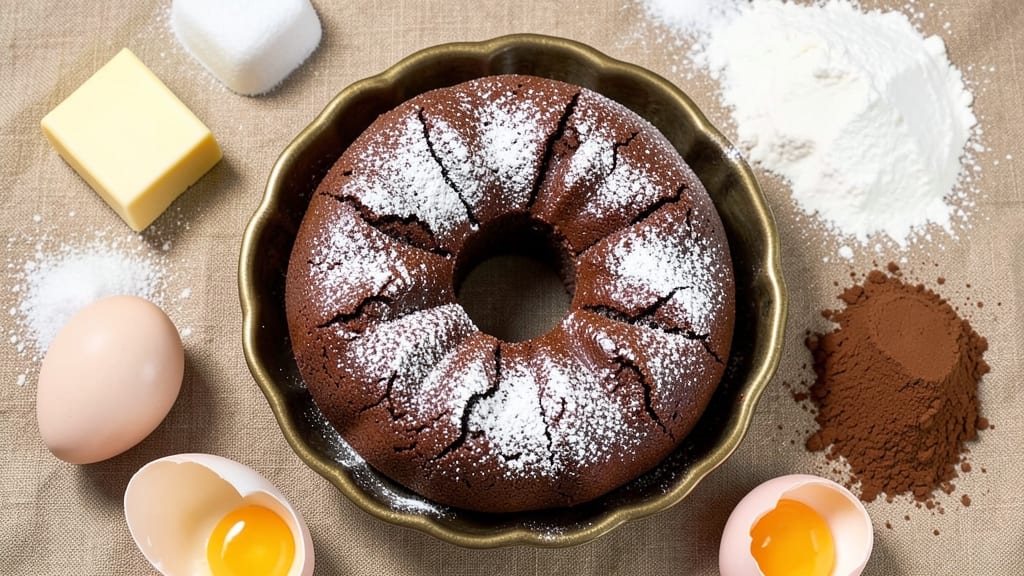
This basic chocolate bundt cake recipe delivers the perfect balance of rich cocoa flavor and those coveted fudgy cracks—no fancy techniques required.
The secret lies in a simple batter that relies on precise measurements and a well-prepped glass bowl to create that signature dome shape with crisp edges and a moist center.
I've baked this cake dozens of times, and it never fails to impress with its deep chocolate taste and elegant presentation.
The beauty of this recipe is its simplicity: just six core ingredients (plus butter and oil) come together in one bowl, with no mixing errors to worry about.
The batter is poured into a greased bundt pan, where it develops those signature cracks as it bakes, creating a textural contrast that makes every bite exciting. Baking time is straightforward—about 45-50 minutes at 350°F—but the real magic happens in the cooling and serving.
What you'll end up with is a cake that's rich enough to satisfy chocolate lovers but light enough to feel special. The exterior develops a subtle crackle, while the interior remains tender with just the right amount of fudginess.
This is the kind of dessert that feels homemade yet impressive enough for company—no one will guess it's your first attempt.
Serve it warm with vanilla ice cream or whipped cream for an extra decadent touch, or enjoy it at room temperature with a dusting of powdered sugar. The recipe scales perfectly for gifts or parties, and leftovers keep well for up to three days. Let's get baking!
Ingredients for basic chocolate bundt cake
Six core ingredients plus butter and oil—this is all you need for perfect bundt cake magic.
| Ingredient | Amount | Notes |
|---|---|---|
| Unsalted Butter 🧈 | ¾ cup | Softened to room temperature |
| Granulated Sugar 🍚 | 1 ½ cups | Standard white granulated |
| All-Purpose Flour 🌾 | 1 ½ cups | Sifted for smooth batter |
| Cocoa Powder 🍫 | ½ cup | Natural unsweetened cocoa |
| Large Eggs 🥚 | 2 whole | Room temperature preferred |
| Baking Soda 🧂 | 1 tsp | Pure baking soda |
| Salt 🧂 | ½ tsp | Fine sea salt |
| Vanilla Extract 🌿 | 1 tbsp | Pure vanilla extract |
| Vegetable Oil 🫒 | ½ cup | Light neutral oil |
| Milk 🥛 | ½ cup | Whole milk preferred |
| Powdered Sugar 🍚 | ¼ cup | For dusting (optional) |
The cocoa powder is where the deep chocolate flavor starts. Natural unsweetened cocoa gives that rich, bittersweet taste—avoid Dutch-processed if you want maximum flavor. Ghirardelli or Hershey's Special Dark are solid grocery store options, but bulk bins at Whole Foods often have fresher, more vibrant cocoa. The flour should be sifted to avoid lumps in the batter, which can ruin those signature cracks. For the butter, I always use Land O'Lakes unsalted—it's reliable and melts smoothly. Room temperature is key: if it's too cold, the batter won't mix properly.
No vanilla extract? Vanilla bean paste at half the amount works beautifully. Short on milk? Eggnog or heavy cream adds richness, but stick to whole milk for the classic texture. The baking soda and salt are non-negotiable—they balance the sweetness and ensure proper rise. For the powdered sugar, Domino brand is my go-to because it dissolves smoothly. If you're making this ahead, store the dry ingredients (flour, cocoa, baking soda, salt) in an airtight container for up to 6 months, and the wet ingredients (butter, oil, milk) in the fridge for 1 week.
The batter keeps for 2 days in the fridge once mixed, but the cake itself is best served fresh. If you need to prep ahead, bake the cake and store it wrapped at room temperature for 2 days or freeze for 3 months. To reheat, wrap the cooled cake in foil and warm in a 300°F oven for 10 minutes—it'll taste like it just came out of the oven. The bundt pan? Wilton non-stick is my favorite—it releases beautifully and lasts for years.
Why You'll Love This Recipe
- No Mixer Needed: I’ll admit, I don’t own a stand mixer—and this cake doesn’t miss it. Creaming the butter and sugar by hand takes less than 5 minutes, and the cocoa powder blends right in with the flour. Honestly, the only tool you’ll need is a whisk and a Bundt pan.
- Rich Without Fuss: That first bite? Pure chocolate satisfaction. The melted butter and granulated sugar create a tender crumb, while the cocoa powder gives it that deep, velvety flavor—no fancy additives required. I’ll be real: it’s the kind of cake that makes store-bought look like an afterthought.
- Showstoppers for Any Event: Birthday? Check. Brunch? Done. Holiday dessert table? Perfect. This cake’s elegant shape and bold flavor make it feel special, but it’s so simple I’ve even brought it to potlucks in 45 minutes flat. No one will guess it’s just five ingredients.
- Leftovers That Last: Between us, this cake stays moist for days—no dry crumbs here. I’ve had slices on day three, and they’re still better than most boxed cakes. Plus, the ingredients are budget-friendly, so you can bake it twice and still save money. Win-win.
Step-by-step instructions for chocolate bundt cake
Here's how to bake a rich chocolate Bundt cake with those signature fudgy cracks and moist crumb.
Cream Butter and Sugar Until Light
In a large mixing bowl, combine the 0.75 cup unsalted butter and 1.5 cups granulated sugar. Beat with an electric mixer on medium speed for 3-5 minutes until the mixture is pale, fluffy, and nearly doubles in volume. This creaming process incorporates air, which creates that tender crumb and helps the cake rise properly.
I press down on the butter mixture with a spatula occasionally to check for lightness—it should leave clean marks that don't immediately fill back in. If the mixture still feels dense or looks like wet sand, keep beating for another minute. The goal is to create a smooth, airy base that will hold up to the dense chocolate flavor.
Add Eggs and Wet Ingredients
Add the 2 whole large eggs, one at a time, beating well after each addition. Then mix in the 1 tablespoon vanilla extract, 0.5 cup vegetable oil, and 0.5 cup milk. Scrape down the sides of the bowl with a rubber spatula to ensure all ingredients are fully incorporated and the batter is smooth.
This step builds the cake's moisture content and ensures even distribution of flavor. I always let the eggs come to room temperature first—this prevents cold spots in the batter that could lead to uneven baking. After adding all wet ingredients, the mixture should be well combined but still slightly thick, with no visible streaks of flour.
Combine Dry Ingredients Gently
In a separate bowl, whisk together the 1.5 cups all-purpose flour, 0.5 cup cocoa powder, 1 teaspoon baking soda, and 0.5 teaspoon salt. Sift the dry ingredients directly into the wet mixture while mixing on low speed. Mix just until combined—about 20-30 seconds—to avoid developing gluten, which would make the cake tough.
I use a spatula to gently fold in the dry ingredients, being careful not to overmix. The batter should be thick but pourable. If it looks too stiff, add 1-2 tablespoons of milk to loosen it. The key here is to maintain the air incorporated in the creaming step while ensuring all dry ingredients are evenly distributed throughout the batter.
Prepare the Bundt Pan and Bake
Preheat your oven to 350°F. Generously grease a 10-12 cup Bundt pan with butter or baking spray, then dust with flour, tapping out any excess. Pour the batter into the prepared pan and smooth the top with a spatula. Bake for 50-60 minutes, or until a toothpick inserted in the center comes out clean with just a few moist crumbs.
I check for doneness at the 50-minute mark—the cake should be springy to the touch and the top should be set. If the top browns too quickly, tent the pan with foil. The cake is done when it passes the toothpick test and the edges begin to pull away slightly from the pan. This indicates proper doneness and that those signature fudgy cracks will form as it cools.
Cool and Serve
Remove the cake from the oven and let it cool in the pan for 10 minutes. Then invert the cake onto a wire rack and let it cool completely before slicing. This gradual cooling prevents the cake from falling apart and allows the fudgy cracks to develop fully as the cake sets.
Once completely cooled, dust the cake with 0.25 cup powdered sugar if desired. The cake will be moist and rich, with a slightly crisp exterior and a tender, fudgy interior. For the best texture, serve it at room temperature—this allows the flavors to fully meld and the cake to reach its ideal consistency. The fudgy cracks should be prominent, adding to the visual appeal and texture contrast.
Pro Tips For Making Basic Chocolate Bundt Cake
- Melt Butter Slowly: I learned this the hard way—dumping cold butter straight into hot sugar makes lumps that never fully dissolve. Instead, melt the butter first, then mix it with the sugar while it’s still warm. The sugar will incorporate smoothly, and your cake won’t turn out greasy or dense.
- Sift That Cocoa: Cocoa powder clumps like a stubborn guest at a party. Sift it with the flour before mixing to avoid dry pockets in your cake. Pro move: Use a fine-mesh sieve and tap it gently on the bowl—no need to go full-on flour tornado.
- Don’t Overmix the Batter: The second you see streaks of flour, stop stirring. Overmixing develops gluten, and your bundt cake will turn out tough instead of tender. Fold just until combined—about 10-12 strokes max—then let the batter rest for 5 minutes. Trust me, your cake will thank you.
- Grease the Pan Properly: Butter alone won’t cut it—flour sticks like glue. After greasing the bundt pan with softened butter, use a pastry brush to coat it with melted butter, then dust with flour. Tap out the excess, and run your fingers along the ridges to check for smoothness. No flour residue = no cake sticking.
Common mistakes when making this recipe
Overmixing the Batter
The biggest mistake I see is overmixing after adding the dry ingredients. When you mix too long, you develop gluten in the flour, which makes the cake tough instead of tender.
I've ruined many a bundt cake by beating the batter for 2-3 minutes after adding flour—it turns out dense and dry. Stop mixing as soon as the dry ingredients disappear, usually within 20-30 seconds on low speed.
The batter should look thick but still pourable, with no visible streaks of flour. 💫
Skipping Room Temperature Ingredients
Cold butter, eggs, or milk can cause the batter to separate or bake unevenly. I learned this the hard way when my first bundt cake had a raw center because I used straight-from-the-fridge eggs. Always let your butter, eggs, and milk sit at room temperature for 30-60 minutes before mixing.
The butter should be soft enough to press with a finger but not melted. This ensures even distribution of fat throughout the batter for consistent texture.
Poor Pan Preparation
If your bundt pan isn't properly greased and floured, the cake will stick and crack improperly. I've seen cakes tear apart completely when trying to invert them because the pan wasn't prepared well enough.
Use melted butter or baking spray (like Baker's Joy) and then dust with flour, tapping out excess. For extra insurance, I sometimes use a mix of butter and flour to create a thick paste that I rub all over the pan.
This creates a barrier that prevents sticking while still allowing those beautiful fudgy cracks to form.
Incorrect Baking Time
Underbaking or overbaking ruins the perfect texture. I've had cakes that were gummy in the center because I pulled them out too early, and others that were dry and crumbly because I left them in too long.
The cake is done when a toothpick comes out with just a few moist crumbs—about 50-60 minutes at 350°F. If the top browns too quickly, tent the pan with foil. The edges should pull away slightly from the pan, indicating proper doneness.
Let it cool in the pan for 10 minutes before inverting.
Forgetting to Cool Properly
Trying to slice the cake too soon is a recipe for disaster. I've seen bundt cakes collapse completely when sliced while still warm. After baking, let the cake cool in the pan for 10 minutes, then invert onto a wire rack to cool completely.
This gradual cooling allows the structure to set properly and those signature fudgy cracks to develop fully. Patience here makes all the difference—rushing this step often leads to a crumbly, uneven cake. ✨
Using the Wrong Cocoa Powder
Not all cocoa powders are created equal. I've made this mistake by using Dutch-processed cocoa (which is more mellow) instead of natural unsweetened cocoa. Natural cocoa has more acidity, which reacts better with the baking soda to create lift and those beautiful cracks.
Stick with natural unsweetened cocoa like Ghirardelli or Hershey's Special Dark. The difference in flavor and texture is noticeable—natural cocoa gives that rich, bittersweet taste that chocolate lovers crave.
Nutrition facts
Frequently asked questions
Why does my chocolate bundt cake crack so much?
Those signature fudgy cracks happen naturally as the cake cools! The cracks form because the outer layer sets faster than the center, creating tension. To enhance them, try baking at 350°F for the full 50-60 minutes—don't rush it. The cracks are actually a sign of proper baking and add beautiful texture contrast.
Can I make this cake without a bundt pan?
Yes, but the shape will be different! Use a 9-inch round or tube pan instead. Grease it well and bake for 40-45 minutes at 350°F. The texture will still be delicious, though the classic dome shape won't form. For extra richness, add 1/4 cup chocolate chips to the batter.
How do I store leftover bundt cake?
Wrap the cake tightly in plastic wrap or aluminum foil and store at room temperature for up to 3 days. For longer storage, freeze slices in a sealed container for 3 months. To reheat, wrap the cake in foil and warm in a 300°F oven for 10 minutes—it'll taste fresh-baked!
What's the best way to decorate this cake?
Keep it simple! Dust with powdered sugar for an elegant finish, or drizzle with melted chocolate and sprinkle with crushed nuts. For extra flair, add fresh berries or a dollop of whipped cream. Avoid heavy frosting—this cake's rich flavor shines best with minimal decoration.
Can I substitute butter with oil?
You can, but the texture will change slightly. Replace the 0.75 cup butter with 1 cup oil (same amount). The cake will be more tender but slightly less flavorful. For best results, stick with the butter—it adds richness and helps create those perfect fudgy cracks.